
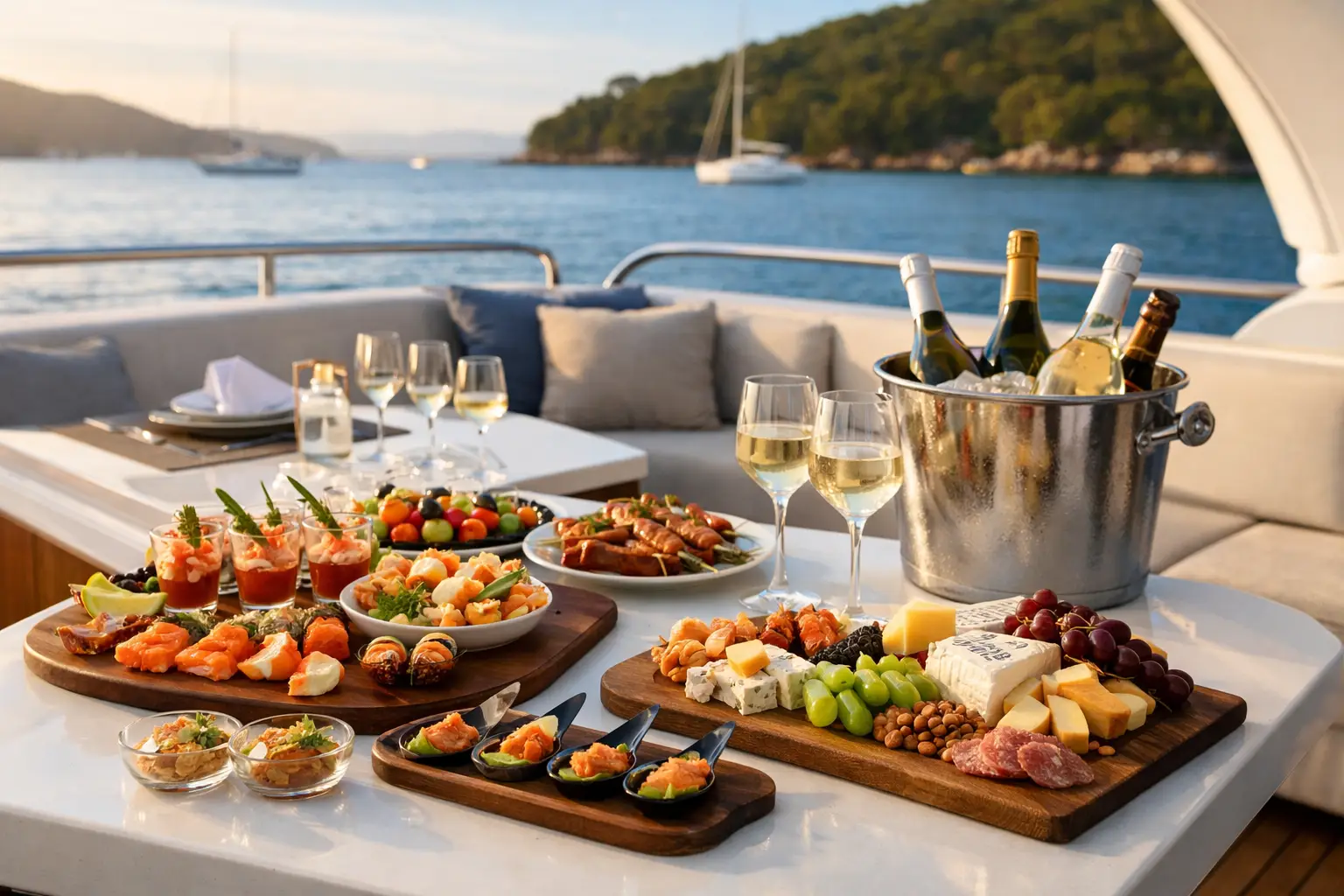
The difference between a good charter and the event everyone talks about on Monday is often sitting on a plate. A well-planned boat event catering menu does more than feed a group. It keeps conversations moving, suits the rhythm of the day, and gives guests a reason to gather around the deck before the music, the skyline, or the swim platform takes over.
On the water, food needs to work harder. Guests are socializing, moving between lounge areas, taking photos, and enjoying the view. The best menus feel generous and elevated without demanding cutlery, long waits, or a formal sit-down dinner that breaks the energy of the occasion.
Start With the Kind of Event You Want to Create
A menu should follow the atmosphere, not the other way around. A daytime raft-up with friends calls for bright, relaxed food that is easy to pick up between swims and sunbathing. A sunset birthday celebration can carry a little more indulgence, with polished canapés, sharing platters, and a dessert moment timed for golden hour. A corporate charter may need a stronger sense of hospitality, with food that looks considered, accommodates different dietary needs, and lets clients mingle comfortably.
Think about when guests will board, how long they will be onboard, and what you want the peak moment to be. A three-hour sunset cruise does not necessarily need a full formal meal, but it does need enough substantial food that guests feel looked after. A longer private charter, especially one built around swimming and a full afternoon on deck, benefits from a more generous progression of grazing food, hot dishes, and something sweet.
The strongest events have a clear food rhythm: a welcoming bite when guests arrive, satisfying options once the group has settled in, and a final treat that lands at exactly the right moment.
Build a Boat Event Catering Menu for How Guests Actually Eat
A floating venue is not a restaurant dining room. Space is social, plates travel, and the group will not always sit down at the same time. That is why hand-held dishes, small plates, and shareable platters usually outperform meals that require guests to balance a knife, fork, drink, and phone all at once.
Choose food that remains appealing after a few minutes on a platter and is easy to enjoy while standing. Freshly prepared sliders, skewers, seafood bites, satay, mini wraps, and crisp salads in individual portions are all practical because they look polished and allow guests to keep circulating. For a more premium feel, add a few visually striking items such as fresh prawns, sushi-style bites, premium charcuterie, or beautifully presented seasonal fruit.
The goal is not to serve the most complicated food possible. It is to serve food that feels abundant, intentional, and appropriate for the occasion.
Arrival bites should be light and social
The first 30 minutes set the tone. Guests are greeting one another, choosing their favorite spot on deck, and getting their first view of the water. Offer bites that are easy to take with one hand and do not fill everyone up too quickly.
Cold canapés, vegetable cups, small bruschetta-style bites, and chilled seafood are especially effective for a warm-weather departure. For an evening charter, mini bao buns, delicate skewers, or bite-size dumplings can bring more warmth without turning arrival into a full meal.
Add substantial food before the energy builds
Once the event is underway, bring out dishes with enough substance to carry the group through. This is where a menu needs balance. Too many delicate canapés can leave guests hungry. Too much heavy food can slow the event down, particularly on a sunny afternoon.
A good middle ground is a mix of protein-forward dishes, fresh salads, and satisfying carbohydrates. Think grilled chicken skewers alongside herb salads, mini burgers with crisp slaw, or sharing boards paired with rolls and seasonal sides. Vegetarian options should feel like part of the main event rather than an afterthought. A well-made plant-based slider, grilled halloumi skewer, or roasted vegetable wrap gives every guest a choice they will genuinely want.
Finish with a moment worth photographing
Dessert does not need to be elaborate, but it should feel intentional. Small sweet bites, fruit platters, macarons, brownies, or mini tarts are easier to serve and enjoy than large plated desserts. For birthdays and milestone celebrations, this is also the natural point for a cake presentation.
Time it around sunset, a speech, or the return journey through the harbor. When food is part of the event flow, even a simple dessert becomes a shared moment rather than an item checked off at the end.
The Best Menu Balances Freshness and Practicality
A premium menu needs contrast. Fresh, chilled dishes are welcome in Hong Kong’s warmer months, while hot items create a sense of comfort and generosity, particularly for evening events. Pairing both gives guests variety and keeps the spread visually appealing throughout the charter.
Avoid food that becomes messy or loses its texture quickly. Saucy pasta, oversized burgers, dishes with fragile garnishes, and anything that requires careful carving can make service more difficult than it needs to be. The same applies to menu items with strong odors or ingredients that can spill easily on a moving deck.
This does not mean the menu has to be conservative. It means each dish should earn its place. A spicy skewer, a colorful poke-style cup, or a bold Asian-inspired canapé can bring personality without creating a logistical headache. The right caterer will know how to adapt presentation and portioning for service on the water.
Dietary Needs Are Part of Premium Hosting
If you are hosting colleagues, clients, or a large social group, dietary planning is a visible sign of good hosting. Ask guests for requirements before the event and make sure vegetarian, vegan, gluten-conscious, and allergy-aware options are clearly accounted for.
The best approach is not to create one isolated plate for every dietary request. Build flexibility into the menu from the start. Include dishes that naturally suit a range of guests, then ensure special items are prepared and labeled thoughtfully. This helps everyone feel included without turning the menu into a complicated announcement.
For corporate events, it is also wise to consider cultural preferences and the time of day. A midday charter may suit lighter, fresher food, while an after-work event can support heartier share plates and warm savory options. It depends on your guest list, but thoughtful planning will always feel more polished than a one-size-fits-all spread.
Match Service Style to Your Group Size
A small group can enjoy a more tailored presentation, with food brought out in stages and served around lounge areas. For a larger celebration, especially one spanning multiple decks or connected vessels, the menu needs to be designed for pace. Guests should be able to access food easily without forming a line that interrupts the atmosphere.
Grazing tables and substantial shared platters work beautifully when the group is relaxed and moving freely. Passed canapés add a more elevated hospitality touch for client entertaining or formal celebrations. A combination often works best: welcoming canapés on arrival, a generous central spread during the main event, then desserts served later.
At True Blue Fleet, the open-deck layout makes that social style of service particularly effective. Guests can gather around food, drift back to the lounge areas, and stay part of the action rather than disappearing into a dining setup away from the group.
Do Not Treat Drinks and Food as Separate Decisions
Food and drinks should complement each other, especially when guests are spending hours in the sun or celebrating through the evening. Fresh, flavorful dishes help keep the occasion feeling balanced, while substantial food gives the bar offering a stronger foundation.
A daytime menu might lean into chilled fruit, citrus-led salads, grilled seafood, and lighter handheld dishes. An evening event can bring in richer flavors, warm appetizers, and more indulgent sharing plates. Water and nonalcoholic choices deserve the same planning as the rest of the offering, particularly for active daytime charters.
The key is generosity without excess. When every element is well paced, guests feel cared for from boarding to the final song.
Plan Early, Then Let the Menu Support the Celebration
The menu is easier to get right when it is considered alongside guest numbers, timing, entertainment, and the style of charter. Share your vision early: Is this a client event that needs a confident, polished edge? A birthday built around sunset and dancing? A relaxed afternoon where people will spend as much time near the water as they do eating?
Those details determine whether you need elegant roaming canapés, a substantial grazing spread, hot food service, or a combination of all three. They also make it easier to plan quantities that feel generous without overloading the deck.
The best boat events never make guests think about logistics. They remember the first bite with a harbor view, the platter that brought everyone together, and the feeling that the entire day was made for their group. Start with a menu that belongs to that moment, and the celebration will take care of the rest.