
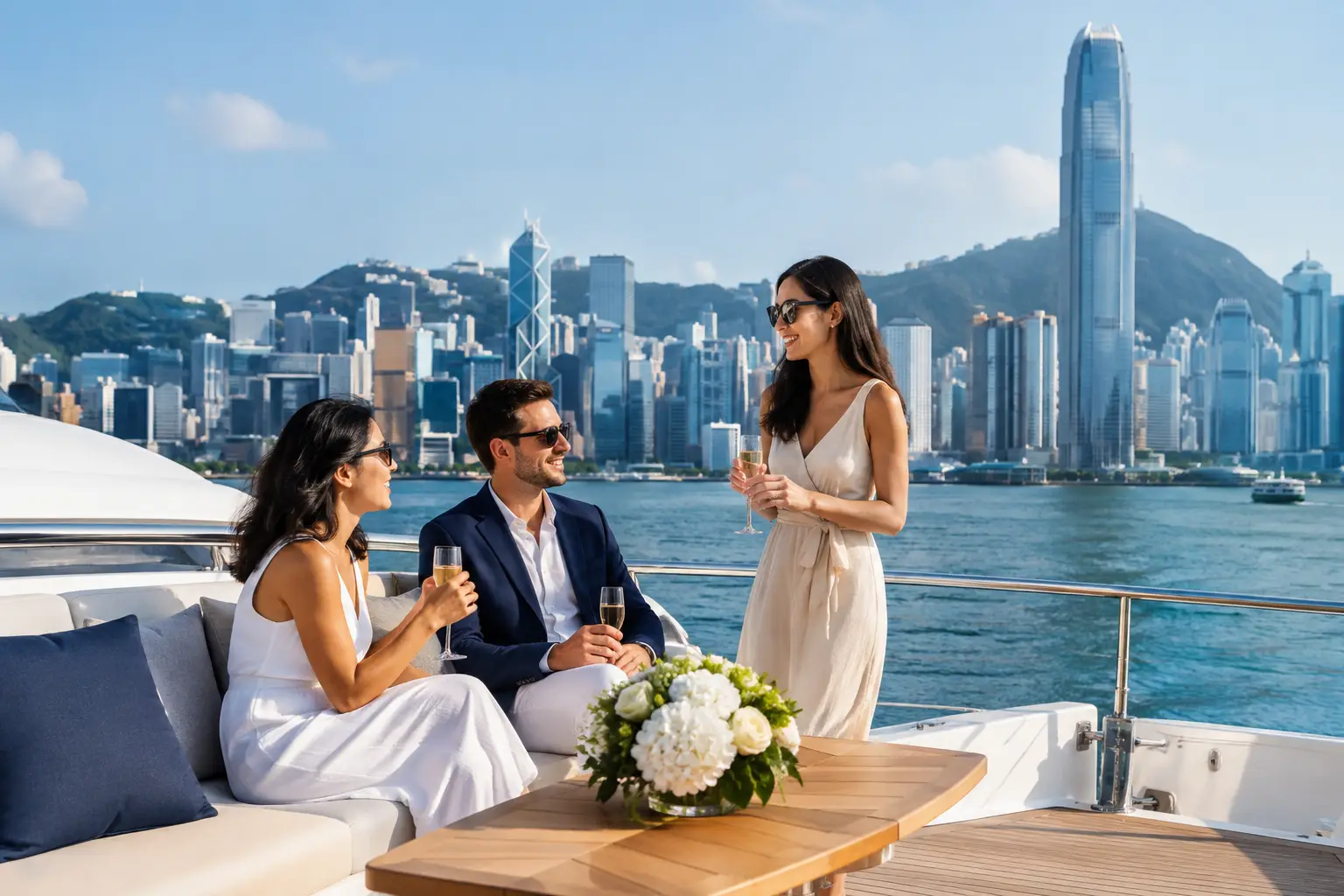
A great charter is not defined by the boat alone. It is defined by the moment your guests step aboard, find space to settle in, and realize the whole day has been designed around them. This Hong Kong yacht charter guide is for organizers who want more than a vessel – they want a polished social event with the right atmosphere, hospitality, and room for every guest to enjoy it.
Start With the Occasion, Not the Boat
A birthday with 25 close friends, a client event for 60 executives, and a company celebration for 120 guests may all happen on the water, but they need very different setups. The best starting point is deciding what the event needs to feel like.
For a social celebration, open deck space, lounge seating, a strong sound system, and easy access to the water often matter most. For corporate hospitality, service flow, shade, comfortable conversation areas, and a well-timed food and beverage program can make the bigger impression. If the goal is a large-format celebration, a multi-vessel setup can turn separate boats into one connected floating venue, keeping the entire group part of the same occasion.
Avoid choosing purely from a capacity number. A boat that technically holds your group may not give them enough room to mingle, dine, dance, or relax. Ask how the space works once catering, crew, coolers, seating, and entertainment are in place. The difference between “everyone fit” and “everyone had a great time” is where premium charter planning begins.
Choose the Right Time for Your Charter
Timing changes the experience more than many hosts expect. A daytime charter offers the full on-water lifestyle: swimming, inflatables, sun lounges, and long afternoons at anchor. It suits birthdays, friend groups, and team celebrations that want a relaxed beach-club energy without leaving the city.
A sunset or evening cruise brings a different kind of polish. The harbor lights create a natural backdrop for client hosting, cocktail-led functions, milestone celebrations, and groups who want a more dressed-up occasion. The cooler temperatures can also make evening charters particularly comfortable in warmer months.
Weather and season should shape the plan, not derail it. Hong Kong’s summer heat, occasional rain, and changing sea conditions are all manageable when the operator has a thoughtful contingency plan. Ask in advance about covered areas, timing flexibility, route alternatives, and the decision process if weather conditions change. Good event hosting feels effortless because those conversations happened before boarding.
Build Your Guest List Around Comfort
Guest numbers affect almost every charter decision: vessel choice, catering quantities, staffing, boarding arrangements, and whether one boat or a raft-up configuration makes the most sense.
For smaller groups, privacy and flow may be the priority. A single spacious vessel can feel exclusive while still offering distinct areas for dining, lounging, music, and swimming. Mid-sized groups need enough deck room for guests to move easily rather than gather in one bottleneck. Larger events need an operator that can coordinate logistics without making the experience feel fragmented.
This is where connected-vessel events stand apart. For groups approaching 100 guests or more, multiple boats can create scale without sacrificing atmosphere. Guests can circulate between decks, the event can include different zones for food, music, and conversation, and the group remains united rather than split across separate charters. True Blue Fleet can create this kind of linked on-water venue for celebrations and corporate functions of up to 150 guests.
What to Look for in a Premium Charter Setup
Not every charter is built for entertaining. Some vessels are better suited to quiet cruising, while others are designed around groups, hospitality, and shared experiences. If your priority is an event that looks as good as it feels, focus on the layout and inclusions rather than a generic description of the boat.
Look for large open decks where guests can be together, not tucked into separate corners. Lounge-style seating encourages conversation and gives the day a more elevated feel than basic bench seating. Oversized swim platforms make water access more comfortable and organized for daytime events, while quality onboard sound keeps the atmosphere moving without overwhelming every conversation.
Catering deserves the same attention. Freshly prepared food, a considered menu, and staff who know how to serve a group at sea can change the entire tone of the event. The most successful charters treat food and drinks as part of the hosting experience, not an afterthought added to a boat rental.
Your Hong Kong Yacht Charter Guide to Routes and Stops
The route should support the mood of the event. A daytime itinerary might prioritize calm water, time at anchor, and a swim stop where guests can use inflatables and enjoy the open deck. A harbor-focused evening charter may prioritize skyline views, sunset timing, and an easy flow between boarding, welcome drinks, dining, and cruising.
There is no single “best” route. It depends on the season, sea conditions, boarding point, event duration, and what your group actually wants to do. An itinerary packed with too many stops can feel rushed. A simple plan with enough time to settle in, eat well, enjoy the water or views, and be present with the group usually delivers more.
For corporate groups, keep the schedule realistic. Build in time for guests to arrive, board, mingle, and enjoy the first part of the experience before any speeches or structured moments. For birthdays and social events, leave room for spontaneity. The best stories tend to happen between the planned highlights.
Make Catering and Entertainment Part of the Plan
An all-inclusive package is valuable when it removes the admin that usually falls on the organizer. Rather than coordinating separate catering, beverage, staffing, sound, and activity suppliers, choose a format where those elements are already designed to work together onboard.
That does not mean every event should look the same. A daytime birthday may call for casual sharing food, upbeat music, and plenty of water time. A client event could need polished canapés, refined service, and a lower-volume playlist that supports conversation. A company celebration may benefit from a host, branded touches, a short presentation, or a themed dress code that photographs well without feeling forced.
Be clear with your charter team about dietary needs, guest demographics, music preferences, and the energy you want. Small details matter: whether there are enough shaded areas, whether the menu is easy to eat while standing, where guests can store bags, and how the crew will guide the day from boarding through disembarkation.
Questions Worth Asking Before You Book
A premium charter company should answer practical questions clearly. Confirm the final guest capacity for your preferred event style, not just the legal maximum. Ask what is included in the quoted package, how long the charter runs, what the boarding process looks like, and whether there are timing limits around routes or stops.
It is also smart to ask about crew service, food preparation, music capabilities, swimming arrangements, and weather procedures. If you are planning a large group, discuss how the operator manages arrivals, group movement, and multiple vessels. Transparent answers are a good sign that the team understands event execution, not simply boat hire.
Finally, consider your guests. Will they need a clear boarding location? Is the schedule easy to understand? Does the event allow enough time to enjoy the boat rather than spend the day rushing to and from it? A well-designed charter takes care of those details before they become questions on the day.
Give the Day Room to Be Memorable
The strongest on-water events have a plan, but they never feel overprogrammed. Choose a vessel with space to host properly, build the package around your group, and trust a crew that knows how to keep service sharp while the energy stays easy.
When the setting, food, music, and guest flow all work together, the charter becomes more than an outing. It becomes the event people are still talking about long after everyone is back on shore.