
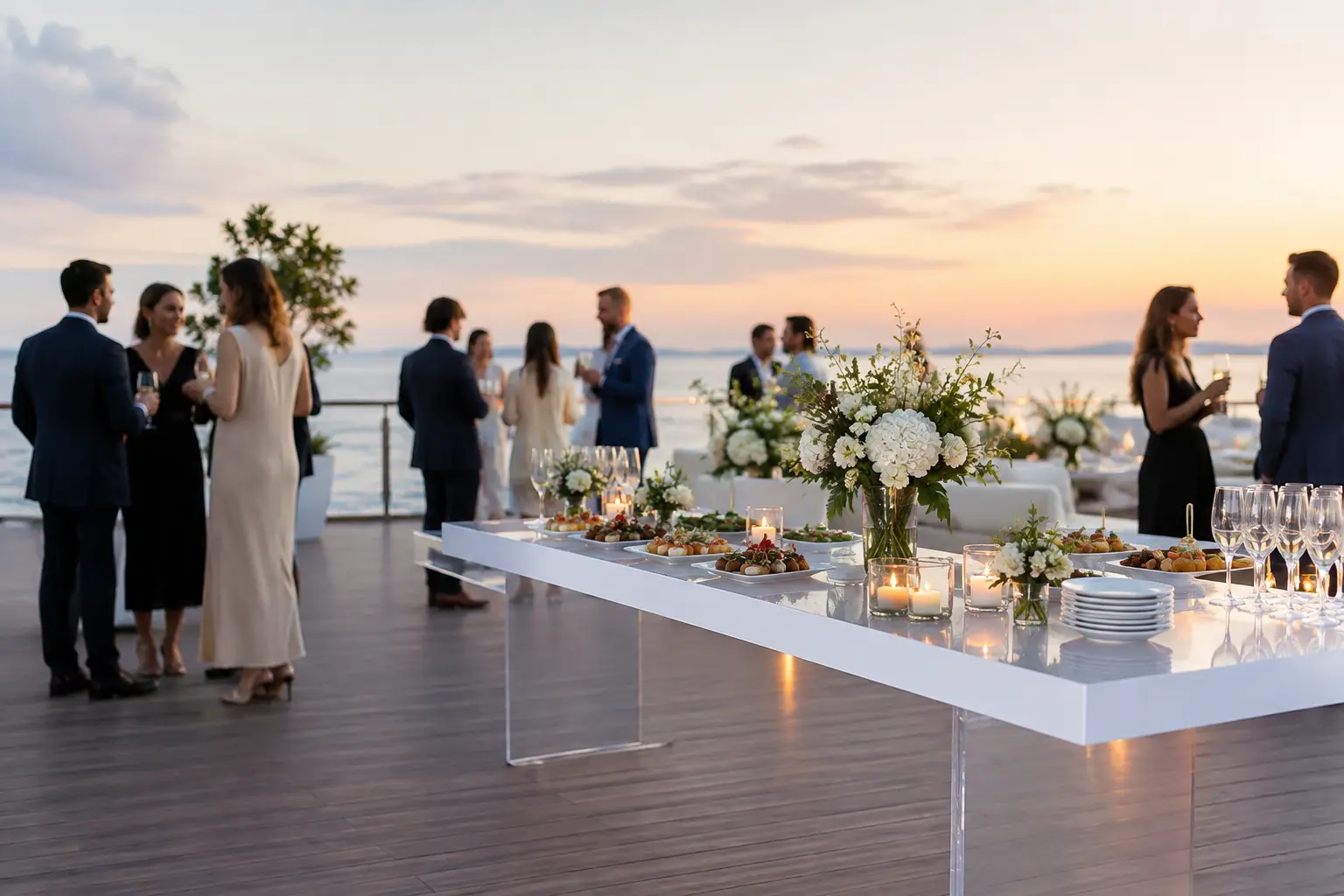
A floating reception should never feel like a catered meeting that happens to be on a boat. It should feel like guests have stepped into a private waterfront venue where the skyline, music, food, and conversation all arrive at exactly the right moment. Knowing how to stage a floating reception means designing for atmosphere first, then building the details that make hosting feel easy.
For corporate hosts, birthday planners, and social organizers, the appeal is clear: there is no standard ballroom, no static view, and no need to split the group across separate rooms. But a memorable event on the water takes more than choosing a departure time and sending invitations. Guest flow, vessel layout, food service, weather planning, and the mood of the occasion all need to work together.
Start With the Reception You Want Guests to Remember
Before choosing décor or writing a menu, decide what the reception is meant to feel like. A client appreciation evening may call for polished lounge seating, a considered cocktail service, and enough calm space for real conversation. A milestone birthday may need a stronger soundtrack, more open floor space, and a schedule built around sunset, photos, and celebration.
The best floating receptions have a clear social purpose. Are guests arriving to network? To celebrate a team achievement? To bring together friends who do not often see each other? That answer guides every decision, from the boarding experience to the final drink service.
Avoid trying to make one event serve every possible mood. A reception can be elevated and energetic, but it does not need to be formal, loud, interactive, and highly programmed all at once. Choose the dominant feeling, then let the details support it.
Choose a Vessel Built for Reception-Style Entertaining
Not every charter boat is a natural reception venue. A vessel designed around sightseeing or seated dining can make a standing social event feel cramped and fragmented. For a proper floating reception, prioritize open entertaining decks, lounge-style seating, clear circulation routes, and a layout that keeps the entire group connected.
The difference is immediately noticeable. Guests should be able to board, collect a drink, greet familiar faces, and find a place to settle without forming a bottleneck at the entrance. There should be room for a central social energy without forcing everyone into one tight cluster.
For larger groups, consider whether multiple vessels can be connected to create one larger event footprint. This approach works particularly well when the guest list includes different social circles or teams. One area can become the main hospitality hub, while another offers a quieter lounge setting for conversations that need more than a few minutes.
Match capacity to comfort, not just the guest list
A boat may technically accommodate a certain number of people, but a reception needs room to breathe. Plan around the experience you want, not simply the maximum headcount. Guests need space around food stations, bars, seating zones, restrooms, and photo moments.
If the event includes speeches, awards, or a presentation, leave enough open deck space for people to gather without blocking service. If the focus is mingling, give guests multiple places to stand and sit so the crowd naturally spreads across the vessel.
Build the Guest Journey From Boarding to Farewell
The strongest receptions have momentum. Each stage should feel purposeful, even if guests never notice the planning behind it. Start with boarding. A warm welcome, a clearly positioned first drink, and music already playing set the tone before the boat has left the dock.
The first 20 minutes are about arrival and connection. Do not rush guests straight into a speech or activity. Let them take in the setting, meet the crew, find their friends, and enjoy the anticipation of being out on the water.
Once the vessel is underway, bring food into the experience at the right pace. Passing small plates can keep the room moving, while a styled grazing or buffet area gives guests a natural place to gather. The right choice depends on the group. For a networking-heavy reception, roaming service keeps conversations fluid. For a more relaxed celebration, a central food display can become part of the visual atmosphere.
Save the key moment for when the backdrop is at its best. In Hong Kong, that may be a sunset toast, a welcome from the host as the harbor lights come alive, or a team recognition moment when everyone is already settled and engaged. Timing is one of the biggest advantages of hosting on the water, so use it deliberately.
How to Stage a Floating Reception With Natural Flow
A reception feels premium when guests never have to ask where to go next. Create distinct zones, but do not overdesign them. The deck should feel social rather than segmented.
Place the welcome point near boarding, then guide guests toward the main lounge and drink service. Keep food away from narrow walkways and avoid placing the speaker or DJ setup where it blocks the best view. If speeches are planned, make sure the host can be seen and heard from every major guest area.
Music deserves more attention than it usually gets. A playlist that is too quiet can drain energy, but music that dominates too early makes conversation difficult. Begin with upbeat but relaxed background tracks, then raise the tempo after the formal moment or as the sun goes down. A quality sound system matters because open decks absorb sound differently than indoor venues.
Décor should enhance the vessel rather than compete with it. The harbor is already the backdrop. Use lighting, florals, signage, table styling, or a simple branded moment to create polish, but leave room for guests to enjoy the water, the horizon, and the architecture around them.
Give every guest type a reason to stay engaged
Reception groups are rarely made up of one personality type. Some guests want to circulate from the moment they board. Others prefer a comfortable place to sit and take in the setting. Corporate hosts may need a place for private client conversations, while birthday groups may want an obvious photo-ready focal point.
A well-staged boat reception serves all of those needs at once. Lounge seating gives quieter guests a home base. Open deck space gives the social core room to build energy. Thoughtful service keeps food and drinks within reach without turning the event into a line-up.
Treat Food and Drinks as Part of the Entertainment
On a premium charter, catering should feel like a hosted experience, not an afterthought. Choose food that can be enjoyed while standing and talking, with a few more substantial options so guests feel properly looked after. The menu should match the time of day, event duration, and crowd.
An afternoon reception may lean fresh and light, while an evening event can support richer shared dishes and more dramatic presentation. For corporate groups, consider dietary requirements early and make the options easy to identify without separating guests into awkward service lines.
Drinks should be equally considered. Offer a well-balanced selection that suits the occasion, including appealing nonalcoholic choices. The goal is an atmosphere that feels generous and celebratory while keeping the event comfortable, composed, and host-led.
Plan for Weather Without Losing the Mood
Waterfront events need a weather plan, but that does not mean planning for disappointment. It means selecting a vessel with covered areas, adaptable seating, and a crew that knows how to adjust the setup quickly if conditions shift.
A light breeze can be part of the experience. Strong heat, rain, or unexpected wind requires practical decisions about food placement, décor, timing, and guest comfort. Ask in advance how the crew handles route adjustments, covered-space use, and event flow if the weather changes.
It also helps to communicate clearly with guests before they arrive. Let them know the boarding time, suggested attire, and whether they should bring a light layer. A little preparation keeps the experience polished from the first step onboard.
Put the Crew at the Center of the Experience
The crew is the difference between hiring a boat and hosting a true reception. Professional hosts keep the event moving without making it feel managed. They know when to refresh a drink, when to clear space before a speech, and when to give the group room to enjoy the moment.
This is where a hospitality-led charter earns its value. With True Blue Fleet, the vessel, catering, sound, crew service, and open-deck event layout are designed to work as one experience rather than a collection of add-ons.
The most successful hosts do not spend the reception directing vendors or solving small problems. They are present with their guests. That is the real standard for a floating reception: the host looks relaxed, the group feels looked after, and the water becomes more than a setting. It becomes the reason no one forgets the night.