
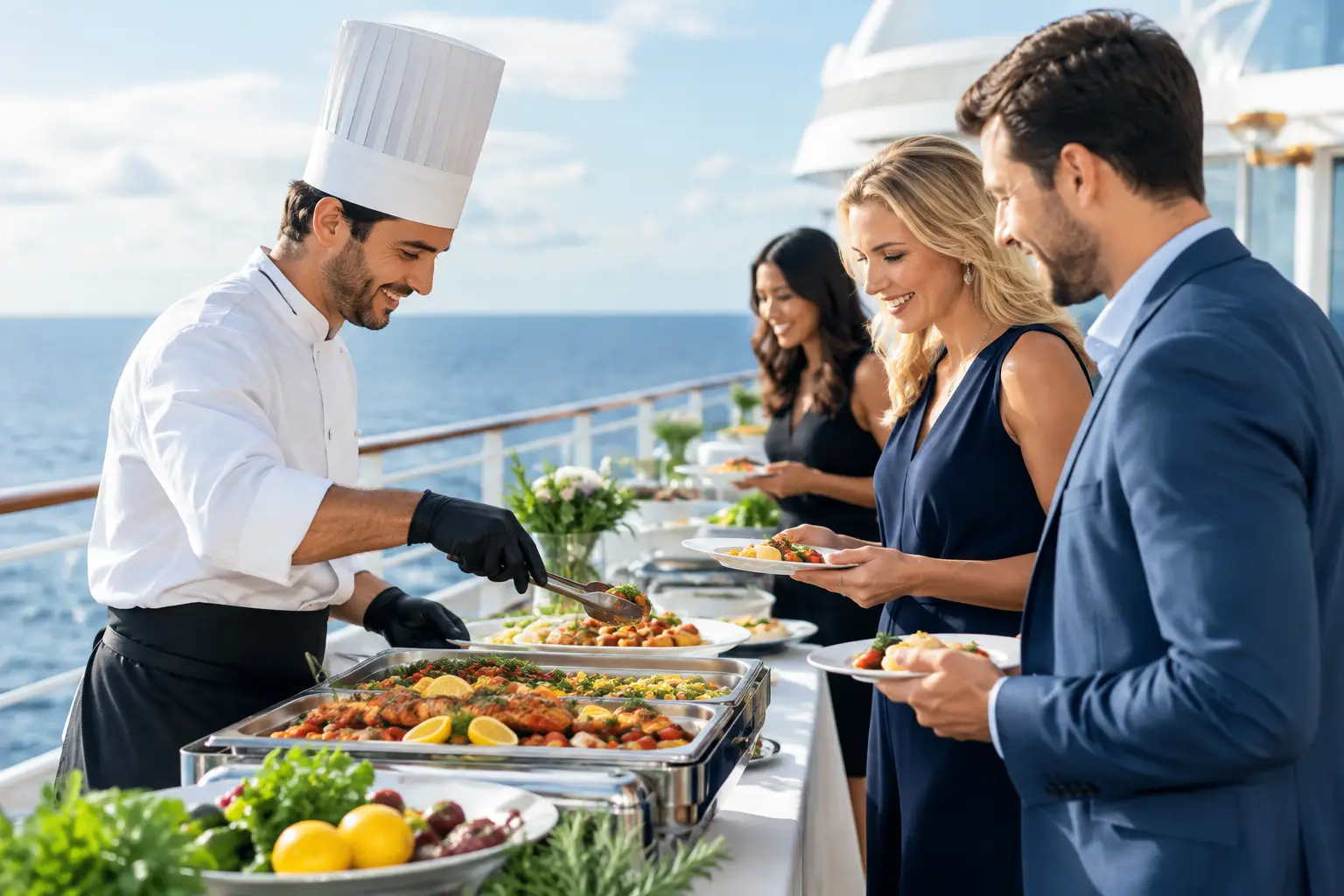
The first plate should feel as considered as the first view from the deck. Knowing how to choose event cruise catering means looking beyond a menu of crowd-pleasers and choosing food, drinks, and service that keep the whole event moving. On the water, timing matters. Space matters. And the best catering supports the atmosphere rather than pulling guests away from it.
Whether you are hosting a client event, milestone birthday, sunset celebration, or a large social charter, the right catering creates an easy rhythm: guests arrive, settle in with a drink, graze, mingle, and stay present for the moments you planned. The wrong fit can create queues, clutter, awkward meal timing, or food that simply does not hold up outdoors.
How to Choose Event Cruise Catering for Your Guest List
Start with the people, not the menu. A 25-person executive gathering has different needs from an 80-person birthday charter with music, swimming, and constant movement across the deck. Your guest count, age mix, event purpose, and start time should shape every catering decision.
For a corporate event, substantial passed bites or polished sharing platters often work better than a formal sit-down meal. Guests can continue conversations, meet new people, and move naturally between the lounge areas and open deck. For a daytime celebration, guests may expect a more generous food offering, especially if the charter runs through lunch. Evening harbor events can lean into stylish canapés, grazing-style selections, and late-service bites that arrive when the energy lifts.
Ask yourself one practical question: will guests see the food as the main event, or as part of a bigger social experience? If the purpose is a long lunch, food should be more substantial and paced in courses. If the focus is connection, music, and sunset views, choose formats that are easy to enjoy one-handed without interrupting the occasion.
Dietary needs should be collected early, not treated as an afterthought a few days before departure. Vegetarian, vegan, halal, gluten-sensitive, and allergy-aware options need to feel like intentional choices, not a separate plate that looks forgotten. A premium charter should make every guest feel included in the hospitality.
Match the Menu to the Cruise Format
A vessel is not a restaurant with a moving view. It is a social venue with changing conditions, limited prep space, and guests who may be standing, dancing, taking photos, or heading to the swim platform. That is exactly why menu design matters.
Choose dishes that travel well, hold their temperature, and are easy to eat in an open-air setting. Fresh seafood, skewers, sliders, refined wraps, grilled proteins, bright salads, dumplings, and shareable platters can work beautifully when prepared and served at the right moment. Delicate dishes that must be eaten immediately, oversized plated meals, or anything requiring complicated cutting can be less practical when the deck is active.
There is a trade-off between visual drama and operational ease. A dramatic grazing table can make a powerful first impression, but it needs protection from heat and wind, and it may not suit a longer charter. Passed canapés feel elevated and keep guests circulating, but they require the right level of service. A buffet can be generous and efficient for a larger group, but it needs a layout that does not turn one part of the boat into a bottleneck.
The strongest menus use more than one format. Begin with light arrival bites, move into substantial shared food or a buffet at the natural midpoint, then bring out a final round of dessert or late snacks. This gives the event shape without making guests feel tied to a dining schedule.
Choose Service That Protects the Atmosphere
Great cruise catering is as much about service design as it is about flavor. Before booking, ask how food will be served, when it will be served, and who will manage the flow. Those details determine whether your event feels polished or overly managed.
A professional crew should know when to circulate with trays, when to replenish a station, and when to clear glassware without disrupting a conversation or a key moment. For a corporate host, that means clients remain looked after while the organizer can enjoy the event. For a birthday host, it means less time checking food levels and more time actually celebrating.
Pay particular attention to the first 30 minutes. Guests often arrive at slightly different times, and a well-timed welcome drink plus approachable food immediately makes the deck feel alive. Avoid holding every item for a single formal serving time unless the event is deliberately built around a meal.
Service staffing also depends on group size and menu ambition. An intimate charter can feel generous with beautifully arranged platters and thoughtful crew support. A larger function with multiple food stations, specialty drinks, and a full entertainment program needs more hands behind the scenes. If you are connecting vessels for a major event, catering must be planned as one experience across the floating venue, not as separate service points competing for attention.
Ask What Is Included Before You Compare Prices
Catering quotes can look similar until you understand what is actually behind them. A low per-person number may cover basic food but exclude staffing, glassware, ice, dietary alternatives, setup, cleanup, or a meaningful amount of food for the length of your charter. The result is often a package that needs additions just to meet the needs of the day.
When comparing options, clarify these five details:
- How much food is included per guest, and is it enough for the charter duration?
- Are dietary accommodations included and clearly labeled?
- Is food served in courses, passed around the deck, or set out at one station?
- Who handles setup, replenishment, clearing, and cleanup?
- Can the food and drink package be timed around your itinerary and key moments?
An all-inclusive package can offer stronger value when it brings together catering, drinks, experienced crew, and event coordination under one plan. It reduces handoffs between vendors and gives you one team accountable for the guest experience. That said, a highly customized event may call for a more tailored menu, so ask where the package can flex rather than assuming every premium event has to be built from scratch.
Think About Drinks as Part of the Food Experience
Food and drinks should work together. A crisp daytime menu, for example, benefits from refreshing nonalcoholic options, chilled wine, beer, and well-made mixed drinks. A sunset charter may call for a more elevated arrival pour and drinks that stay easy to carry and enjoy while guests move around the deck.
The most successful beverage plans offer range without overwhelming guests with choices. Include thoughtful nonalcoholic options that feel as considered as everything else, especially for daytime events, corporate groups, and guests who are pacing themselves. Water should be easy to access throughout the charter, particularly in warm weather.
Ask how beverages will be served during the busiest parts of the event. A dedicated bar area can create a focal point, while tray service keeps conversations flowing. For larger groups, a combination usually works best: a central service point plus crew circulating at peak moments.
Plan for Weather, Timing, and the Water
Even the finest menu needs a practical weather plan. Hong Kong heat and humidity can affect chilled food, desserts, and outdoor displays, while wind can make lightweight napkins, garnish-heavy plates, and uncovered stations difficult to manage. Your caterer should have a clear approach to food safety, presentation, and service adjustments if conditions change.
Timing matters just as much. A four-hour afternoon charter needs a different food plan from a six-hour evening function. If guests are arriving directly after work, serve satisfying food early. If they have already eaten before boarding, lighter selections with a later snack may be the better fit. Build catering around what your guests will realistically need, not what looks impressive in a proposal.
This is where an experienced charter operator earns its place. True Blue Fleet designs onboard hospitality around spacious social decks, professional crew service, and the way groups actually celebrate on the water. The goal is not to crowd the boat with catering theater. It is to make every guest feel looked after while the event retains its energy.
Taste Before You Commit When the Occasion Is Major
For a high-stakes client function, brand launch, wedding-related celebration, or milestone event, request a tasting or detailed menu consultation. You are not just checking whether the food tastes good. You are assessing portion size, presentation, dietary options, and whether the caterer understands the tone you want to create.
Share the full brief: guest profile, start and finish time, dress code, entertainment, planned speeches, and any key photo moments. A good catering team will spot potential conflicts, such as serving a meal during a presentation or creating a buffet line where guests need space for a sunset toast.
The best event cruise catering feels effortless because it has been carefully planned. Choose food that suits your guests, service that suits the deck, and a team that understands how a standout celebration should feel from first welcome to final toast.