A private charter is no longer judged by the boat alone. The strongest trends in yacht hospitality are changing the question from “Where are we going?” to “How will this feel for every guest on board?” For birthday hosts, corporate planners, and groups bringing together friends or clients, the water is now the setting for a fully produced social experience – one built around atmosphere, service, food, music, and room to connect.
That shift matters in a city where people have plenty of options for a night out. A yacht event has to offer more than a view. It has to make the group feel looked after from the first welcome drink to the final photo against the skyline.
1. Social layouts now matter more than formal yacht interiors
For years, luxury on the water was often associated with polished cabins, formal dining areas, and a high-gloss design meant to be admired. For private events, that formula can leave a group spread across separate spaces rather than together in the moment.
The new standard is a social-first layout. Guests want open entertaining decks, lounge seating, broad walkways, shaded areas, and a natural center of energy where the group can gather without being squeezed into a narrow cockpit. The best event vessels feel less like a traditional boat and more like a floating private venue with the harbor as its backdrop.
This is particularly valuable for celebrations and corporate groups. A host should not have to choose between a proper catering setup, a place to dance, relaxed seating for conversations, and easy access to the water. Thoughtful deck design makes all of those elements possible at once.
There is a trade-off. A smaller, highly private yacht can be ideal for a close dinner or executive meeting, while a larger open-deck vessel creates more impact for a high-energy gathering. The right choice depends on whether the event is built around intimacy, movement, or scale.
2. Hospitality is becoming more curated, less add-on
Food and drinks used to be treated as supporting details of a charter. Now they are central to how guests remember the experience. Hosts expect menus that feel generous, freshly prepared, well presented, and appropriate for the occasion – whether that means relaxed sharing dishes for a day on the water or elevated canapés for client entertainment.
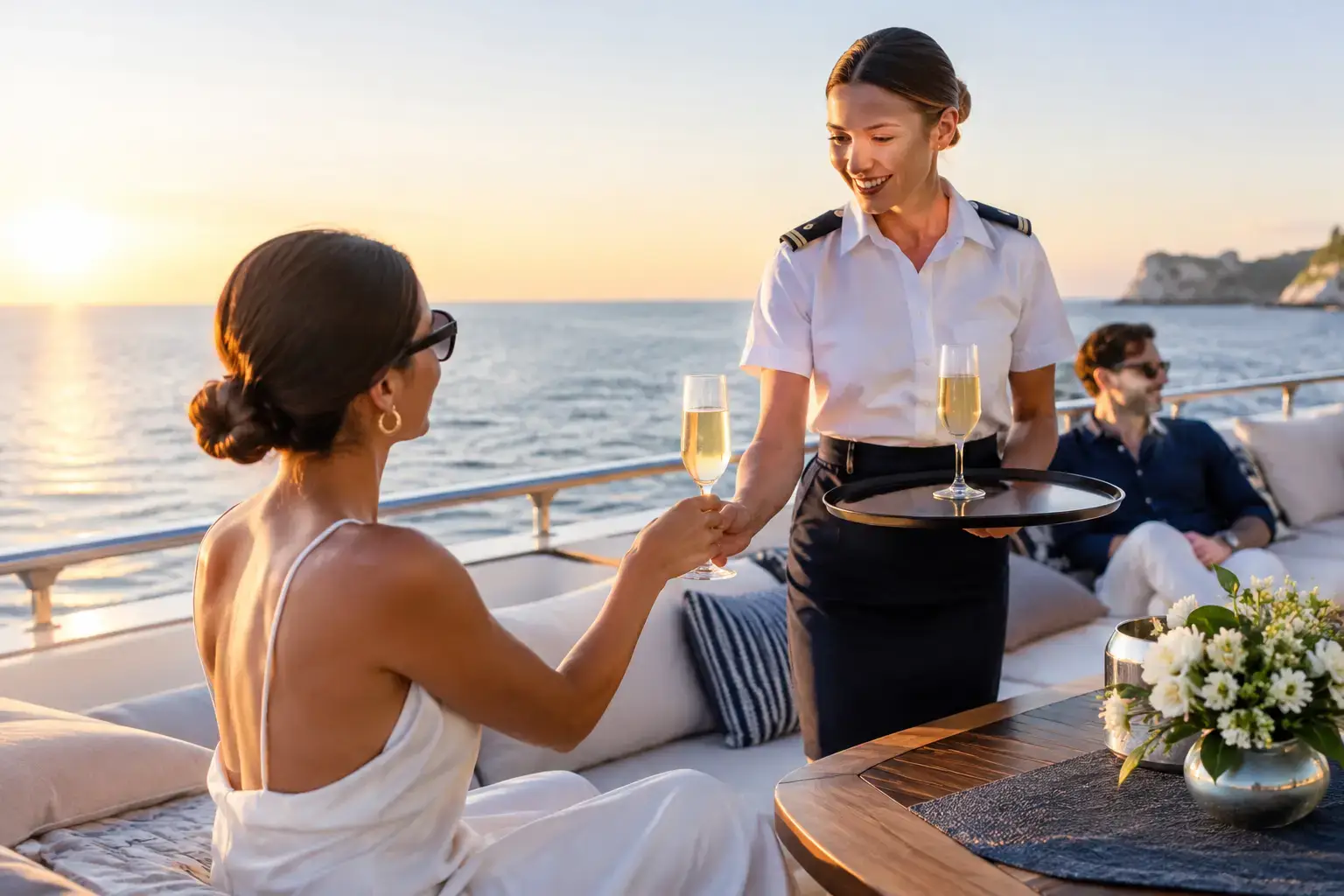
The same applies to service. Professional crew are no longer simply there to operate the vessel. They are part of the hosting experience, reading the pace of the event, keeping guests comfortable, managing timing, and helping the day run smoothly without pulling the organizer away from their own guests.
This is where all-inclusive planning earns its value. When catering, bar service, music, water activities, and crew coordination are considered together, the event feels intentional rather than assembled from a string of separate add-ons. The host gets to be present, not preoccupied with logistics.
Personalization is also growing. Groups increasingly want a charter to reflect the reason they are celebrating: a branded corporate moment, a milestone birthday, a sunset engagement party, or a team reward with its own personality. That does not always require elaborate theming. Often, it is the detail in the menu, playlist, timing, and setup that makes the event feel made for that group.
3. The new luxury is effortless group hosting
One of the most important trends in yacht hospitality is invisible coordination. Guests may not see the work behind a successful charter, but they feel it immediately. Boarding is clear, the space is prepared, food arrives at the right moment, glasses are refreshed, and the energy shifts naturally from daytime lounging to sunset celebration.
For corporate hosts, this is more than a convenience. Client-facing events carry a reputational stake. The venue needs to feel polished without becoming stiff, and the itinerary needs enough structure to keep the event moving while leaving room for genuine conversation.
For private hosts, the benefit is different but just as meaningful. A birthday organizer should not spend the day answering questions about ice, music, serving times, or where guests should put their bags. Premium hospitality gives the host freedom to enjoy the occasion alongside everyone else.
A good charter team also understands that not every group wants the same pace. Some want a long lunch, swimming, and lounge-style conversation. Others want an upbeat evening with a full deck and a strong soundtrack. The best experience is not the loudest or busiest one. It is the one designed around the people actually on board.
4. Multi-vessel events are creating a bigger stage
Large private events have traditionally faced a choice: keep the gathering small enough for one vessel or move it ashore. Raft-up formats are changing that. By connecting compatible boats into one floating event space, hosts can create distinct areas for dining, socializing, entertainment, and relaxed waterfront moments while keeping the entire group part of one occasion.
This format works especially well for company celebrations, major birthdays, and groups that want scale without losing exclusivity. Rather than booking a standard venue with other parties nearby, the group has its own space on the water, with a setting that changes throughout the day.
Scale, however, should never mean crowding. The point of a multi-vessel setup is not to pack in more people. It is to create more room, more choice, and a better flow between different parts of the event. When planned well, guests can move easily from the main social deck to a quieter lounge area, then return to the energy when they are ready.
True Blue Fleet has helped define this approach in Hong Kong with Australian-built vessels designed around large open entertaining areas and raft-up events for groups of up to 150 guests. It is a model that reflects where premium on-water events are heading: bigger in possibility, but still personal in execution.
5. Water access is becoming part of the event design
For daytime charters, the water is no longer just scenery. Oversized swim platforms, inflatables, and well-managed swim stops turn the charter into an active shared experience rather than a static gathering on deck.
The hospitality detail is in how this is handled. Guests need clear guidance, appropriate supervision, easy access in and out of the water, towels or comfortable changing options where available, and a deck setup that still works for those who prefer to stay dry and socialize. A great day does not require every person to do the same thing at the same time.
This is also why vessel choice matters. A boat can look impressive in photos but still be awkward for a group if it lacks accessible water entry or enough deck space for guests to spread out while activities are underway. For a summer celebration, these practical features can shape the entire mood of the day.
6. Visual impact is now part of the hospitality brief
Hosts increasingly choose yacht venues because they want an event that feels distinctive in real life and in the memories that follow. Sunset light, an open horizon, a striking fleet, and a well-styled deck naturally create moments people want to capture.
But visual appeal is not just about posting photos. It signals care. When guests step onto a vessel with an inviting layout, quality food presentation, comfortable lounge spaces, and a confident atmosphere, they immediately understand that this is more than a boat rental.
The smartest planners do not over-style the occasion. Hong Kong’s harbor, the open water, and the changing light already do much of the work. The goal is to complement the setting with a venue that feels considered, social, and unmistakably premium.
What These Trends Mean for Your Next Charter
The most memorable yacht events are not built around a checklist of extras. They are built around a clear idea of how the group should feel: welcomed, relaxed, energized, and connected. Choose a vessel with space for your guest list to genuinely enjoy one another, then let the food, service, music, and setting do what a great host experience should do – make the occasion feel easy to enjoy and hard to forget.