A corporate event can lose momentum the moment guests walk into another hotel ballroom. A sunset charter changes the energy immediately: the skyline shifts, the dress code relaxes, and conversations happen more naturally on an open deck than they do around a conference table. Knowing how to organize a corporate sunset charter means designing that feeling deliberately, from the guest list through to the final song as the city lights come on.
The strongest events do not try to cram a full day of meetings onto a boat. They give people a polished reason to connect, celebrate a milestone, thank clients, or bring a team together in a setting that feels distinctly removed from the office.
Start With the Purpose, Not the Boat
Before choosing a date, guest count, or menu, decide what the event needs to achieve. A client appreciation evening calls for a different mood than a product launch, leadership offsite, or team celebration. The first may need more room for conversation and hosted introductions. The second may require a short presentation moment, branded visuals, and a sharper run of show.
Be clear about the one thing guests should leave feeling. It could be valued, energized, connected to the team, or confident in a new partnership. That decision guides every practical choice that follows, including vessel size, music level, catering style, and whether the event should be intimate or high-impact.
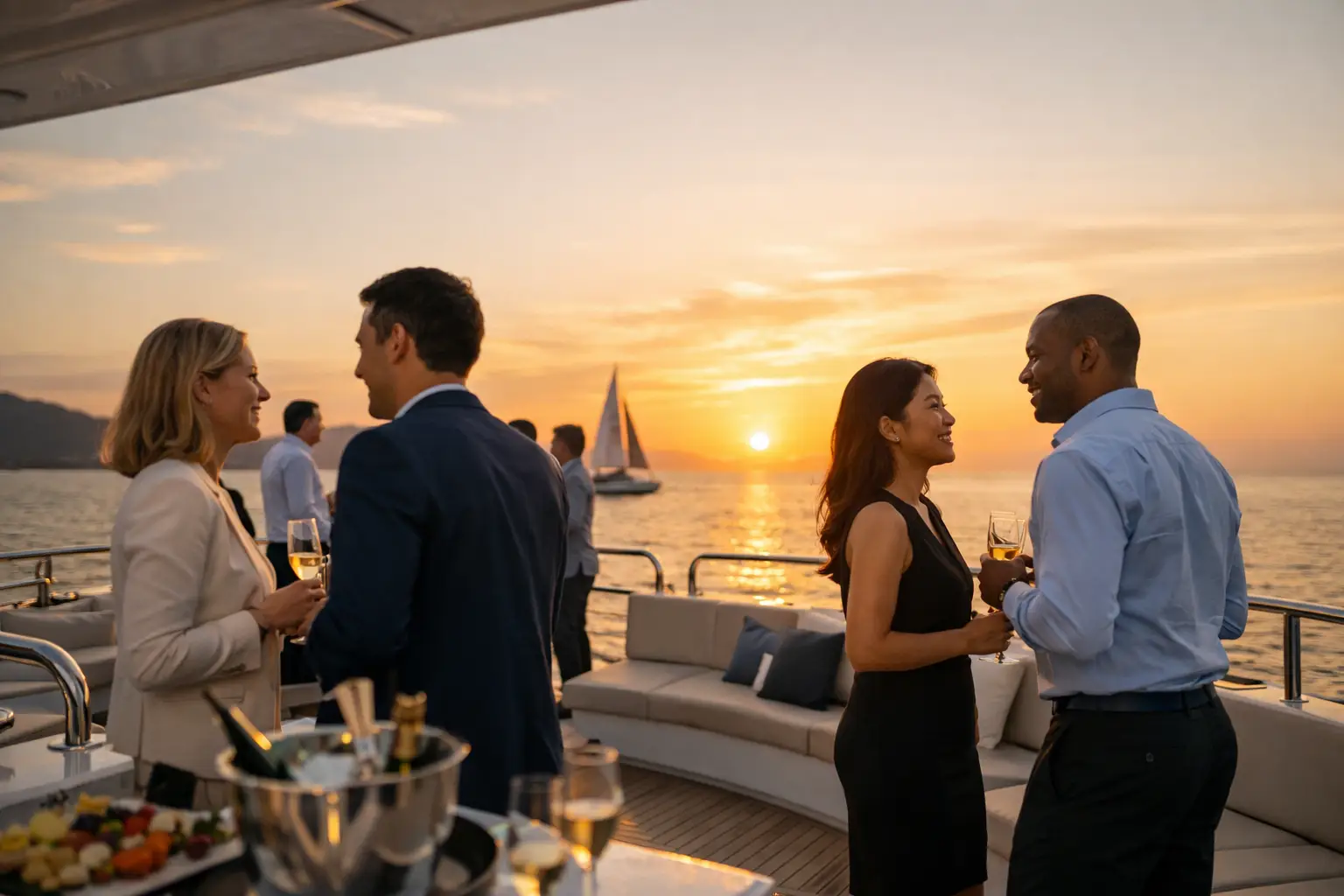
A sunset charter works especially well when the goal is relationship-building. The changing light creates a natural arc to the evening: arrival and welcome drinks while the harbor is bright, relaxed conversation through golden hour, then a more celebratory atmosphere after dark.
Set the Guest Count and Event Format Early
Guest count is not just a capacity question. It determines how the event feels onboard. A group of 25 can be hosted as a close, lounge-style client dinner with plenty of space to move. A group of 70 may need a more social format built around circulating food, music, and multiple areas for guests to gather. For larger functions, connected vessels can create one floating event venue while keeping the experience open and comfortable.
Ask yourself whether everyone needs to be together for one key moment. If the CEO is giving a welcome, a product is being revealed, or awards are being presented, plan the layout around sightlines and sound. If the goal is relaxed networking, prioritize open entertaining space, easy access to food and drinks, and enough seating for guests who prefer a quieter conversation.
Avoid treating the boat as a standard event room. The best onboard formats use the movement of the water and the open deck to their advantage. Keep formal programming short, then let the setting do the work.
Choose the right duration
For most corporate sunset events, three to four hours is the sweet spot. It gives guests time to arrive, settle in, enjoy the sunset, and stay for the evening atmosphere without making the commitment feel too long on a work night.
A shorter charter can work for a focused client reception, particularly when paired with a clear arrival window and a concise host welcome. A longer event makes more sense for an annual celebration, an end-of-quarter party, or a group that wants to include a fuller dinner and entertainment. The trade-off is energy: longer does not automatically mean better. A well-paced four-hour charter often lands more strongly than a program that runs out of momentum.
Build the Timing Around Sunset, Not Around Guesswork
Sunset is the centerpiece, so confirm the seasonal sunset time before issuing invitations. Guests should be onboard well before the best light begins, not still arriving at the pier while the sky is changing color. Build in a comfortable boarding period, then plan to be in the right part of the harbor as golden hour approaches.
For a polished corporate flow, invite guests to arrive 20 to 30 minutes before departure. That buffer allows for check-in, a welcome drink, name badges if needed, and a relaxed start rather than a last-minute rush. It also gives hosts time to greet priority clients before the vessel departs.
If you are planning remarks, schedule them before sunset or shortly afterward. During golden hour, guests want to be outside, taking in the view and capturing the moment. A five-minute welcome is enough. Save longer speeches for a land-based setting, or replace them with a concise toast and a clear message from leadership.
Make Hospitality Feel Effortless
Corporate guests notice the details that remove friction. They should not have to wonder where to go, when food is being served, or who to ask for help. A strong charter plan has a clear guest journey: warm welcome, easy access to refreshments, food that arrives at the right pace, and a crew that keeps the event moving without making it feel overly managed.
Catering should match the format. Canapés and substantial sharing-style dishes are often ideal for a networking-led sunset cruise because guests can keep moving and talking. A more formal seated meal may suit a smaller executive group, but it changes the social rhythm and requires more dedicated space. If your objective is mingling, do not force guests into their seats too early.
Plan for dietary requirements when invitations go out, not the day before. Vegetarian, vegan, halal, allergy-conscious, and non-alcoholic options should feel considered rather than like an afterthought. This is one of the simplest ways to make premium hospitality feel genuinely inclusive.
Keep the beverage plan professional and generous
A well-curated beverage service can set a celebratory tone without overwhelming the corporate purpose. Offer quality wine, beer, cocktails, sparkling options, and thoughtful non-alcoholic choices. The goal is choice, not excess.
For client-facing events, consider a hosted welcome drink followed by a refined beverage package. For internal celebrations, a broader all-inclusive format may fit the group better. In either case, make water and non-alcoholic drinks highly visible, and ensure the crew has a clear plan for responsible service throughout the event.
Create an Atmosphere That Still Feels Like Your Company
A corporate sunset charter should feel elevated, but it does not need to look like a trade-show booth on water. Use branding with restraint. A welcome sign at boarding, a subtle color palette in menus or napkins, a branded photo moment, or a short screen message can be more effective than covering every surface with logos.
Music matters just as much. Start with a polished, social playlist that allows conversation. As daylight fades, the sound can become more upbeat if the group is there to celebrate. The key is reading the purpose and audience. Senior client entertainment may call for sophisticated background music. A young professional team event can carry more energy later in the evening.
Think about photography early. The best images happen around sunset, with the open deck, the harbor backdrop, and groups naturally enjoying themselves. Tell guests if a photographer will be present, and schedule one quick group photo before people spread out. This gives the company useful event content without turning the night into a staged shoot.
Have a Real Weather and Comfort Plan
The harbor setting is part of the appeal, but outdoor events always require contingency thinking. Ask about covered areas, rain procedures, wind conditions, and what happens if the forecast changes. A premium charter operator should be able to explain the options clearly and recommend a format that remains enjoyable in less-than-perfect conditions.
Comfort also comes down to small decisions. Encourage smart-casual attire and footwear that is comfortable on deck. Let guests know the boarding location, boarding time, and expected return time in advance. If the group includes overseas visitors or senior leaders, assign an event contact who can answer logistics questions before the day.
For a large group, appoint a few internal hosts rather than placing every responsibility on one organizer. They can welcome VIPs, keep an eye on timing, coordinate any speeches, and make sure guests are not left standing alone. The crew runs the vessel and service; your hosts protect the relationships.
The Final Checklist for a Corporate Sunset Charter
About one week out, confirm the final headcount, dietary needs, guest list, event timeline, and any branding or entertainment requirements. Two days before, send a concise guest note with the boarding point, arrival time, dress guidance, and a contact number. On the day, arrive early enough to walk through the layout, test any presentation equipment, and brief your internal hosts.
True Blue Fleet is built for this kind of occasion: spacious Australian-built vessels, lounge-style open decks, premium onboard hospitality, and the scale to host everything from intimate client evenings to large connected-vessel events. The difference is not simply being on the water. It is giving your guests a setting where business relationships can feel more personal, more relaxed, and far more memorable.
When the last guests step ashore, the measure of a great charter is not whether every minute followed a rigid schedule. It is whether the right people had the right conversations while the sun went down – and whether they are still talking about the evening when they are back at work.