
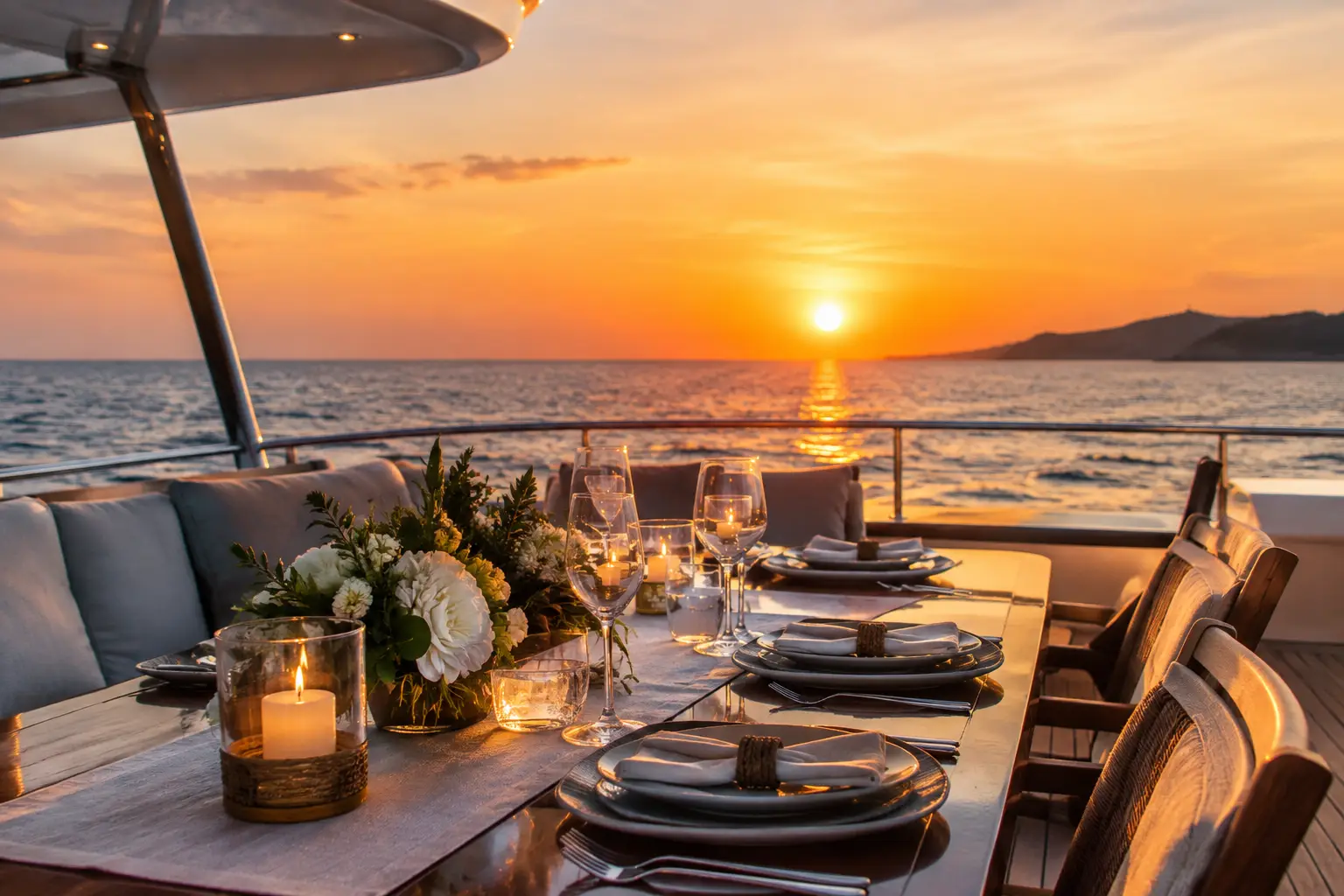
The best sunset dinners do not begin when the sun touches the skyline. They begin when guests step aboard and immediately feel that the night has been considered from every angle. Knowing how to host a sunset boat dinner means designing more than a meal: you are creating a moving, open-deck occasion where the view, food, music, and company all peak at the right moment.
For a birthday, client function, engagement celebration, or an elevated night with your closest people, the goal is simple: make the experience feel effortless for your guests while every detail works hard behind the scenes.
How to Host a Sunset Boat Dinner With the Right Run of Show
Sunset is the headline, but it is also a deadline. Build your charter timing around it rather than treating it as a backdrop that will simply happen. Guests need time to arrive, settle in with a welcome drink, take in the water, and reconnect before the light changes. If everyone boards five minutes before sunset, the first half-hour can feel rushed instead of relaxed.
A strong format is to welcome guests aboard well before golden hour, then cruise into the best viewing stretch as the sky starts to soften. Serve lighter bites and drinks while people mingle and take photos. Move into the main dinner once the most dramatic light has passed and the harbor has shifted into its evening mood. That rhythm gives the evening shape without making it feel programmed.
Departure time depends on the season, your pickup location, and the route. Confirm the actual sunset time close to your event date, then work backward with your charter team. Allow extra time for guests who may be arriving from offices, particularly for a weekday corporate dinner. A later boarding time may suit the calendar, but an early enough start is what makes the sunset part feel intentional.
Start With the Guest Experience, Not Just the Guest Count
A dinner for 18 has a different energy from a celebration for 60, even when the menu looks similar. Before choosing a vessel or deciding on styling, consider how you want people to interact. Is this an intimate seated dinner where conversation is the center of the night? A social, lounge-style event with food stations and guests moving between the deck, bar, and seating areas? Or a polished corporate evening where clients need space to circulate naturally?
A large open deck gives a group breathing room, but space should still have a purpose. Create a clear welcome point, a sociable area near the bar, comfortable lounge seating for quieter conversations, and a distinct dining zone. On a well-planned boat dinner, guests should never need to ask where they should stand, eat, or place a drink. The layout quietly guides them.
For bigger groups, a formal sit-down dinner can make the deck feel overly fixed and split guests into separate tables. Shared platters, chef-attended stations, or a premium buffet-style service often keep the atmosphere more connected. For a smaller group, a plated dinner may be exactly right. The best choice depends on whether the night should feel like a private dining room on the water or a lively floating lounge with dinner at its core.
Choose Food That Looks Good and Travels Well
Boat dining rewards smart menu choices. The most impressive dish is not always the most complicated one. A menu should be fresh, generous, and easy to enjoy while guests are standing, talking, or moving between spaces. It should also hold its quality through the timing of the cruise.
Start with substantial canapes or shared starters that arrive early, before hunger competes with the sunset. Then bring out a main meal with enough range to suit the group, including clear vegetarian and dietary options arranged in advance. Finish with desserts that feel celebratory but do not require guests to sit down with a fork at exactly the same time.
A thoughtful beverage plan matters just as much. A welcome serve creates an immediate sense of occasion, while a considered range of wine, beer, spirits, soft drinks, and nonalcoholic options lets every guest feel included. Keep water readily available, especially in warm weather, and make service visible without turning the evening into a queue at the bar.
If you are hosting colleagues or clients, err toward an abundant, polished menu rather than novelty. For a birthday or social celebration, you can lean more expressive with a signature cocktail, a dessert moment, or a cake presentation timed after dinner. The point is not to add every possible extra. It is to choose a few details that feel personal.
Use Music to Build the Atmosphere
The soundtrack should follow the night. Start with warm, conversational music during boarding, then lift the energy as the sky deepens and dinner winds down. A premium sound system can transform the deck, but volume control is what makes it work. Guests should be able to speak comfortably over dinner before the music becomes more upbeat later on.
Prepare a playlist that lasts longer than the charter, or appoint one person who understands the mood you want. Avoid handing the music over to a different guest every 20 minutes. That is how an elegant atmosphere becomes disjointed.
Lighting deserves the same attention. Sunset supplies the first layer, but it fades quickly. Soft onboard lighting, candle-style table lights where appropriate, and a defined spot for speeches or cake will keep the space flattering after dark. The skyline becomes more dramatic at night, so make sure your event still feels visually strong once the daylight is gone.
Plan the Moments Guests Will Remember
The details people retell are rarely the logistical ones. They remember the first view as the boat pulls away, the group photo when the sky is at its best, a surprise toast, and the point when the city lights come on around them.
Choose one or two anchor moments and protect them in the schedule. A toast during golden hour is a classic for a reason, but it needs to be short and well-timed. Let guests have their phones ready, gather everyone naturally, and keep the message meaningful. For corporate hosts, this is an effective window for a brief welcome or recognition moment before dinner begins.
If you are celebrating a milestone, bring out the cake after the main course, when guests have settled into the evening and the deck has a more intimate glow. If your group is highly social, reserve some open time after dinner for guests to move around, enjoy the music, and take photos. Do not overfill the itinerary. A boat dinner needs room to breathe.
Work With a Charter Team That Understands Events
A sunset boat dinner is only as calm as the planning behind it. A professional crew handles the operational side, but an experienced event team also helps you make the right calls on boarding flow, weather planning, catering timing, décor, music, and guest comfort.
Ask practical questions before confirming your charter. How is the deck arranged for your group size? Where will food be served? What happens if weather conditions change? Are dietary requirements collected in advance? Is there a clear plan for speeches, a cake, or branded corporate touches? These are not minor details. They determine whether the event feels composed or improvised.
For larger functions, the ability to connect vessels can create a completely different experience. Separate areas for dining, drinks, and entertainment allow a big group to stay together without feeling packed in. In Hong Kong, True Blue Fleet’s Australian-built boats are designed around that open, lounge-style social flow, making them especially suited to groups that want more than a conventional dinner venue.
Give Your Guests a Clear Brief Before Boarding
A polished host makes arrival easy. Send guests the pickup location, boarding time, dress guidance, and a note about bringing a light layer for the evening breeze. Encourage punctuality without making the message stiff. The boat cannot hold sunset for late arrivals.
Keep the tone simple: arrive ready for a great night on the water, wear footwear suited to a boat deck, and let the host know about dietary needs ahead of time. If the event has a dress code, make it specific. “Smart summer evening” gives guests a better picture than “dress nicely.”
The final touch is your own presence. Once guests arrive, do not spend the night managing details that a good crew can handle. Welcome people, introduce groups who have not met, and set the energy. When the host is relaxed, everyone else follows. That is how a sunset dinner becomes the kind of night guests talk about long after the harbor lights fade.