
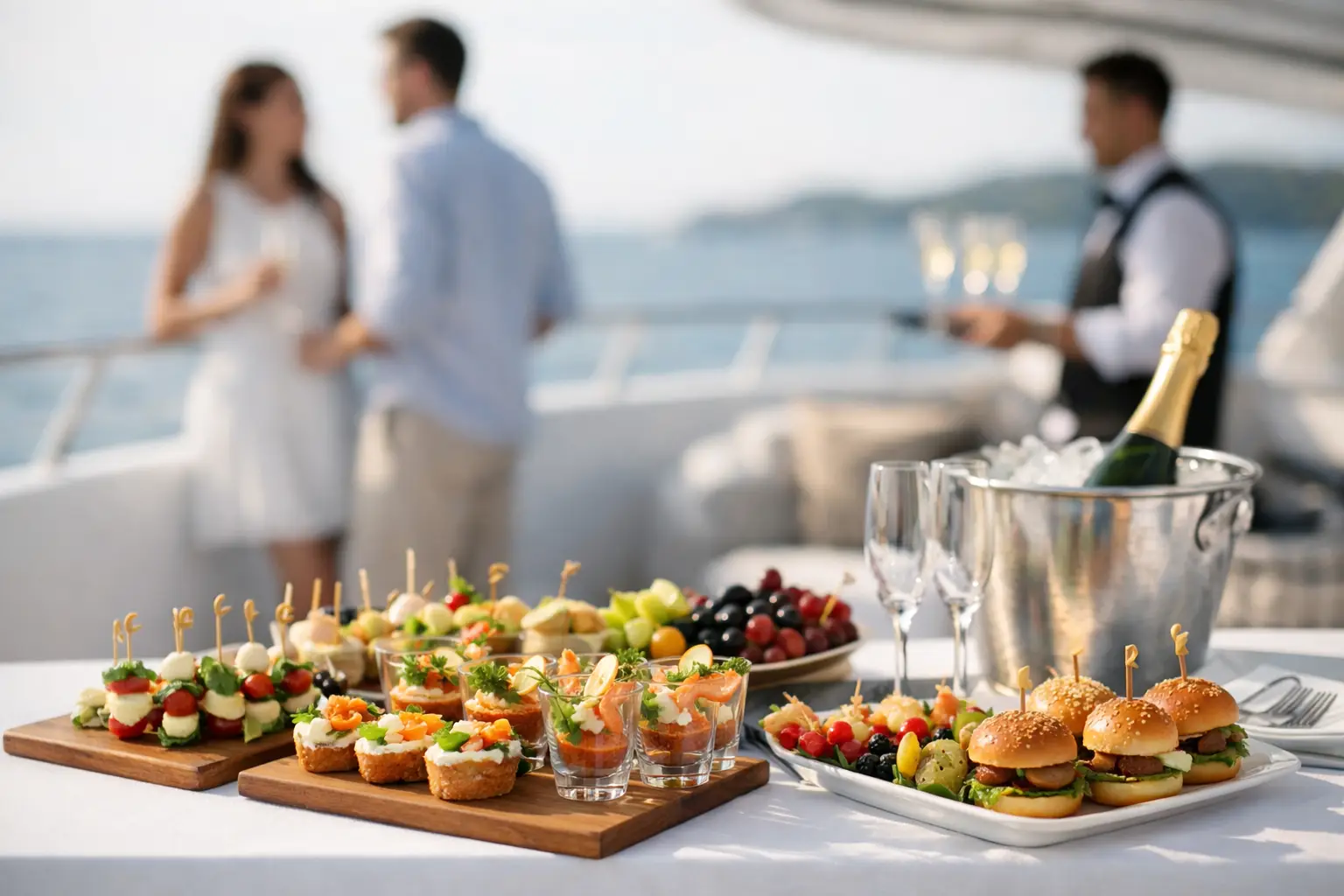
A great boat event is remembered in snapshots: friends gathered around a sunlit spread, a perfectly timed tray arriving as the skyline turns gold, and food that still looks as good at the end of the cruise as it did when it first came aboard. The best catering ideas for boat events are not about bringing a restaurant menu onto a vessel. They are about creating food moments that suit the movement, pace, weather, and social energy of the day.
For a birthday, corporate function, sunset charter, or raft-up celebration, the menu should feel generous without making the deck feel crowded. It needs to be easy to enjoy while standing, talking, dancing, or moving between the lounge areas and swim platform. Most of all, it should match the standard of the occasion.
Start With the Event, Not the Menu
The smartest catering decision begins with one question: what should the event feel like? A polished client-hosting afternoon calls for a different approach than a high-energy birthday charter. A daytime swim event needs lighter, cooler food, while an evening harbor gathering can carry more substantial flavors and a more refined presentation.
Guest count matters just as much. Smaller groups can enjoy more plated touches and made-to-order details. For larger events, a premium grazing-style format and tray-passed bites keep service moving while allowing guests to stay part of the action. On a spacious open-deck vessel, the goal is to create natural gathering points around food without turning the deck into a buffet line.
Timing is another deciding factor. If guests board hungry, have satisfying food ready early. If the charter begins midafternoon and runs through sunset, build the menu in stages: welcome bites first, a more substantial spread during the middle of the event, then a small sweet finish as the lights of the harbor take over.
Best Catering Ideas for Boat Events, Designed for the Water
The most successful menus share three qualities: they are easy to hold, full of color and texture, and satisfying without being overly heavy. Here are the formats that consistently work for premium on-water entertaining.
Elevated share plates create instant atmosphere
Share plates make people gather. Think chilled prawns, tuna tartare cups, freshly prepared sliders, skewers, crispy bites, and vibrant salads served in portions that are simple to pick up. This format feels social from the first moment guests arrive, especially when tables are styled with abundance rather than formality.
The advantage is flexibility. Guests can graze at their own pace, and hosts are not asking everyone to stop talking and take a seat at the same time. For celebrations where the music, views, and conversation are central, that freedom matters.
Keep the selection balanced. Rich items such as sliders or slow-cooked meat work best alongside bright, refreshing choices like citrus-forward seafood, fruit, herbs, and crisp vegetables. Hong Kong heat and sea air can make an overly heavy menu feel like hard work by midafternoon.
Canapés are ideal for corporate hosting and sunset events
For a client event, networking charter, or cocktail-style evening, tray-passed canapés bring a more polished rhythm to the experience. Guests receive thoughtful food throughout the cruise without needing to step away from a conversation or queue at a serving station.
Choose bites that hold their shape and can be eaten in one or two mouthfuls. Mini crab cakes, beef skewers, smoked salmon blinis, chicken satay, and vegetarian tartlets all feel considered while remaining practical on deck. Avoid dishes that require cutting, balancing a bowl in one hand, or chasing sauce across a plate.
Canapés also allow the menu to evolve as the event progresses. Start fresh and light, then introduce warmer, more substantial bites later in the charter. It is a subtle way to make the hospitality feel tailored rather than static.
A premium grazing table makes the strongest visual statement
A well-built grazing table does more than feed a group. It becomes part of the event design. Layered cheeses, charcuterie, artisan breads, seasonal fruit, dips, nuts, and colorful antipasti create a centerpiece that immediately sets the tone for a lounge-style celebration.
This format is especially effective for birthdays, engagement celebrations, and large private events because it gives guests something to enjoy the moment they step aboard. It also photographs beautifully against open decks, ocean views, and a sunset backdrop.
There is a trade-off: grazing tables need thoughtful placement and regular attention in warm weather. They should be set up away from the busiest traffic areas, protected from direct sun where possible, and refreshed in sensible portions rather than displayed all at once for a long afternoon. Premium presentation depends on food looking fresh from boarding through to the final toast.
Build a lunch that does not slow down the party
For day charters, the best main meal is substantial enough to keep guests energized but easy enough to enjoy without a formal sit-down service. Mini burgers, grilled skewers, wraps, bao buns, gourmet sandwiches, and hearty salads are all strong choices when prepared with quality ingredients and served at the right time.
A build-your-own format can work for casual groups, but it needs disciplined execution. Too many components create queues and clutter. A curated station with two proteins, a vegetarian option, and a few high-quality sides delivers more than an oversized spread with endless choices.
If swimming is part of the day, serve the main meal before or after the longest water session rather than during it. Guests are more likely to enjoy food when they are dry, settled, and ready to relax on deck again.
Do Not Treat Dietary Needs as an Afterthought
A premium menu makes every guest feel included. Collect dietary requirements before the event, then build alternatives into the core spread rather than presenting one isolated plate at the end. Vegetarian, vegan, gluten-free, and allergy-aware dishes can be just as vibrant and indulgent as the rest of the menu.
The key is clear planning. Labeling can help on larger charters, particularly when guests are serving themselves. For serious allergies, the catering and crew teams need precise information in advance so preparation and handling are properly coordinated.
It is also worth thinking beyond dietary restrictions. Not every guest wants seafood, spice, or rich meat dishes, and corporate groups often include a wider mix of preferences than a private birthday party. Variety is not about adding more food for the sake of it. It is about offering a smart range that lets every guest find something excellent.
Match the Food Service to the Boat Layout
The vessel itself should shape the catering plan. On a lounge-style entertainment boat, food works best when it supports movement and connection. Small service points around the deck can feel more relaxed than one large table, while passed trays bring food directly into the social flow.
Avoid fragile glassware, unstable towers of food, or dishes that need constant precision handling. The water is part of the setting, and a good caterer designs around it. Secure serving pieces, compact portions, and a crew that understands onboard timing will always outperform an elaborate land-based concept that has been forced onto a boat.
For larger groups, connected vessels can create distinct zones: one area for welcome drinks and canapés, one for a main food spread, and one for music and dancing. That separation keeps the experience elevated and gives guests room to enjoy every part of the event without congestion.
Finish With Something Worth Waiting For
Dessert should feel like a reward, not an interruption. Individual sweets are usually the best choice onboard: mini cheesecakes, chocolate tartlets, fruit skewers, macarons, or bite-size local-inspired treats. They are easy to pass around, easy to photograph, and do not require guests to put their evening on pause.
For birthdays, a celebration cake can still have its moment, but plan the timing. Bring it out when the group is gathered, the light is right, and the music can drop for a proper toast. That small piece of production turns a cake into a highlight.
The right catering does not compete with the harbor, the music, or the people you brought together. It gives the day its rhythm, makes every guest feel looked after, and turns a great charter into the kind of event people keep talking about long after they step back onto shore.