
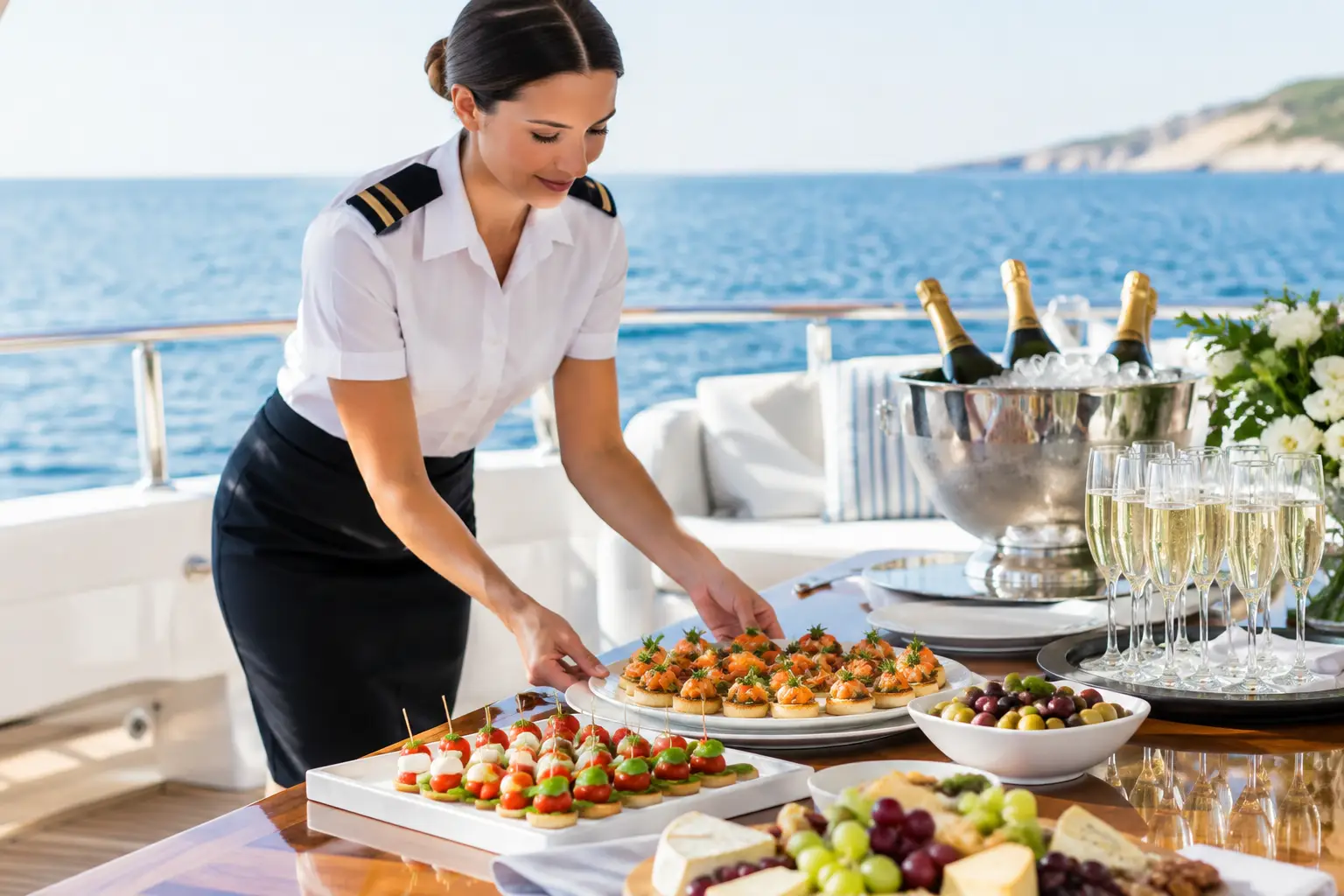
A packed deck at sunset is not the moment to discover there are too few vegetarian options, nowhere to set down a plate, or a menu that requires more cutlery than guests can comfortably manage. Knowing how to arrange onboard catering means planning food around the rhythm of the event, the space on board, and the experience you want guests to remember.
For a birthday on the water, a client event, or a large social celebration, catering should feel like part of the atmosphere rather than a pause in it. The best onboard menus are generous, beautifully presented, easy to enjoy while mingling, and timed around the moments that matter most.
Start With the Event, Not the Menu
Before choosing dishes, define the shape of your charter. A daytime swim-focused outing needs a different food plan than an evening harbor event, where guests arrive dressed for cocktails and conversation. The guest count matters, but so does the purpose of the gathering.
Ask what you want people to do during the event. If the priority is swimming, music, and movement between the lounge areas and swim platform, lighter shareable food works best. For a corporate function, substantial canapés or a structured buffet may better support networking and make the occasion feel more hosted. A milestone celebration may call for a stronger centerpiece moment, such as a styled cake presentation or a plated feature served at sunset.
Also consider the charter duration. On a shorter evening cruise, guests generally expect polished bites and a focused food service. On a longer day charter, catering needs to sustain the group across several hours, often with lunch followed by lighter grazing options later on.
Confirm Guest Numbers Before Finalizing Portions
A final headcount is the foundation of good catering. It affects not only how much food is prepared, but also the menu format, service setup, and amount of deck space needed for the spread.
Build in a clear RSVP deadline and ask guests to declare dietary requirements at the same time. Last-minute additions happen, especially for corporate groups and larger celebrations, so it is sensible to allow a modest buffer where possible. That does not mean ordering indiscriminately. It means making sure the menu has enough range that every guest can eat well.
For mixed groups, aim for clear variety across proteins, seafood, vegetarian dishes, and lighter options. Guests should never have to hunt through every platter to work out what they can eat. Labeling dishes clearly is a small detail that makes the event feel considered and professionally run.
Choose Food That Works on an Open Deck
The most impressive restaurant menu is not always the right menu for a yacht event. Onboard catering needs to account for wind, warmth, movement, limited table space, and guests who are socializing rather than sitting through a formal meal.
Handheld dishes, bite-size canapés, skewers, sliders, fresh wraps, composed salads, and easy-to-serve Asian-inspired sharing platters tend to work especially well. They are satisfying without being cumbersome, and guests can continue talking, taking photos, or moving around the deck without managing a full place setting.
Avoid food that is overly saucy, fragile, or difficult to eat standing up. A dish may look spectacular when it leaves a kitchen, but it needs to hold its quality through transport, setup, and service on the water. Delicate items can still have a place, particularly for a more formal occasion, but they should be chosen with the conditions in mind.
Temperature is another practical consideration. Cold dishes need proper chilling, while hot food should be served in a way that preserves both quality and food safety. A capable charter operator and catering team will plan the holding, plating, and serving process in advance rather than treating the boat as an ordinary venue.
Buffet, Passed Service, or Shared Platters?
The right format depends on your group and the energy you want to create. A buffet gives guests freedom to serve themselves and can work well for a relaxed daytime charter. It is especially effective when the vessel has a dedicated space where the setup will not interrupt the flow of the deck.
Passed canapés feel more elevated and work beautifully for client entertaining, cocktail-style events, and sunset cruises. This format keeps guests engaged in the social atmosphere while professional crew circulate with food at the right pace.
Shared platters sit between the two. They create a generous, communal feel and suit groups who want a relaxed but premium lunch or early dinner. The trade-off is that platters require enough table and lounge space for guests to reach them comfortably. On a large open-deck vessel, that can be part of the experience. On a more compact layout, individual bites may be the smarter choice.
Plan Dietary Requirements Early
Dietary needs are not an afterthought. They are a core part of hosting well. Gather information on vegetarian, vegan, gluten-free, halal, allergy-sensitive, and other requirements when invitations go out, then share a confirmed list with your charter provider before the event.
Be specific about serious allergies and potential cross-contact concerns. A general note saying “some guests have allergies” is not enough for a catering team to plan safely. Clear information allows dishes to be separated, labeled, and served with the right care.
There is also a hospitality advantage to planning this well. When every guest has appealing choices, rather than a single backup plate, the whole event feels more inclusive. Premium catering is not only about abundant presentation. It is about making every person feel expected.
Time Food Service Around the Best Moments
Food should support the event schedule, not compete with it. If guests board hungry after work, begin with passed bites soon after departure. If the day includes swimming or water activities, serve the main meal before guests get fully immersed in the action, then bring out lighter snacks afterward.
For sunset events, think about the visual rhythm. A welcome drink and canapés on boarding set the tone. A more substantial food service can follow once everyone has settled in, leaving the golden-hour window open for conversation, photos, and the harbor view. Dessert or a celebration cake can then create a second high point later in the charter.
Do not serve everything at once unless the event is intentionally casual. Staging the menu keeps the experience fresh and avoids a crowded catering table that feels picked over halfway through the cruise. It also gives your guests natural moments to gather without making the schedule feel rigid.
Match Drinks and Food Without Overcomplicating It
A good pairing plan is about balance, not formality. Fresh, lighter dishes suit a daytime charter, while richer skewers, sliders, and warm canapés can carry an evening gathering. Make sure there are quality nonalcoholic choices as well, particularly for daytime events and guests who prefer a lighter pace.
The key is to avoid a menu that feels disconnected. If the food is refined but the drink service is minimal, or if the menu is heavy during a hot afternoon on deck, guests will notice. Your charter provider can help shape a package where food, drinks, crew service, and the event timeline work together.
Work With a Team That Understands Onboard Service
Catering on land can absorb small planning mistakes. On a yacht, timing and space are less forgiving. The crew needs to know when food arrives, where it will be set, how dishes will be replenished, and how the deck will stay clean and comfortable throughout the event.
This is where an all-inclusive charter format can remove a great deal of pressure from the host. Rather than coordinating outside deliveries, equipment, setup, drinks, staffing, and cleanup separately, you have one team overseeing the full guest experience. For larger occasions, that level of coordination protects the atmosphere you worked to create.
True Blue Fleet designs its open-deck charters around social events, with catering and crew service planned to suit the vessel, group size, and occasion. That matters when you want guests to experience a polished floating venue, not a gathering where logistics are visible at every turn.
Final Details That Make Catering Feel Effortless
A few decisions can make a major difference on the day. Confirm the final menu, guest count, dietary list, service times, cake requirements, and any branded or themed presentation details at least several days before departure. If you are bringing décor, party favors, or signage, check where these will sit so they do not interfere with food service or guest movement.
Think about the end of the event, too. A late sweet bite, fruit platter, or take-home favor can be a thoughtful finishing touch for longer charters. It is not necessary for every group, but it can be a smart addition when the occasion calls for an extra layer of hospitality.
The strongest onboard catering plans leave room for the unexpected while making guests feel that every detail was intentional. Give your food the same attention as your guest list and playlist, and it will help turn a great charter into the kind of occasion people keep talking about long after they step back onto shore.