
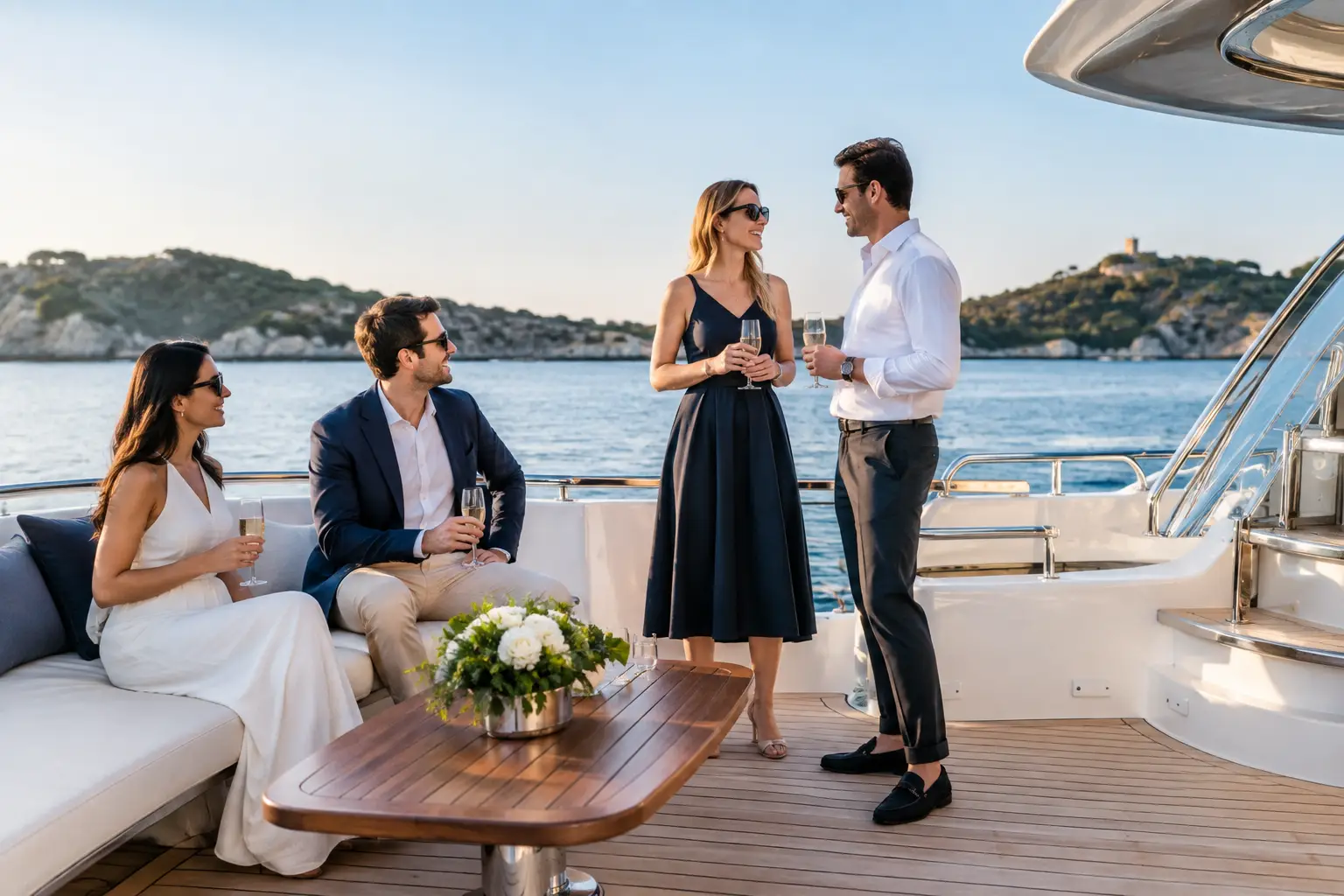
A guest count is not just a number on an invitation. Yacht capacity limits determine whether your event feels like an elevated afternoon on the water or a crowded gathering where people spend more time finding space than enjoying the view. For birthdays, client entertaining, team events, and major celebrations, choosing the right capacity is one of the first decisions that shapes every moment onboard.
The best charter is not necessarily the vessel with the highest number printed beside its name. It is the one that gives your group room to move, mingle, eat, relax, dance, and enjoy the water comfortably – with the crew able to deliver the level of hospitality your occasion deserves.
What Yacht Capacity Limits Actually Mean
Every charter vessel has a maximum passenger capacity. This is the legal number of guests and crew permitted onboard under its operating requirements. It is a hard limit, not a planning suggestion, and it exists to protect everyone onboard.
But there is another number that matters just as much when planning a private event: the comfortable event capacity. This is the guest count at which the layout, seating, catering service, and social atmosphere still feel generous. A boat may be permitted to carry a certain number of people, yet feel best for a slightly smaller group when the plan includes a catered meal, a full drinks setup, a DJ, presentations, or plenty of space for guests to gather in one place.
Think of legal capacity as the ceiling. Think of event capacity as the sweet spot. For premium entertaining, the sweet spot is usually where the magic happens.
Capacity Changes the Entire Onboard Experience
A vessel designed for a dozen guests creates a very different event from one designed for 40, 70, or 100. The difference is not only square footage. It affects the energy of the day and how naturally people connect.
For smaller groups, a more intimate setup can feel exclusive and relaxed. Guests can settle into lounge seating, enjoy conversations without competing for attention, and make full use of the swim platform or shaded areas. This format works especially well for close-knit birthday groups, leadership outings, and client events where personal service is central to the experience.
Mid-sized groups bring a livelier social dynamic. The right open-deck layout lets guests circulate easily between food, drinks, shaded lounges, and the music area without splitting into disconnected pockets. This is often the ideal range for teams, larger birthday celebrations, and social groups that want energy without losing comfort.
Large-scale events need more than a larger headcount allowance. They need a venue mindset. Arrival flow, storage for personal belongings, food service timing, restroom access, music levels, seating zones, and crew coordination all become more important as the group grows. A large event can feel spectacular when it has the right space and an organized format. Without that planning, even a beautiful vessel can feel unnecessarily tight.
The Guest Count Is Only One Part of the Equation
When someone asks, “How many people can the yacht hold?” the better question is, “What do you want those people to do once they are onboard?”
A sunset cocktail event has different space needs from a daytime swim charter. A seated dinner requires more room than passed canapés. A corporate presentation needs a clear focal point and reliable sightlines, while a birthday with music and dancing benefits from keeping the main deck open. If your group includes a mix of colleagues, clients, and partners, you may also want quieter lounge areas where conversations can happen away from the center of the action.
Your itinerary matters too. A harbor cruise can accommodate a different rhythm from a day built around anchoring, swimming, and inflatables. On a swim-focused charter, guests need easy pathways between the deck, towels, refreshment areas, and the water access point. The goal is to keep the atmosphere social and effortless, not to have everyone waiting their turn for space.
Catering is another deciding factor. A generous buffet, chef-prepared spread, or premium grazing setup adds to the occasion, but it also needs a logical service area. This is why a capacity recommendation should account for the event format, not simply the maximum passenger number.
How to Choose the Right Yacht Size
Start with a realistic guest list, then separate confirmed guests from the people who are simply being considered. It is tempting to book for the absolute maximum and hope the numbers work out. A better approach is to choose a vessel that suits your expected attendance, then understand how much flexibility is available before your final numbers are due.
Next, decide which experience matters most. If the priority is relaxed connection, generous lounge space should lead the decision. If it is an energetic celebration, look for a vessel with a broad, open entertaining deck and a layout that keeps the group together. If it is a corporate function, prioritize circulation, presentation space, catering flow, and a polished arrival experience.
It also helps to be honest about the group. A group of 35 close friends will use a boat differently from 35 guests meeting for the first time. The first group may naturally cluster around music and the swim platform. The second may need more defined zones that make networking easy and avoid awkward bottlenecks.
Leave Room for the Experience You Promised
For an occasion that feels premium, do not plan around bodies on deck. Plan around the moments you want guests to remember: the first drink as the skyline lights up, the group photo with everyone comfortably in frame, the catered spread that does not interrupt the party, and the easy movement between lounge areas and the dance floor.
A little capacity buffer can make a meaningful difference. It gives the crew room to serve, allows guests to spread out naturally, and keeps the boat looking as good in photos as it feels in person. This is particularly valuable for brand events and client hospitality, where every detail becomes part of the impression.
When One Yacht Is Not Enough
For large celebrations, trying to fit everyone onto one vessel is not always the strongest option. Multiple boats can create a far more dynamic private event venue, particularly when the vessels are designed to operate together in a raft-up format.
This approach gives a large group distinct areas for dining, lounging, music, and mingling while preserving the feeling of one shared occasion. It also creates visual impact that a standard charter setup cannot match. Rather than compromising on space, your event gains multiple decks, more room to host, and a bigger sense of arrival.
True Blue Fleet can connect its Australian-built vessels for private functions of up to 150 guests, creating a floating event environment built for social scale. It is an ideal option when the guest list has outgrown a single-deck celebration but the experience still needs to feel curated, polished, and personal.
That said, more vessels are not automatically the right answer. For a group that wants everyone together all day, one spacious boat may create a stronger atmosphere than a multi-vessel format. The right choice depends on the number of guests, the occasion, and whether your priority is intimacy, variety, or large-format impact.
Why Capacity Planning Supports Safety and Service
Capacity limits are often discussed as a safety requirement, and they are. Professional crew need clear access around the vessel, guest movement needs to remain manageable, and the onboard environment must be suitable for the conditions and itinerary.
Good capacity planning also protects the hospitality side of the event. It gives the crew enough room to welcome guests properly, serve food and beverages with care, manage timing, and keep shared spaces tidy throughout the charter. Guests may not notice those operational details directly, but they will notice the result: a celebration that feels calm, well looked after, and confidently hosted.
There is a trade-off worth considering. Booking a larger vessel than you need can sometimes make a small group feel dispersed. Booking too close to maximum capacity can limit the premium, lounge-style feeling that made the charter appealing in the first place. The right recommendation sits between those extremes.
Ask These Questions Before You Confirm
Before locking in a vessel, share your expected guest count, event type, preferred time of day, catering plans, and whether swimming, music, presentations, or formal speeches are part of the schedule. Ask about both the legal maximum and the recommended number for your specific format.
Also ask how the deck is likely to be arranged. Will there be room for a food service area? Where will guests gather for a speech? Is there a quieter space for conversation? How does the layout change if weather conditions require more guests under cover? Clear answers turn capacity from a vague number into a confident event plan.
The most memorable private charters never feel like a venue trying to hold everyone. They feel like the venue was chosen for that exact group. Build in enough room for your guests to move, connect, and celebrate at their own pace, and the water becomes more than a backdrop – it becomes the setting that makes the whole event feel exceptional.