A great event venue does more than hold a guest list. It changes how people arrive, connect, celebrate, and remember the occasion. That is why floating event venue trends are moving beyond the novelty of being on a boat. For corporate hosts, birthday organizers, and social groups, the water is becoming a setting for fully produced hospitality experiences – with atmosphere, comfort, food, music, and room to actually enjoy the people you invited.
The shift is clear: guests no longer want a basic venue with a view. They want a setting that feels distinct from the moment they step aboard, while still being easy for the host to organize. The strongest on-water events combine the energy of a private social club with the polish of a professionally hosted function.
Floating Event Venue Trends That Matter Most
Open layouts are replacing cramped boat formats
One of the biggest changes is a move away from boats designed around cabins, narrow walkways, and fixed seating. Event-ready vessels are being selected and configured around social flow. Guests need room to circulate, settle into conversation, gather around food and drinks, and enjoy the view without feeling separated from the action.
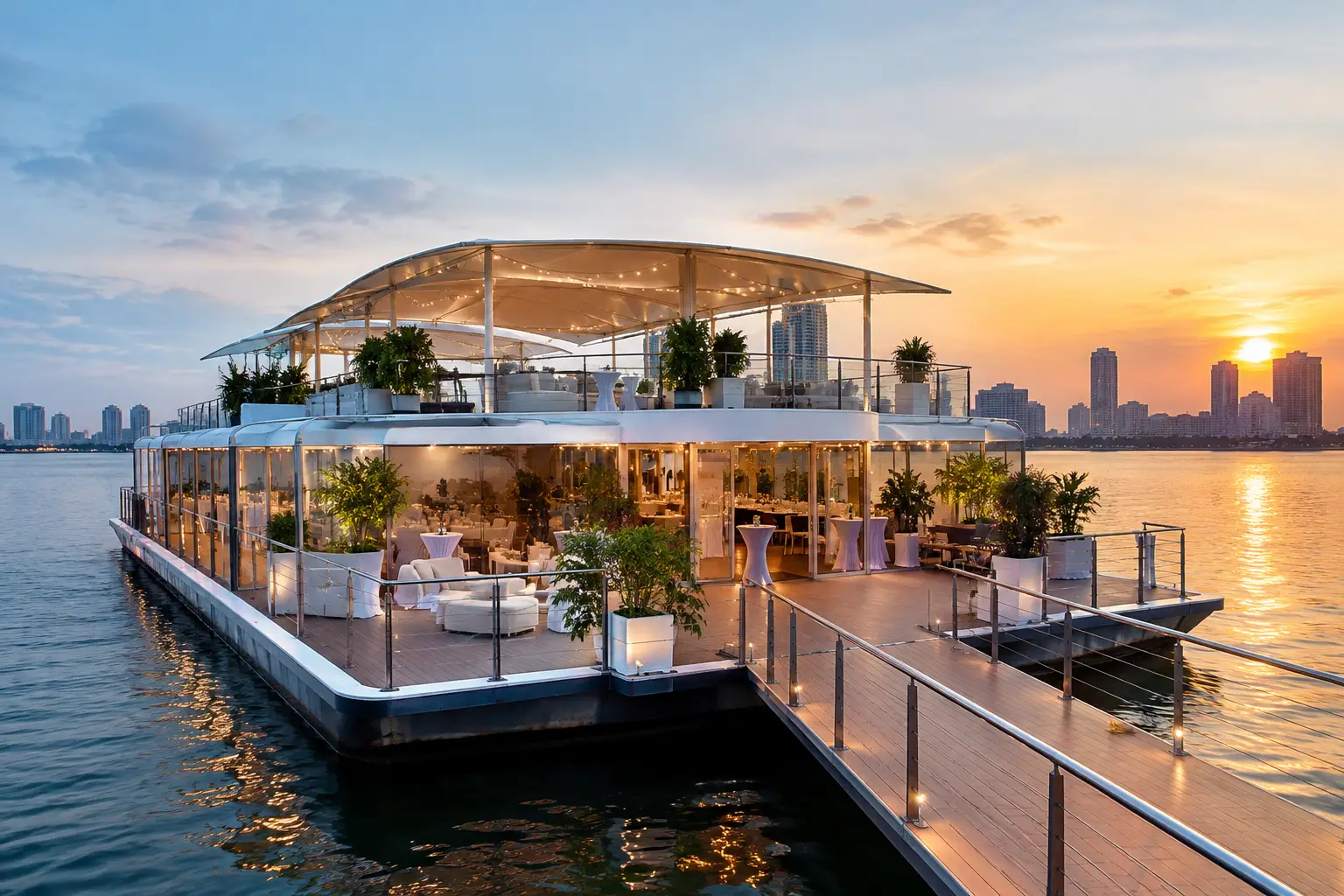
Open entertaining decks and lounge-style spaces create that flow naturally. They give a team event enough room for networking, a birthday group a place to dance and connect, and a client function an environment that feels polished without becoming stiff. The difference is especially noticeable with larger groups: space is not just a comfort feature, it shapes the entire mood of the event.
This is also why capacity should be considered carefully. A venue that technically fits a group may not give that group the premium experience it expects. The right charter is sized for the kind of gathering you are hosting, not simply the number of names on a guest list.
Hospitality is becoming part of the venue itself
The modern floating venue is not an empty boat waiting for an organizer to source every detail. Hosts increasingly want a complete experience, where catering, drinks, crew service, music, timing, and setup work together from the start.
That approach matters because the venue is moving. A successful event needs thoughtful pacing: a welcoming arrival, time for guests to settle in, food served at the right moment, a shift in energy as the sun goes down, and a comfortable finish that does not feel rushed. Professional crew and event teams make those transitions feel natural for guests, while the host stays present rather than managing logistics.
Freshly prepared onboard catering has become a major differentiator. It is not simply about filling plates. Quality food anchors the experience, adds to the sense of occasion, and gives corporate hosts confidence when entertaining clients or colleagues. Pair that with attentive service and a considered beverage offering, and the boat feels less like a rental and more like a private venue built around your group.
Corporate events are becoming more social by design
Corporate hospitality has changed. A formal dinner in a private room still has its place, particularly for presentations or highly structured agendas. But many companies now want events that produce genuine conversation and stronger connections, especially when teams are split across offices, functions, or cultures.
An on-water venue changes the default behavior. People step away from their desks, leave the predictable setting behind, and become more open to engaging with one another. A sunset departure, open deck, and harbor backdrop give the event immediate energy before a word is spoken.
The best format depends on the objective. A leadership group may prefer an early evening charter with refined hospitality and plenty of space for conversation. A team celebration can lean into music, social activities, and a more animated atmosphere. Client entertainment needs the balance right: memorable enough to stand out, but comfortable enough for real relationship-building.
Multi-vessel events are expanding what is possible
A single large boat is not always the best answer for a big group. One of the most exciting floating event venue trends is the ability to connect multiple vessels into one shared event space. This raft-up format gives organizers scale without losing the feeling of a private, intentional experience.
For large celebrations and corporate groups, connected boats can create distinct zones: a central social deck, a quieter lounge area, a food and beverage point, or a dedicated area for music and entertainment. Guests can move between spaces while remaining part of the same event. It feels expansive, visually impressive, and far more dynamic than a standard function room.
There are practical considerations. Weather conditions, group profile, timing, and operational planning all matter more at this scale. That is precisely why experienced event operators are essential. The goal is not to make an event bigger for the sake of it. It is to create enough space, service, and structure for every guest to feel included.
The Rise of the Floating Beach Club Feel
The demand for visual, social environments has shaped venue expectations across every category. On the water, that has translated into a more relaxed but elevated style: oversized swim platforms, comfortable lounge areas, premium sound, open decks, and a setting that looks as good in the moment as it does in the photos afterward.
This is not about turning every charter into a high-volume party. It is about creating an atmosphere with personality. A daytime celebration may center on sunshine, swimming where conditions and crew guidance allow, and a relaxed social pace. An evening charter may feel more dressed-up, with city lights, music, and a sharper hospitality focus.
The strongest events let the setting do some of the work. The harbor provides movement, changing light, and an ever-shifting backdrop. The vessel provides the private space. Together, they create a sense of escape without requiring guests to travel far from the city.
Why Turnkey Planning Wins
Convenience is now a luxury feature. Busy organizers do not want to chase separate caterers, entertainment providers, beverage suppliers, decorators, and transport plans, then hope each piece arrives on time. They want clear options, informed guidance, and a crew that understands how an event should run.
A turnkey charter package reduces the number of decisions without making the event feel generic. The best operators still allow room for the details that matter: guest count, event timing, food preferences, music style, brand moments, celebration touches, and the overall energy you want onboard.
That balance is key. Too much customization can create complexity and dilute the host’s vision. Too little can make the occasion feel off-the-shelf. The right partner brings a proven event format, then adapts it intelligently to the group.
For organizers in Hong Kong, True Blue Fleet reflects this direction with Australian-built vessels designed around open-deck entertaining, hospitality-led packages, and raft-up events for groups of up to 150 guests. It is a format built for people who want more than a boat booking – they want the event to feel considered from first boarding to final farewell.
How to Choose a Floating Venue for Your Group
Start with the feeling you want guests to take away. If the aim is sophisticated client hosting, prioritize comfort, service, quality catering, and room for conversation. If it is a milestone birthday or team celebration, look for social layouts, a strong sound setup, and spaces that keep the group together rather than divided between decks.
Then consider the event window. Daytime has a more relaxed, sunlit character and works beautifully for social celebrations. Sunset and evening departures bring a more dramatic mood and can suit corporate entertaining, cocktails, and special occasions. Neither is automatically better. The right choice depends on your audience, season, and event purpose.
Finally, ask what is included and who is managing the experience. The best floating venues are not defined by the vessel alone. They are defined by how confidently the crew, hospitality, and event planning come together around your guests.
The next standout event may not need a bigger ballroom or a more elaborate guest list. It may simply need a venue that gets people out of routine, gives them space to connect, and makes the occasion feel impossible to repeat anywhere else.