
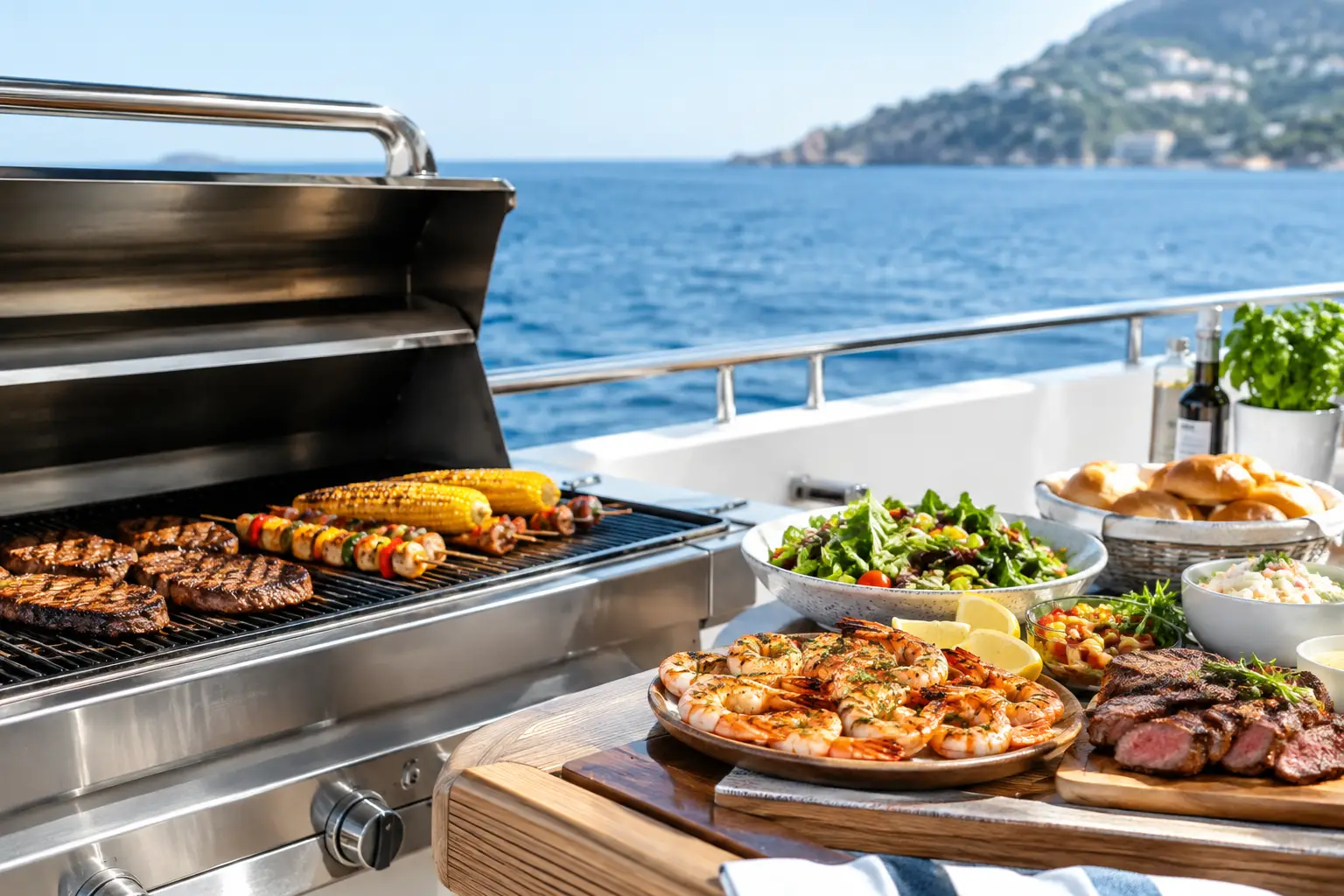
The best onboard barbecue menus do more than put great food on a plate. They keep guests moving between the lounge, the swim platform, the music, and the sunset without a long pause in the atmosphere. For a private yacht party, the goal is a menu that feels generous and elevated while still being easy to enjoy standing up, chatting, and taking in the view.
A barbecue belongs on an open deck because it brings energy to the event. The aroma signals that the day has properly started, and a live grill gives the occasion a social center without turning the meal into a formal sit-down affair. The strongest menus are built around that feeling: bold flavors, polished presentation, and food that holds up beautifully in a lively setting.
What Makes the Best Onboard Barbecue Menus Work
Land-based barbecue can be as messy, slow, and sauce-heavy as it likes. On the water, the details matter more. Guests may be in resort wear, moving around the vessel, or splitting their attention between the food and the action around them. That calls for dishes that are substantial but manageable, with a balance of familiar favorites and a few premium touches.
A winning menu usually has three layers. First, it needs dependable grill favorites that satisfy a mixed crowd. Second, it needs fresh sides that cut through the richness of the barbecue. Finally, it needs a clear vegetarian offering that feels intentionally chosen, not like an afterthought.
Portion timing matters just as much as the dishes themselves. Bringing everything out at once can make a beautiful spread feel static after 20 minutes. Staggering the service keeps the deck energized: light starters as the boat gets underway, barbecue at the peak of the gathering, then something cool and easy to finish.
Start With Food Guests Can Enjoy One-Handed
The first food of the day should encourage people to settle in, not make them hunt for a table. Small bites give guests something to enjoy while they greet the group, choose a lounge spot, and take those first photos on deck.
Think grilled chicken skewers with a bright herb marinade, mini sliders with a crisp slaw, or charred prawns served with a citrus dipping sauce. These are familiar enough to be instantly appealing but feel more considered than standard party snacks. For a more polished corporate function, bite-size beef skewers or sesame-glazed salmon portions add a premium note without slowing down service.
The practical rule is simple: avoid anything that requires a knife, a balancing act, or a full seated meal setup. A yacht event should feel effortless for guests. If a dish is delicious but awkward to eat while holding a drink or talking to colleagues, it is better suited to a dining room than an open entertaining deck.
Make the Grill the Main Event
The barbecue itself should offer contrast, not five versions of the same protein. A well-rounded spread might pair smoky beef with lighter chicken, seafood, and a plant-forward option. That gives guests genuine choice and makes the catering feel abundant without creating unnecessary excess.
For celebratory groups, grilled ribeye slices, honey chili chicken thighs, garlic prawns, and marinated vegetable skewers create a menu with broad appeal. For a slightly more refined harbor evening, consider miso-glazed salmon, herb-marinated lamb cutlets, and grilled halloumi with roasted peppers. The best choice depends on the crowd. A birthday group often wants recognizable, generous favorites, while a client event may benefit from a more composed, restaurant-style selection.
Sauces deserve attention here. Offer two or three distinct options, such as chimichurri, smoky barbecue sauce, and a fresh citrus chili sauce, rather than covering everything in one heavy glaze. Guests can choose their own flavor level, and the proteins stay visually appealing on the serving table.
Build Sides That Feel Fresh, Colorful, and Generous
A barbecue menu becomes memorable when the sides bring brightness and texture. Rich grilled meats need crisp salads, grilled vegetables, and satisfying starches that do not feel overly heavy in warm weather.
A citrusy green salad with shaved fennel, watermelon and feta, or a crunchy Asian-style slaw can bring welcome freshness to the plate. Roasted baby potatoes, grilled corn, and warm flatbreads provide the comfort factor. For groups with diverse preferences, a grain salad with herbs, roasted vegetables, and a light dressing is a smart addition because it works for guests avoiding meat while still feeling substantial.
Color is not just a visual detail. On a lounge-style deck, a vibrant spread helps the whole event look as good as it feels. Bright salads, charred vegetables, fresh herbs, and attractive serving platters create the kind of food moment guests naturally gather around.
Give Vegetarian Guests a Proper Main
One of the quickest ways to weaken an otherwise premium menu is to offer vegetarian guests only side dishes. A thoughtful onboard barbecue menu includes at least one satisfying vegetarian centerpiece, with vegan adjustments where needed.
Grilled portobello mushroom burgers, miso eggplant, spiced cauliflower steaks, or vegetable skewers with halloumi all work well. The key is to give the dish its own flavor profile and presentation, rather than treating it as a substitute for the meat selection. If there are known dietary requirements in the group, confirming them before the charter allows the catering team to plan confidently and avoid last-minute compromises.
Plan the Menu Around the Shape of the Event
The best onboard barbecue menus are not identical for every charter. A daytime raft-up with swimming, inflatables, and a high-energy group benefits from easy, relaxed food served in generous rounds. An evening harbor cruise may call for more refined portions, grilled seafood, and polished canapés that match a dressed-up crowd.
For a daytime celebration, serve light bites early, then schedule the barbecue after guests have had time to enjoy the water and work up an appetite. Keep dessert cool and uncomplicated: fresh fruit, mini ice cream treats, or individual dessert cups travel better than elaborate plated pastries.
For corporate entertaining, build in a clear service moment after guests have arrived and had time to connect. Food should support conversation, not interrupt it. A menu with premium grilled proteins, composed salads, and easy handheld desserts feels generous and professional without making the occasion overly formal.
Large groups need a little more structure. When multiple vessels are connected for a major celebration, menu variety and service flow become especially important. Stations or staggered platters can prevent a rush around one area and keep the atmosphere relaxed. This is where experienced crew and event planning make a visible difference: guests should see a great spread, not the logistics behind it.
Do Not Forget the Details That Protect the Experience
Great food is only part of the picture. The menu should be designed with the charter schedule, guest count, weather, and available deck space in mind. Delicate dishes may struggle in strong wind, while overly saucy food can be messy on a moving deck. A good event host will recommend options that suit the vessel and the occasion rather than simply offering the longest possible menu.
It also pays to be clear about the guest mix. Are people arriving straight from the office? Is the event active and swim-focused? Are there major dietary needs? Is the group looking for a long, leisurely afternoon or a sunset celebration with a more elevated feel? Those answers shape the right balance of portions, flavor, and service timing.
At True Blue Fleet, the strongest barbecue events are the ones where the food feels woven into the day rather than added on at the end. Guests remember the first grill aromas, the platter they shared with friends, and the ease of having everything ready when the moment calls for it.
Choose dishes that invite people to stay on deck a little longer. When the menu is built for the setting, the barbecue becomes part of the celebration itself.