
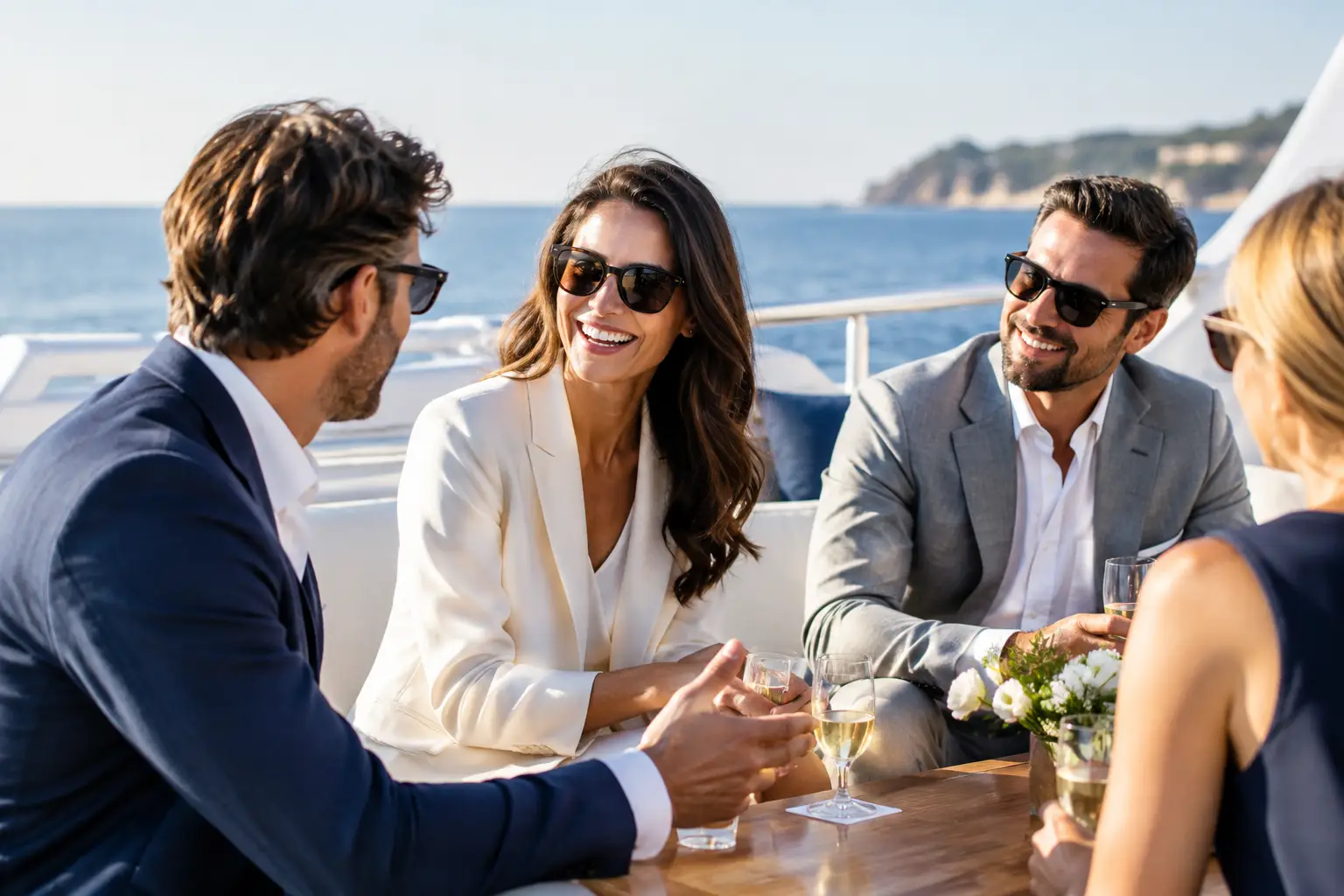
A room full of business cards is not a networking event. The best yacht networking activities give people an easy reason to start talking, a relaxed setting to stay in the conversation, and enough structure to make every guest feel included. On the water, the setting already does part of the work: open decks, harbor views, and a shared experience move guests out of office mode before the first introduction is made.
For client entertainment, leadership gatherings, industry socials, or a team event with real business value, the aim is not to pack the schedule. It is to create the kind of atmosphere where a promising conversation can run longer than a two-minute exchange beside a name badge.
Why yacht events create better business conversations
A yacht changes the social dynamic in a way that a hotel ballroom rarely can. Guests arrive together, share a defined experience, and have natural moments to reconnect throughout the event. There is no need to manufacture excitement with a packed agenda. The venue creates anticipation, while the open layout gives conversations room to form and evolve.
That does not mean every corporate charter should feel informal. The strongest events pair a polished hospitality experience with a light-touch program. Guests should know why they are there, who they should meet, and what happens next, without feeling managed from one awkward activity to another.
The trade-off is simple: too little direction can leave quieter guests on the edges, while too much can make an exceptional venue feel like a conference room on the water. A well-designed yacht networking event sits in the middle. It has a clear rhythm, excellent food and drinks, and a few well-timed prompts that make introductions feel natural.
The best yacht networking activities for corporate events
The right mix depends on your group. A client-focused sunset event needs a different pace than an internal leadership gathering or a cross-industry mixer. These activities are designed to build genuine rapport while keeping the experience social, polished, and easy to enjoy.
1. Curated welcome introductions
Start with introductions that give guests something useful to say beyond their job title. Instead of asking everyone to state their name and company, have the host invite a small selection of attendees to share one current business focus, a market observation, or the type of connection they hope to make that evening.
Keep this brief. Five or six thoughtful introductions are enough to set the tone and create conversation hooks across the deck. Guests can then approach one another with a relevant opening rather than defaulting to small talk.
2. Hosted connection circles
Connection circles work especially well early in the charter, when guests are still finding their footing. Divide attendees into small groups of six to eight and give each group a host, whether that is a senior team member, event organizer, or confident industry connector.
Offer one focused prompt, such as a challenge shaping their sector this year or a lesson they wish they had learned sooner. After ten minutes, guests can move on. It is enough structure to remove social friction, but not so much that it becomes a workshop.
3. A harbor-view speaker moment
A concise speaker moment gives the event a focal point and adds value beyond hospitality. Choose a guest speaker, founder, executive, or industry voice with a perspective your audience will genuinely want to discuss. The strongest format is a 10-minute talk followed by a moderated question or two.
Timing matters. Schedule it after guests have had time to settle in, then let the conversation continue over canapés or dinner. A good speaker segment should create energy and ideas, not interrupt the social flow for too long.
4. Conversation cards with a purpose
Thoughtful conversation cards can be surprisingly effective when they are designed for adults, not treated like a novelty game. Place a few cards around lounge areas or at high-top tables with prompts that invite experience-sharing: “What is one shift your clients are asking for?” or “What partnership would make the biggest difference to your business this year?”
Avoid generic icebreakers that feel forced. The goal is to help people move from introductions to substance. This works particularly well for mixed groups where guests may not already share an industry or a professional network.
5. Small-group tasting experiences
A hosted tasting creates an easy shared moment without taking over the evening. It could center on a chef-led canapé pairing, a premium nonalcoholic option, or a curated selection matched to the onboard menu. The point is the guided social exchange, not the format itself.
Bring guests together in groups small enough for conversation, then allow them to circulate again. A tasting is most effective when it feels like part of the hospitality, not an extra item added simply to fill time.
6. The rotating host table
For an event built around senior relationships, designate a lounge table or section of the deck for rotating conversations with a host executive, subject-matter expert, or special guest. Every 15 to 20 minutes, a new small group joins the table.
This gives attendees access to people they may not naturally approach in a larger crowd. It also protects hosts from spending the entire night in one conversation, making the event more valuable across the guest list.
7. Team challenges that stay on-brand
For internal events, a short collaborative challenge can bring colleagues together across departments. Keep it strategic and low-pressure: teams might create a one-minute pitch around a fictional client brief, vote on an industry prediction, or solve a creative business scenario.
Avoid anything that requires guests to perform, compete too aggressively, or leave the atmosphere feeling childish. The best version creates laughs, reveals different strengths, and gives people a new reason to speak with colleagues they do not work with every day.
8. Sunset connection time
Not every valuable activity needs instructions. Build an intentional unprogrammed window around sunset, when the views are at their best and guests naturally want to be on deck. Serve a memorable course or refresh the music, then let the moment breathe.
This is where the earlier introductions and structured moments pay off. By now, guests have context, comfort, and several reasons to continue conversations. The setting does the rest.
Build the event around a natural rhythm
The strongest yacht networking events have a beginning, middle, and finish, even when the schedule stays relaxed. Begin with a welcoming arrival and light introductions. Add one or two purposeful moments once everyone is onboard. Then move into a longer social stretch where food, views, and music support conversation rather than compete with it.
For a two- to four-hour corporate charter, three planned touchpoints are usually plenty. More than that can dilute the premium, lounge-style feeling that makes an on-water gathering special. If your guest list includes people who do not know each other, prioritize the activities that make first conversations easy. If it is a relationship-building event with existing clients, spend more time on hospitality, thoughtful seating, and hosted introductions.
Guest count also changes the format. A group of 25 can gather around a single speaker or tasting station. At 80 or more, use multiple zones across the deck and create parallel conversation opportunities. For larger events, connected vessels can create distinct spaces for arrivals, dining, speaker moments, and relaxed networking without crowding every guest into one area.
Details that make networking feel effortless
Great activities cannot compensate for poor event flow. Make sure guests can hear each other, move easily between spaces, and find food and drinks without forming a line across the deck. Music should build atmosphere, not dominate the room. Seating should invite small groups to pause, while open areas should make it easy to circulate.
A confident host is equally valuable. Their job is not to announce every moment. It is to read the room, introduce people with purpose, and quietly guide the pace. The best hosts know when to bring energy forward and when to step back so guests can own the conversation.
For a polished Hong Kong corporate gathering, True Blue Fleet brings together spacious open-deck entertaining, lounge-style comfort, professional crew service, and the scale to host everything from focused client groups to larger multi-vessel events. The result should feel less like a standard corporate function and more like an occasion people are genuinely glad they attended.
The most valuable connection may happen long after the formal introduction, when two guests stay on deck to finish a conversation they would never have started in an office. Design for that moment, and the event will keep working long after the yacht returns to shore.