The difference between a good boat event and an exceptional one is often decided before the first guest steps aboard. Knowing how to choose a party boat layout means looking beyond capacity and imagining how your group will move, meet, eat, dance, relax, and take in the water together. A boat may technically fit your guest count, but the right layout makes the occasion feel generous, polished, and naturally social.
For a birthday, company celebration, client event, or sunset gathering, the best vessel is not simply the largest one available. It is the one that gives your particular group room to enjoy the moments that matter without sending people downstairs, splitting conversations across cramped areas, or turning the bar, buffet, and dance floor into bottlenecks.
Start With the Energy You Want to Create
Every event has a rhythm. A refined corporate reception needs easy circulation, comfortable conversation zones, and a clear area for welcoming guests or making a short address. A milestone birthday may need a more open center of gravity, where music, movement, and spontaneous group moments can build throughout the day. A swim-focused charter needs a layout that keeps towels, food, loungers, and water access from competing for the same few square feet.
Start by writing one sentence that describes the atmosphere you want. Think along the lines of: relaxed afternoon lounge, high-energy sunset celebration, polished client hospitality, or a big social day built around swimming and music. That sentence is more useful than a generic request for a party boat because it reveals what the layout must support.
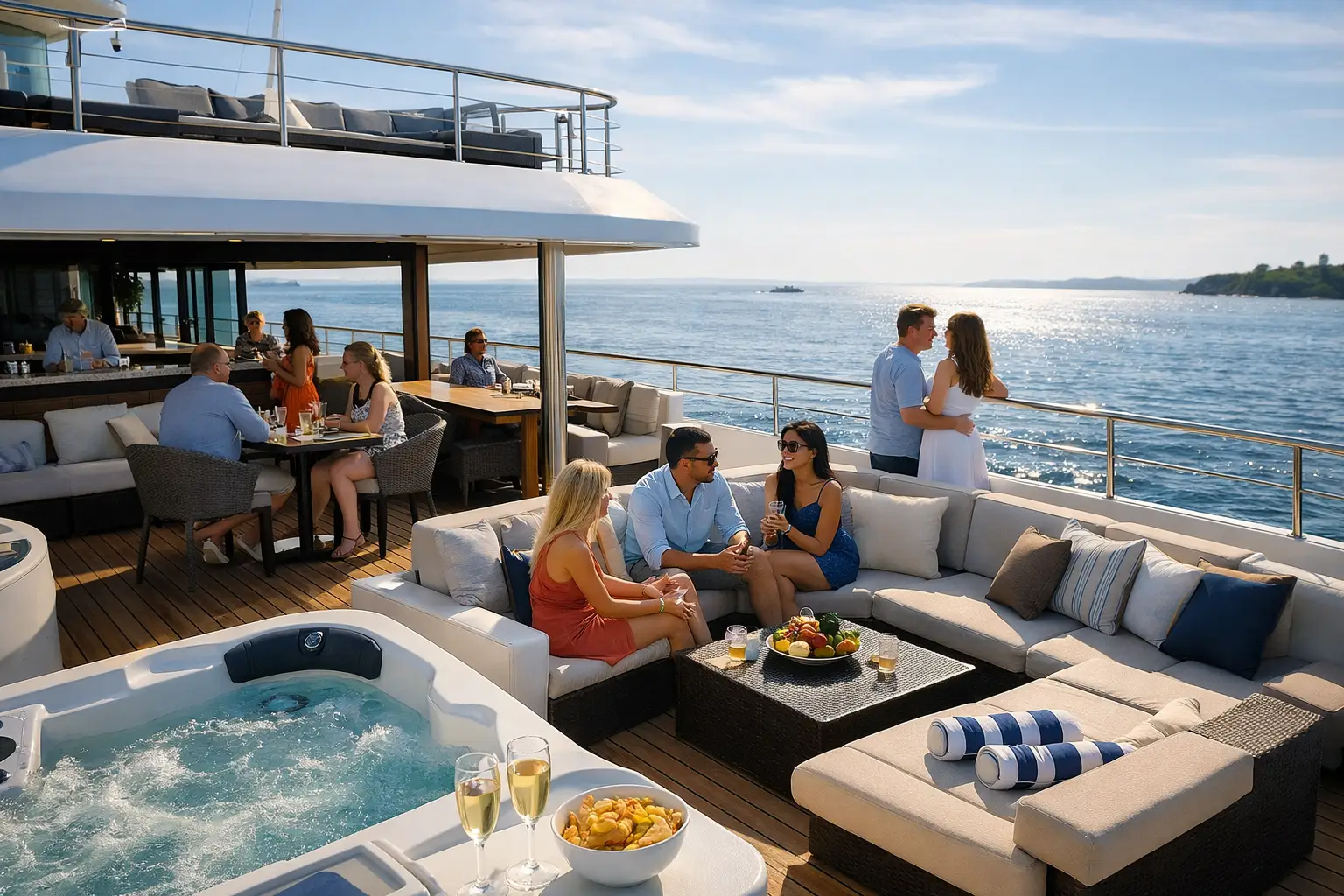
Open-deck vessels tend to create one shared atmosphere. Guests can see where the action is, join conversations naturally, and move from shaded seating to the music area without disappearing into separate cabins. Multi-level boats can work beautifully too, especially when you want distinct zones, but they need enough visual and physical connection to avoid dividing the group into smaller events.
How to Choose Party Boat Layout by Guest Count
Capacity is a safety limit, not a layout recommendation. A vessel rated for 50 guests may feel ideal for 35 people at a catered corporate event, yet feel crowded for 50 if everyone expects to dance, gather around a buffet, and spend time on deck at once.
Ask how many guests will be active in the same area at peak moments. This is usually when food is served, the sun is setting, a cake is brought out, or the playlist shifts from background atmosphere to a proper celebration. If the answer is nearly everyone, prioritize a broad open entertaining deck over extra enclosed rooms that may sit unused.
For smaller groups, a large deck should still feel intentional rather than empty. Lounge furniture, a well-positioned food and drinks station, and a defined music area can create warmth without restricting movement. For larger groups, look for a layout with obvious circulation routes around the main gathering space. People should be able to get a drink, greet friends, and reach the restroom without cutting directly through the center of a dance floor or presentation.
If your group is approaching 60 guests or more, ask whether a single boat will still give you the atmosphere you want. For major celebrations and company functions, connected vessels can create a far more flexible floating venue. One boat can anchor food and hospitality, another can become the social hub, and a quieter lounge area can give guests room to recharge. True Blue Fleet’s raft-up format is designed for precisely this kind of large-format event, accommodating groups of up to 150 guests while preserving a premium sense of space.
Prioritize Guest Flow, Not Just Open Space
A spacious deck is a strong starting point, but layout quality comes down to flow. Great events have an easy, almost invisible rhythm: guests arrive, settle in, pick up a drink, find friends, take photos, eat, dance, and move between sun and shade without needing directions.
When reviewing a boat, picture these pressure points: boarding, food service, the bar or beverage station, restrooms, seating, the sound system, and the swim platform. None of them should create a queue that cuts through the main social zone. A buffet positioned beside the only route to the restroom, for example, can interrupt the entire experience. A bar placed at the edge of the deck often works better because guests can collect a drink and return to the group rather than clustering in a doorway.
The strongest party boat layouts have a clear central social space with supporting areas around it. This lets the event feel connected while still giving guests choices. Some may be talking in a shaded lounge, others may be near the music, and another group may be enjoying the view, but nobody feels removed from the occasion.
Think About Shade and Weather Flexibility
Hong Kong sunshine is part of the appeal of an on-water event, but full exposure can become tiring over a long afternoon. Look for a layout that balances sun-filled deck space with meaningful shade. The goal is not to place everyone under cover. It is to give guests control over their comfort so they can stay engaged longer.
Weather flexibility matters for evening and shoulder-season events too. Covered lounge areas, practical access between indoor and outdoor zones, and a crew that can adjust service around changing conditions all help keep the atmosphere composed. A premium charter should feel considered whether the day is bright, breezy, or lightly overcast.
Match Seating to the Way Your Group Socializes
Rows of fixed seating are useful for transport. They are less useful for a celebration. For social events, lounge-style seating encourages people to face one another, put down a plate, and settle into the conversation. It also gives the deck a more elevated visual feel for photos and hosting.
The right amount of seating depends on the event. A formal client event benefits from enough comfortable places for guests to pause and talk. A high-energy birthday does not need a seat for every person at all times, but it should still have enough lounge space for guests who want a break from the music or sun.
Avoid layouts where all seating is concentrated in one place. Distributing lounge areas around the deck helps the crowd breathe and creates natural conversation pockets. It also means that guests who arrive early, are less inclined to dance, or simply want a quieter chat still feel part of the event.
Give Food, Music, and Swimming Their Own Zones
The most memorable charters combine several experiences, but those experiences should not fight each other for space. If you are planning catered dining, confirm there is a dedicated service area with room for guests to browse comfortably. Freshly prepared food deserves more than a narrow corner where people have to balance plates while others squeeze past.
Music is another layout decision, not merely an equipment choice. Premium sound creates energy, but speaker placement and the dance area should support conversation elsewhere on the boat. An open deck makes it easier for the group to feel the music together, while lounge zones at the perimeter give guests a chance to talk without leaving the atmosphere entirely.
For a swim stop or raft-up party, access to the water needs equal attention. An oversized swim platform changes the experience because it creates a proper transition zone rather than a single-file entry point. Guests can gather, dry off, return to their loungers, and enjoy inflatables without bringing wet traffic through the food and seating areas. Confirm how towels, personal belongings, changing needs, and post-swim service will work before you finalize the plan.
Ask the Questions That Reveal the Real Experience
Photos can make almost any boat look spacious when it is empty. Before choosing, ask for a realistic explanation of how the layout performs with a group like yours. A knowledgeable charter team should be able to describe where food will be served, where guests will gather at sunset, how the deck changes for swimming, and how the crew manages service during the busiest moments.
It is also worth asking whether furniture can be arranged around your event. A presentation, birthday cake moment, DJ setup, brand activation, or client welcome can all affect how the deck should be configured. The best charter operators treat layout as part of event planning, not an afterthought once everyone is on board.
A boat layout should make hosting feel easy. Choose the vessel that lets your guests share the same energy, while still offering room to eat well, relax in comfort, and move with confidence. When the space is right, you get to spend less time managing logistics and more time enjoying the view with the people you invited.