
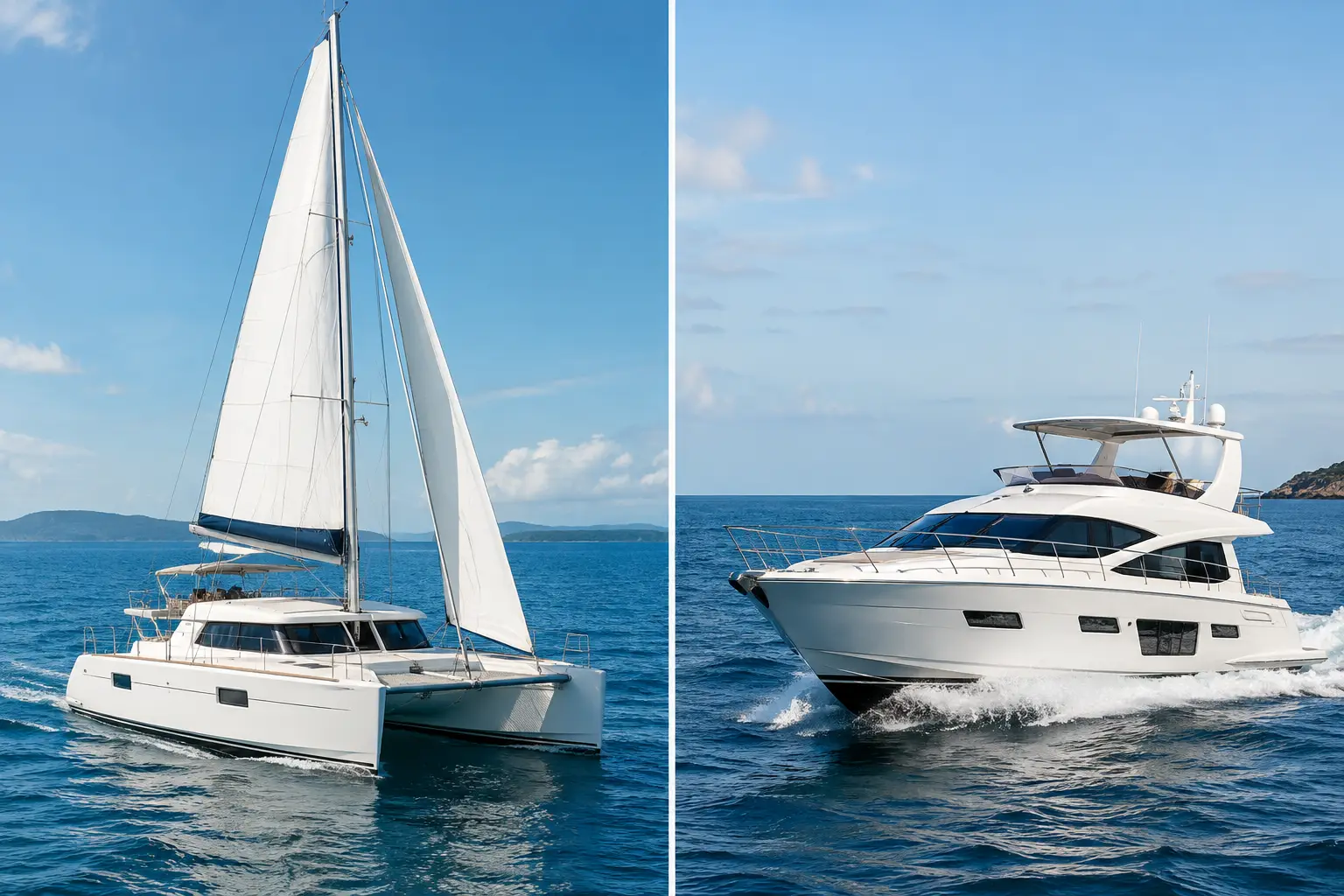
A catamaran versus yacht decision is rarely about which boat looks better from the pier. For a private celebration or corporate function, it is about how your group moves, connects, eats, relaxes, and enjoys the water together. The right vessel turns a booking into a properly hosted occasion. The wrong one can leave guests split between levels, squeezed into narrow walkways, or wondering where the main event is happening.
For social charters, the best choice depends less on boating labels and more on your guest list, event format, and the atmosphere you want to create. A catamaran and a traditional monohull yacht deliver very different experiences once everyone is onboard.
Catamaran versus yacht: understand the real difference
Strictly speaking, a catamaran can also be a yacht. “Yacht” is a broad term that can describe many private recreational vessels, including catamarans. In most charter conversations, though, catamaran versus yacht means a twin-hull catamaran compared with a conventional single-hull motor yacht.
A catamaran has two hulls connected by a broad central deck. This creates a wide, stable platform with generous outdoor space. A monohull yacht has one central hull, usually with a more streamlined profile, a narrower beam, and often multiple interior and exterior levels.
Neither format automatically wins. A sleek motor yacht can feel polished, intimate, and highly exclusive. A well-designed catamaran can feel like a floating lounge, built for groups that want room to gather without losing the energy of the occasion. The event itself should make the decision.
Choose a catamaran when the group experience leads
A catamaran is often the stronger fit for birthdays, day parties, team events, raft-ups, and large social occasions where people should be together rather than scattered across the boat. Its width changes the mood immediately. Guests can stand in conversation circles, settle into lounge seating, visit the bar area, and move between sun and shade without constantly navigating tight passages.
That open layout matters more than most organizers expect. On a narrower boat, a group can naturally divide into small pockets: some on the bow, some in the cabin, some on an upper deck. That can suit a quiet gathering. For a celebration, it can make the event feel fragmented.
Catamarans also tend to offer more usable deck area for their length. The advantage is not simply capacity. It is comfort at capacity. A vessel that technically fits a guest count may not give every guest a good place to sit, socialize, or enjoy the view. On an event-led catamaran, the space is designed to keep the group connected.
The twin-hull design can also provide a steadier feel at anchor, which is welcome for guests who are new to being on the water. It does not remove all motion, because conditions still matter, but it can make a noticeable difference during a relaxed afternoon of swimming, dining, and socializing.
For events centered on warm weather and water access, look closely at the swim platform. A large, easy-entry platform gives guests a more natural transition between the deck and the water, while also creating an extra social zone around inflatables and post-swim lounging. For a Hong Kong summer charter, that feature can shape the whole day.
Where catamarans shine
The catamaran format is particularly effective when the guest list is larger, the schedule includes food and drinks onboard, or the goal is a high-energy but polished atmosphere. It is also ideal when the host wants everyone to enjoy the same experience at the same time, whether that is a sunset toast, a catered meal, or a set on the sound system.
For bigger occasions, the format can scale beautifully. Multiple compatible vessels can raft together to create one connected event setting, allowing groups to move between decks while preserving an organized, premium feel. That is a very different proposition from trying to force a large party onto one confined boat.
When a traditional yacht is the better choice
A monohull yacht can be the right call for a smaller, more formal, or more private occasion. If you are hosting senior clients, arranging an executive meeting, planning an elegant dinner, or marking a milestone with a close group, a classic yacht often delivers the tailored atmosphere you want.
Many motor yachts emphasize refined interiors, a private salon, air-conditioned comfort, and a more structured separation between dining, lounging, and outdoor viewing areas. That structure can be valuable when the weather is uncertain or when the event needs a quieter, more discreet rhythm.
A yacht may also appeal to guests who value the visual statement of a traditional luxury vessel: a sculpted profile, elevated flybridge, polished finishes, and a more formal sense of arrival. For the right crowd, that style is part of the experience.
The trade-off is that a yacht’s spaces are often more segmented. Stairs, cabins, corridors, and level changes create privacy, but they can also interrupt the social flow. If the brief is “keep 40 friends together, comfortable, and moving to the music,” a yacht with beautiful interiors may not be as effective as a purpose-built open-deck catamaran.
Where yachts shine
Choose a traditional yacht when the guest count is modest and the occasion calls for privacy, a composed setting, or more time inside. It can be an excellent platform for a client-hosting event with a seated component, a sophisticated evening gathering, or a celebration where the host prefers distinct spaces over one shared social hub.
The key is to avoid treating “luxury” as a single look. Luxury can mean a quiet salon and formal service. It can also mean room to breathe, restaurant-quality catering, a professional crew that anticipates the group’s needs, and an open deck where every guest has a place in the moment.
Compare the details that affect your event
When weighing a catamaran versus yacht, start with how your guests will actually spend their time. Do not choose based on a single photo or vessel length alone.
First, consider guest flow. If people will be standing, mingling, dancing, and moving between food, drinks, and the water, prioritize wide, connected deck space. If the plan centers on seated dining, conversation, and indoor comfort, a traditional yacht layout may work beautifully.
Next, think about the tone. Catamarans generally suit a relaxed, sociable, beach-club-style atmosphere. Traditional yachts often lean more intimate, elegant, and composed. Neither is better, but a mismatch is easy to feel. A formal client dinner does not need a party-first deck plan, while a birthday group should not be confined by an overly compartmentalized layout.
Then look beyond the boat itself. Catering quality, crew service, music setup, shaded areas, bathrooms, swim access, and weather planning have as much impact on the day as the hull design. A premium charter should feel professionally hosted from boarding to final disembarkation, not like a bare vessel handed over to the group.
Finally, be realistic about group size. A spacious vessel can make 25 guests feel effortless. The same number on a tighter layout can feel crowded before the first drink is poured. Ask about comfortable event capacity, not just the maximum legal capacity.
The best choice for a standout charter
For most social groups, a catamaran is the more natural choice because it creates an open, shared setting where the event can unfold without friction. It gives organizers more room to build a complete experience around dining, music, swimming, conversation, and sunset views. This is why open-deck, lounge-style vessels are so effective for modern private events.
For more intimate or formal hosting, a traditional yacht may deliver exactly the right level of privacy and polish. The question is not whether one vessel type is objectively more luxurious. The question is whether the layout supports the way your guests want to celebrate.
True Blue Fleet was created around that social-first principle: Australian-built vessels with expansive entertaining decks, premium hospitality, and the scale to turn a group gathering into a memorable on-water event. Bring your guest count, your occasion, and the atmosphere you want, then choose the vessel that gives everyone room to enjoy it together.