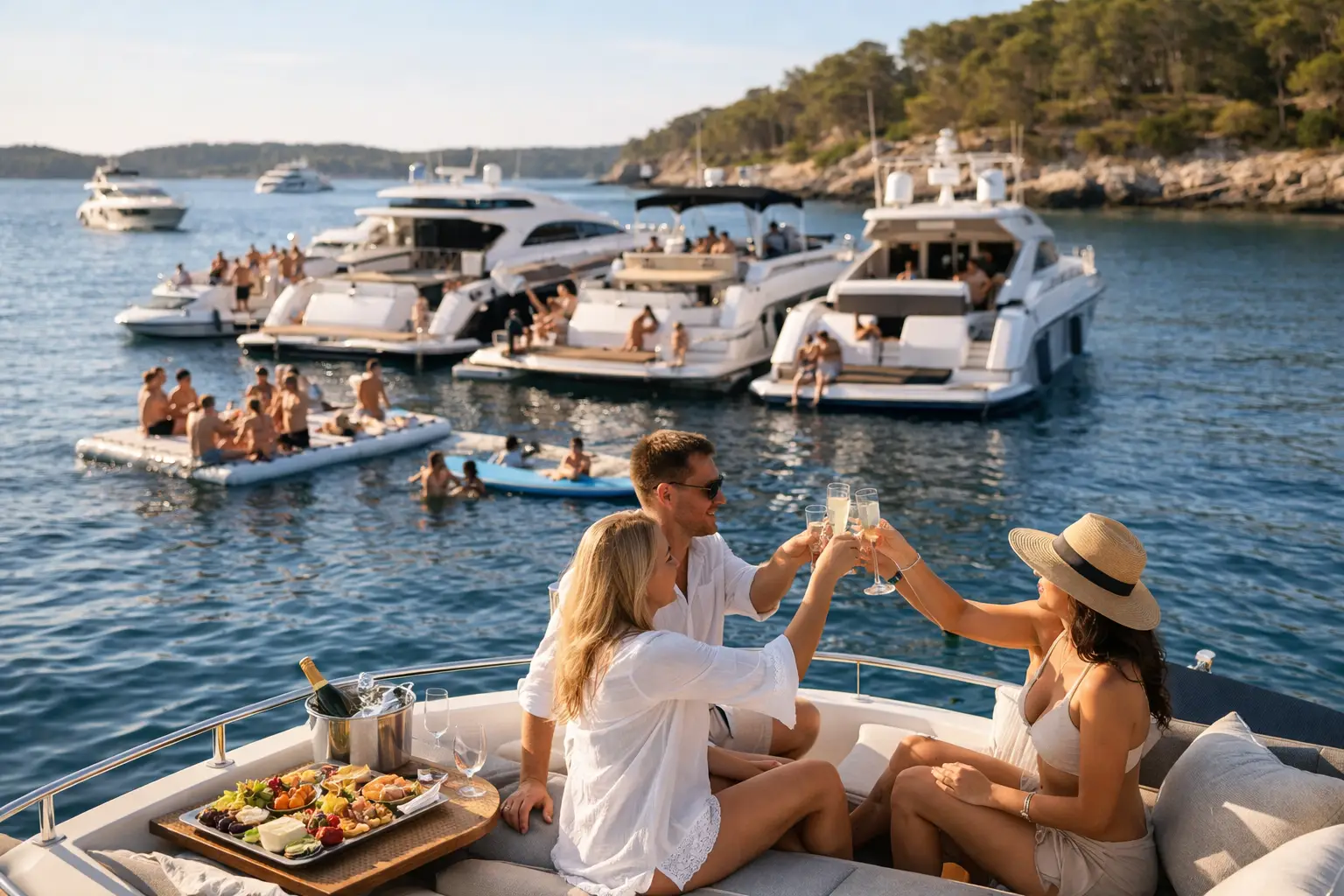
A great raft-up is not simply several boats tied side by side. It is one shared floating venue: guests can move naturally between decks, the energy feels connected, and every detail from arrival to the final sunset photo has a purpose. If you are wondering how to organize a raft up event, start by planning it as a premium social occasion rather than a standard day charter.
The biggest difference is coordination. A single boat can run on instinct. A multi-vessel event needs a clear guest flow, one atmosphere, and professional decisions about timing, food, music, swimming, and weather. Get those right, and the result feels effortless for your guests while delivering the scale and visual impact that makes a raft-up unforgettable.
Start With the Experience You Want to Create
Before choosing boats, define the occasion in one sentence. Is this a milestone birthday with an afternoon swim stop? A company summer social designed for relaxed networking? A client event that starts polished and builds toward a high-energy sunset? That answer shapes every practical choice that follows.
A raft-up works especially well when one vessel would split your group into separate pockets. Connected boats create distinct zones without making anyone feel removed from the action. One deck can be the social hub, another can hold lounge seating and catering, while a swim platform gives guests a place to cool off without interrupting the wider event.
Be realistic about the mood, too. A midday celebration calls for shade, easy access to the water, light food, and a playlist that supports conversation. An evening harbor event needs stronger lighting, a confident music plan, and catering that works well after sunset. Trying to make one itinerary serve every possible preference usually makes the day feel unfocused.
Choose the Right Guest Count and Vessel Setup
Guest count is not just a capacity number. It determines whether the event feels spacious, social, and well hosted. For a premium raft-up, plan around how guests will actually use the decks: standing with a drink, sitting down to eat, moving between vessels, dancing, or relaxing near the water.
Ask your charter operator how the vessels connect, where guests board, which areas are best for food service, and whether there is a natural central deck for announcements or a birthday moment. A well-designed raft-up lets the group feel united while still giving people room to step away from the speakers or settle into a conversation.
This is where purpose-built entertainment boats have a real advantage over traditional layouts. Open decks, lounge-style seating, oversized swim platforms, and a capable crew create a more natural social environment. For larger celebrations, multiple connected vessels can become a single event setting for up to 150 guests, rather than a collection of separate boats with separate vibes.
Pick a Date That Gives You Options
Hong Kong’s conditions can change quickly, particularly through the warmer months. Choose a date with enough lead time to secure the vessel configuration you want, then establish a weather process before invitations go out. Your guests should know what happens if conditions require a route change, a different anchorage, or a rescheduled date.
A professional operator will make the final call based on safety and operating conditions. Your job as host is to build flexibility into the event, not to gamble on a forecast. Avoid promising a specific swim location or exact sunset backdrop as the centerpiece of the day. Promise the atmosphere instead: an elevated private event on the water, designed to adapt well.
Timing matters just as much. For most social raft-ups, four to six hours gives guests time to arrive, settle in, eat, swim if conditions allow, and enjoy the later energy without the day dragging. Corporate groups may prefer a tighter format with a defined boarding window and a polished return time. Birthday groups often benefit from a little more room to let the day unfold.
Build an Itinerary, Not a Rigid Schedule
Guests do not need a minute-by-minute agenda, but the crew and organizers do need a rhythm. The strongest raft-up events have clear phases: boarding and welcome, cruising or arrival at the gathering point, food service, the main social moment, water activities if appropriate, then a relaxed finish.
Give people a reason to look up from their conversations at least once or twice. It could be a short welcome from the host, a toast, a cake presentation, a company recognition moment, or a coordinated group photo across the connected decks. These moments create memories and help the day feel intentionally hosted.
Do not schedule everything at the beginning. Guests arrive at different energy levels, and the best atmosphere builds gradually. Start with great hospitality and comfortable music, then lift the tempo after everyone has found their place. If your group includes clients, senior leaders, or mixed age groups, keep one quieter zone available throughout the charter.
Get Food, Drinks, and Service Right
Food can either anchor the event or become an awkward interruption. For a raft-up, choose catering that is easy to enjoy while standing, sitting, or moving between decks. Freshly prepared sharing-style menus, generous platters, and well-timed service generally work better than a formal meal that asks every guest to stop at once.
Plan for dietary needs early, especially for corporate groups. Collect requirements with the RSVP, not on the morning of the event. It is a small piece of organization that makes the hospitality feel considered.
The drinks plan should fit the audience and time of day. Offer a thoughtful range of refreshing nonalcoholic options alongside the hosted beverage selection, and make water visible and easy to reach across the event space. Good service is about keeping guests comfortable and looked after, not pushing the pace of the party.
For a host, the value of an all-inclusive package is simple: fewer moving parts on the day. With catering, drinks, crew, entertainment setup, and water equipment handled together, you can focus on your guests instead of chasing suppliers from one deck to another.
Set the Soundtrack and the Visual Tone
Music does more than fill silence. It signals what kind of event guests have stepped into. Create a playlist that matches the occasion, or work with the operator on the sound setup and music direction. Keep arrival tracks welcoming, raise the energy when the group is settled, and reserve the biggest sing-along moments for later in the charter.
Volume needs judgment. A premium event should feel alive without making conversation impossible. If there are multiple decks, use the layout to your advantage: place the main sound system where the social energy belongs and preserve another area for catching up.
Visual details deserve similar attention. A dress code can be as simple as “resort polished” or “summer white,” but it gives photos a more considered look. Choose one or two hero moments rather than covering every surface in decorations. Branded signage for a company event, a refined cake display for a birthday, or coordinated lounge styling can do more than a cluttered theme.
Make Safety Part of the Hosting Standard
The best hosts make safety feel normal, calm, and completely built into the experience. Share boarding details in advance, encourage guests to wear practical footwear, and remind everyone to follow crew guidance when moving between connected vessels.
If swimming and inflatables are part of the plan, treat them as a hosted activity rather than an open invitation. Conditions, daylight, location, and crew assessment all matter. Set expectations that water access happens only when approved, and make sure guests know where towels, changing space, and drinking water are located.
Assign one or two sober, reliable points of contact from your group to work with the crew. They can help locate late arrivals, handle small guest questions, and keep any surprise moments – speeches, cakes, gifts, or games – coordinated. That is particularly useful when you are hosting a large group and want to remain present rather than operational.
Send Invitations That Answer the Right Questions
A strong invitation creates anticipation while preventing last-minute confusion. Include the boarding location and exact time, expected return time, dress guidance, whether swimming may be available, and what guests should bring. Let them know if food and drinks are included, but do not overload the message with every operational detail.
Collect RSVPs early and set a firm final headcount date. This protects the catering plan, vessel configuration, and guest experience. It also gives you a chance to identify dietary requirements and ensure the group size still suits the selected raft-up format.
For high-stakes celebrations and corporate hospitality, work with an experienced on-water events team from the beginning. True Blue Fleet can bring the boats, open-deck layout, hospitality, and crew into one coordinated plan, so the event feels like a complete private venue rather than a boat booking with extras attached.
A raft-up is at its best when guests step aboard and immediately understand the brief: great people, generous space, confident hosting, and nothing they need to manage. Plan the structure carefully behind the scenes, then give everyone the freedom to enjoy the water, the company, and the moment.