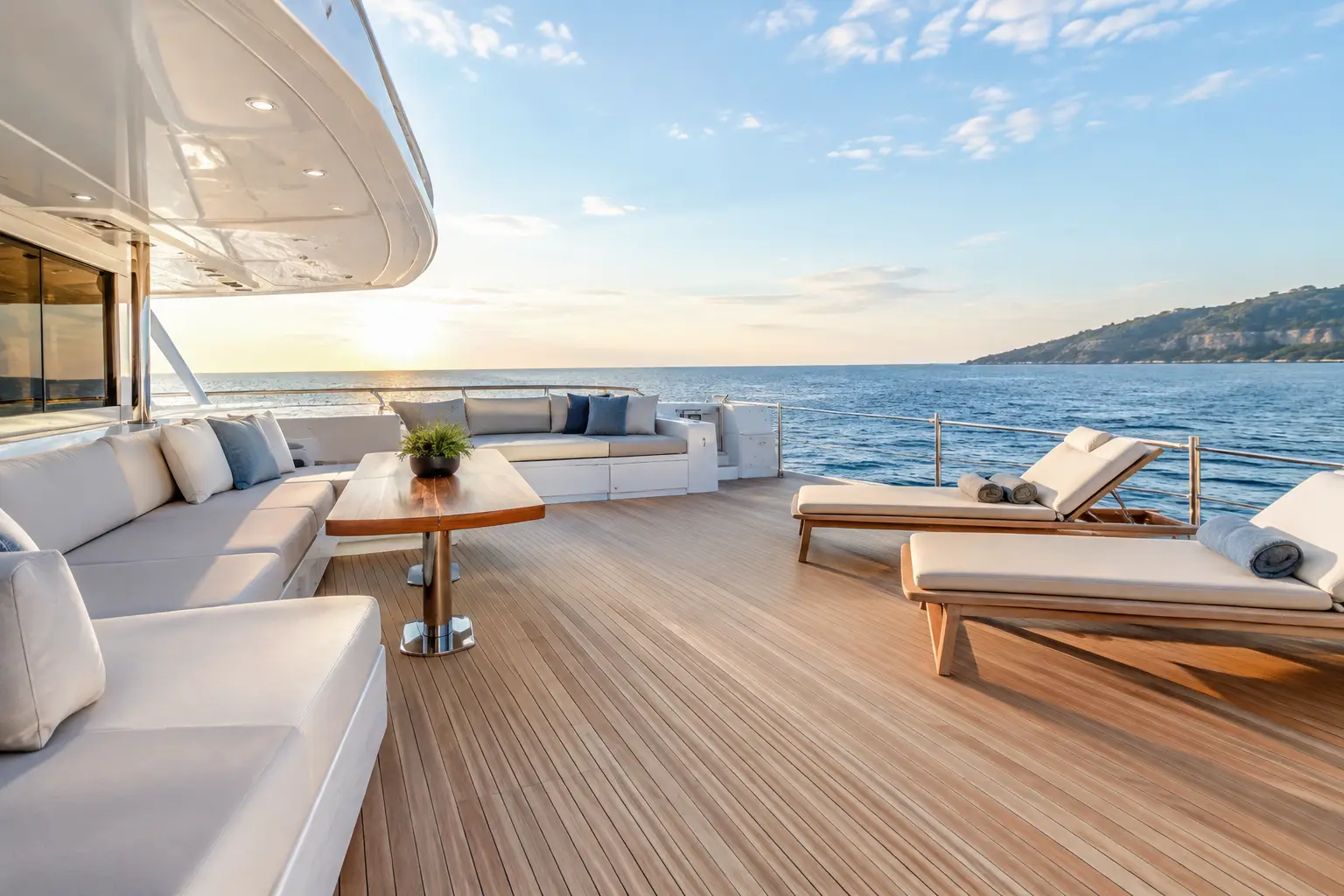
A great charter can be remembered for the sunset, the music, or the first jump into the water. But the detail that determines whether guests actually relax, connect, and stay part of the moment is often the one they notice least at first: the deck layouts. When a vessel is arranged around people rather than simply fitted with seats, it feels less like a boat rental and more like a private venue with a changing waterfront view.
For birthdays, client entertainment, team celebrations, and large social gatherings, the best layout creates energy without forcing everyone into one crowded corner. It gives guests a place to arrive, settle in, eat, talk, take photos, enjoy the water, and rejoin the group without breaking the flow of the event.
Why deck layouts change the entire event
On land, event planners think about the bar, the dance floor, the dining area, and the places where guests can step aside for a proper conversation. The same thinking matters even more on the water, where space is finite and every square foot has a job to do.
A poorly arranged vessel makes a group feel fragmented. People cluster around the only comfortable seating, food service blocks the walkway, and anyone hoping to enjoy the view has to compete for space. A well-planned open deck, by contrast, gives the day a natural rhythm. Guests can move from lounge seating to the social center, from lunch to the swim platform, and from a relaxed afternoon into a sunset celebration without the setup feeling changed or interrupted.
That is why capacity should never be the only question when comparing charter options. A boat may technically accommodate a certain number of people, but the more useful question is whether that group can enjoy the experience together. The goal is not to fill every inch. It is to create enough room for the atmosphere to build.
The best deck layouts create social zones
The strongest event vessels are designed around distinct zones that work together. They do not need walls or formal signs. Good placement of furniture, service areas, shade, and open floor space quietly tells guests where to gather and how to use the boat.
Lounge space sets the tone on arrival
The first few minutes shape a charter’s energy. Lounge-style seating gives guests somewhere to land with a welcome drink, catch up with friends, and take in the setting before the day picks up. It immediately feels more polished than rows of fixed benches pointed in the same direction.
For corporate groups, this area is particularly valuable at the start of the event. It gives colleagues and clients a comfortable place to mix without making conversation feel staged. For celebrations, it becomes a natural home base for the guest of honor, close friends, and the first round of group photos.
The trade-off is simple: more built-in seating can mean less open space. The right balance depends on the group. A relaxed daytime gathering may benefit from generous lounging, while a high-energy evening event usually needs a larger clear deck where guests can stand, circulate, and enjoy the music.
An open entertaining deck keeps the group connected
The central open deck is where a private charter becomes a shared event rather than a collection of separate conversations. It needs enough clear space for people to move naturally, with sightlines that keep guests connected to the water, the sound system, and one another.
This is especially important for a mixed group. At any moment, some guests may be dancing, others may be chatting near the edge of the deck, and a few may be enjoying the view from a lounge area. An open layout lets all of those moments happen at once while still feeling like one party.
The difference is noticeable during key moments: a toast, a birthday cake, a company announcement, or the shift in mood as the skyline lights up. If the group can gather quickly in a visible central space, the event feels intentional and inclusive. If guests are scattered across cramped levels or obstructed by furniture, those moments lose impact.
Food and drinks need their own working space
Premium hospitality is not only about what is served. It is also about how service moves through the event. Catering and drinks should be accessible without turning the main deck into a line or making guests squeeze past a service station every time they want to move.
A smart layout places food where guests can approach from more than one side, then step away to eat and socialize. This avoids the familiar rush that happens when everyone heads to one narrow point at the same time. It also keeps the presentation looking considered throughout the charter, rather than becoming an obstacle halfway through the day.
For a plated meal or a more conversation-led corporate function, the layout may lean toward structured seating. For a birthday or raft-up event, flexible lounge areas and easy grazing service generally keep the pace more social. Neither approach is automatically better. It depends on whether the priority is dining, networking, movement, or a combination of all three.
Water access should feel part of the experience
For daytime charters, the swim platform is not an afterthought. It can become one of the most popular social spaces on board, especially when guests want to cool off, relax near the water, or use inflatables between conversations on deck.
A large, easy-to-access platform makes the transition between boat and water more comfortable and more organized. It also helps separate active water time from the main entertaining area, so guests who prefer to stay dry can continue enjoying the music, food, and company without disruption.
Timing matters here. A group with a clear plan for when the water activities begin and end tends to enjoy more of the charter. Professional crew guidance and appropriate conditions remain essential, but a thoughtfully positioned platform makes the experience feel inviting rather than like a logistical challenge.
Shade, views, and sound all shape the mood
Open-deck entertaining is powerful because it puts guests close to the harbor, the breeze, and the changing light. Yet an entirely exposed deck can become uncomfortable during a long daytime charter. The best arrangements offer a choice between sun and shade, so guests can stay outside without feeling locked into one environment.
Views deserve similar attention. Seating should face outward often enough for guests to enjoy the surroundings, but not so rigidly that everyone is separated into quiet rows. Angled lounges, open edges, and flexible gathering points keep the view present while still encouraging conversation.
Then there is sound. A premium system can set the pace for the day, but speakers and dance space should support the atmosphere rather than dominate every conversation. Corporate hosts may want a lighter soundtrack during networking and a stronger social energy later. Celebration groups may want the music to lead earlier. A versatile deck supports both without requiring the entire event to be rebuilt around the playlist.
Scale matters when the guest list grows
Large events need more than a larger guest count. They need room for the group to breathe. This is where connected vessels can transform the possibilities, creating separate but linked spaces for dining, dancing, lounging, water access, and quieter conversation.
For groups approaching 150 guests, a multi-vessel setup can preserve the intimacy and movement that a single packed deck cannot always deliver. One area can carry the main social energy while another offers a more relaxed setting for conversation, food, or VIP hosting. Guests are still part of the same event, but they have choices in how they experience it.
True Blue Fleet’s Australian-built vessels were transformed with this social purpose in mind: wide open entertaining decks, lounge-style comfort, and the ability to create a larger floating venue when the occasion calls for it. It is a fundamentally different approach from choosing a boat solely for transport or scenery.
Choose a layout around the moments you want guests to remember
Before confirming a charter, picture the event at its busiest point. Where will guests gather for the toast? Where will the food be served? Is there room for the music, the photos, the conversations, and the people who simply want a great seat by the water? Those answers will point to the right vessel faster than a capacity number alone.
The best deck layout does not ask guests to adapt to the boat. It gives the event room to become what you planned: relaxed when it should be relaxed, high-energy when the moment calls for it, and unmistakably special from the first welcome to the last look back at the harbor.