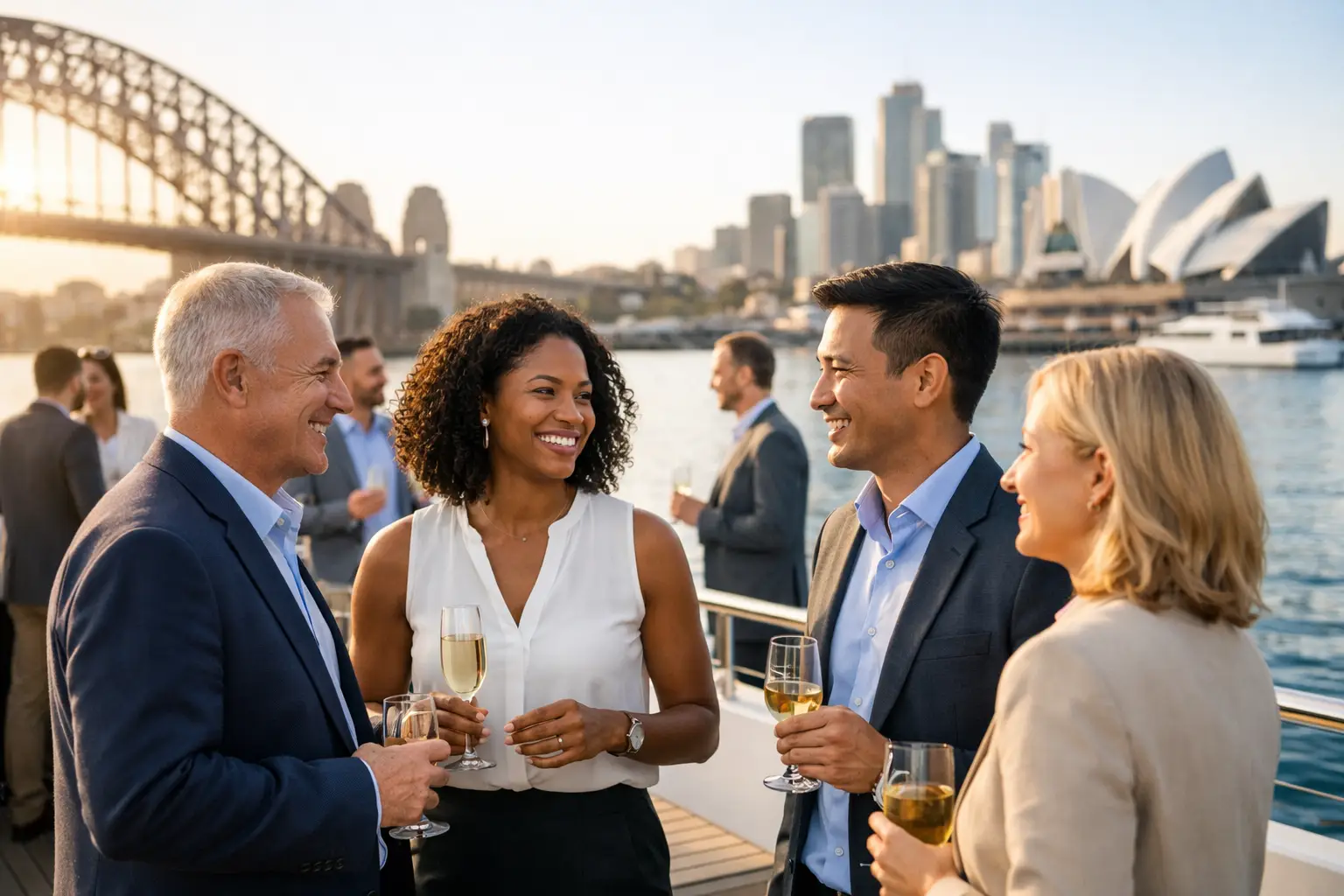
A room full of name badges and lukewarm coffee rarely creates the kind of relationships that move a business forward. The right harbour networking cruise ideas change the energy completely: guests step aboard, the city falls into the background, and conversations become less performative and more natural.
For client hosts, people leaders, and event planners, the goal is not to pack a boat with activities. It is to create enough structure for meaningful introductions while leaving room for the spontaneous conversations that make an event worth attending. On a spacious, lounge-style vessel, that balance feels polished rather than forced.
Start With a Reason to Connect
The strongest networking events have a clear purpose guests can understand before they arrive. That may be introducing a leadership team to key clients, bringing regional colleagues together after a major milestone, welcoming new hires, or creating a more personal setting for industry partners.
A broad invitation to “network over drinks” can work for a highly social group, but it gives quieter guests little direction. A simple theme gives people an easy opening line and helps the host shape the guest list. For example, a quarterly partner appreciation cruise feels different from a women-in-leadership reception or a founder-and-investor evening.
Keep the purpose social, not sales-heavy. Guests should feel that they have been invited into a well-hosted occasion, not dropped into a floating pitch meeting. The business value comes from the quality of the room and the setting you create around it.
Create an Arrival That Feels Like an Occasion
The first 20 minutes set the tone. Guests arriving in small clusters need a clear welcome, a drink in hand, and an easy place to land before the event gains momentum. A professional host or a few designated members of your team can greet attendees, make quick introductions, and prevent familiar groups from forming closed circles too early.
Consider a subtle arrival prompt displayed at the boarding point: a question tied to your event theme, such as “What is one opportunity your team is focused on this quarter?” It is more useful than a generic icebreaker because it gives guests a reason to speak about work without turning the moment into a formal exercise.
The setting matters here. Open decks, comfortable lounge areas, quality catering, and a considered drinks service tell guests they can relax. Premium hospitality is not decoration. It creates the confidence that lets people stay present and engage.
Harbour Networking Cruise Ideas That Avoid Awkward Small Talk
Networking needs some gentle choreography, particularly when guests come from different companies, seniority levels, or industries. The answer is not a packed agenda. It is a few well-timed moments that make introductions feel easy.
Host-led introductions with a purpose
Instead of announcing every VIP to the whole boat, have hosts make targeted introductions in the first hour. Connect people around a shared challenge, market, interest, or opportunity. “You two are both building teams across Asia” is more valuable than “You should meet.”
Give your hosts a short briefing in advance with priority guests and a few useful points of connection. This is especially effective for client events, where the right conversation can be more memorable than any formal presentation.
Conversation tables, not assigned seating
If your cruise includes a meal, use flexible lounge-style seating rather than assigning guests to fixed tables for the entire evening. Small dining clusters encourage deeper conversation, but guests should be able to move easily afterward.
You can place discreet table cards with prompts that feel relevant to the audience: a leadership question, a business trend, or a local market observation. Skip overly playful games unless your group already knows one another well. Corporate guests generally respond better to prompts with substance.
A short spotlight moment
A five-minute welcome from a senior host can give the evening focus. Keep it warm, concise, and genuinely appreciative. Recognize a company milestone, thank partners for their support, or share one forward-looking idea that guests can continue discussing afterward.
Long speeches flatten the atmosphere, particularly once the vessel is underway and the harbor views are at their best. If you need to communicate more than one message, bring it into one short, confident address rather than breaking up the event repeatedly.
A shared experience after sunset
The best networking often happens after guests have had a shared moment to react to. This could be a sunset toast, a brief live music set, a photo moment against the skyline, or a curated tasting element served by the crew.
The experience should support conversation, not dominate it. A DJ and premium sound system can build atmosphere later in the evening, but volume should allow guests to speak comfortably. If the event is primarily for relationship-building, music works best as a mood-setter rather than the main event.
Design the Guest List for Better Conversations
A great vessel cannot fix a guest list with no connective tissue. Before sending invitations, decide whether you want to deepen existing relationships, introduce complementary groups, or celebrate one internal team. Each objective calls for a different mix.
For a client appreciation event, invite the decision-makers you value most alongside a small number of internal leaders who can host them well. For industry networking, avoid filling the deck with people from the same company or direct competitors who have no reason to engage. A thoughtful blend of perspectives creates better conversation than sheer numbers.
It also helps to consider social confidence. A group made entirely of senior executives may need more intentional hosting than a close-knit team celebrating a strong quarter. For mixed groups, invite a few natural connectors who are good at bringing others into the conversation.
Use the Space to Let the Event Breathe
Traditional event venues can make networking feel static. An open-deck charter gives guests natural movement: they can start at the lounge area, step outside for air and harbor views, join a dining group, then reconnect later in a different part of the vessel.
That movement is useful. It resets conversations without making anyone feel trapped, and it allows the event to build in energy gradually. The trade-off is that you need enough space for the group size. A vessel that is technically large enough is not always the right choice if guests cannot circulate comfortably.
For larger corporate functions, connecting multiple vessels into one floating venue can create distinct zones without splitting the crowd. One area can support dining and conversation, another can hold entertainment, and a quieter deck can give senior guests or new connections room to talk. This format works particularly well for guest lists that need both scale and a premium sense of ease.
Make Food and Drinks Part of the Hosting Strategy
Freshly prepared food and well-paced service keep guests engaged without interrupting the flow. Choose food that is easy to enjoy while standing or moving between conversations, then add a more substantial dining moment if the cruise timing calls for it.
The same principle applies to drinks. Offer variety, quality, and attentive service, while keeping the focus on hospitality rather than excess. A thoughtfully stocked bar, polished glassware, and crew who know when to offer the next round make the occasion feel elevated.
If there are cultural, dietary, or corporate policy considerations, plan for them early. The best hosts make every guest feel considered without turning accommodations into a public discussion.
Give Guests a Reason to Follow Up
A networking event has done its job when conversations continue after guests return ashore. You can encourage that without forcing a hard sell. Ask your team to make notes after the event while introductions are fresh, then send personal follow-ups within a few days.
For larger groups, a curated event photo gallery shared privately can provide a natural reason to reconnect. If your organization has announced a milestone or campaign during the cruise, include one relevant takeaway in your follow-up. Keep it useful and personal, not automated.
True Blue Fleet is built for this kind of occasion: a premium, open-deck setting where corporate hospitality feels social, considered, and far removed from another standard venue booking.
The most effective harbor networking cruise is not the one with the busiest run sheet. It is the one where the right people feel relaxed enough to have the conversation they would never have had across a conference table.