A raft-up event for 100 guests should feel like one big celebration, not three separate boat parties happening side by side. That is the difference between simply chartering multiple vessels and creating a connected floating venue designed for conversation, music, dining, swimming, and serious atmosphere.
For a major birthday, company celebration, client function, or private social event, 100 guests is a sweet spot. It is large enough to create real energy, but still personal enough for every guest to feel part of the occasion. The key is choosing the right fleet setup, planning the guest experience around movement and comfort, and letting professional crew handle the details that keep an event running smoothly.
What a Raft-Up Event for 100 Guests Looks Like
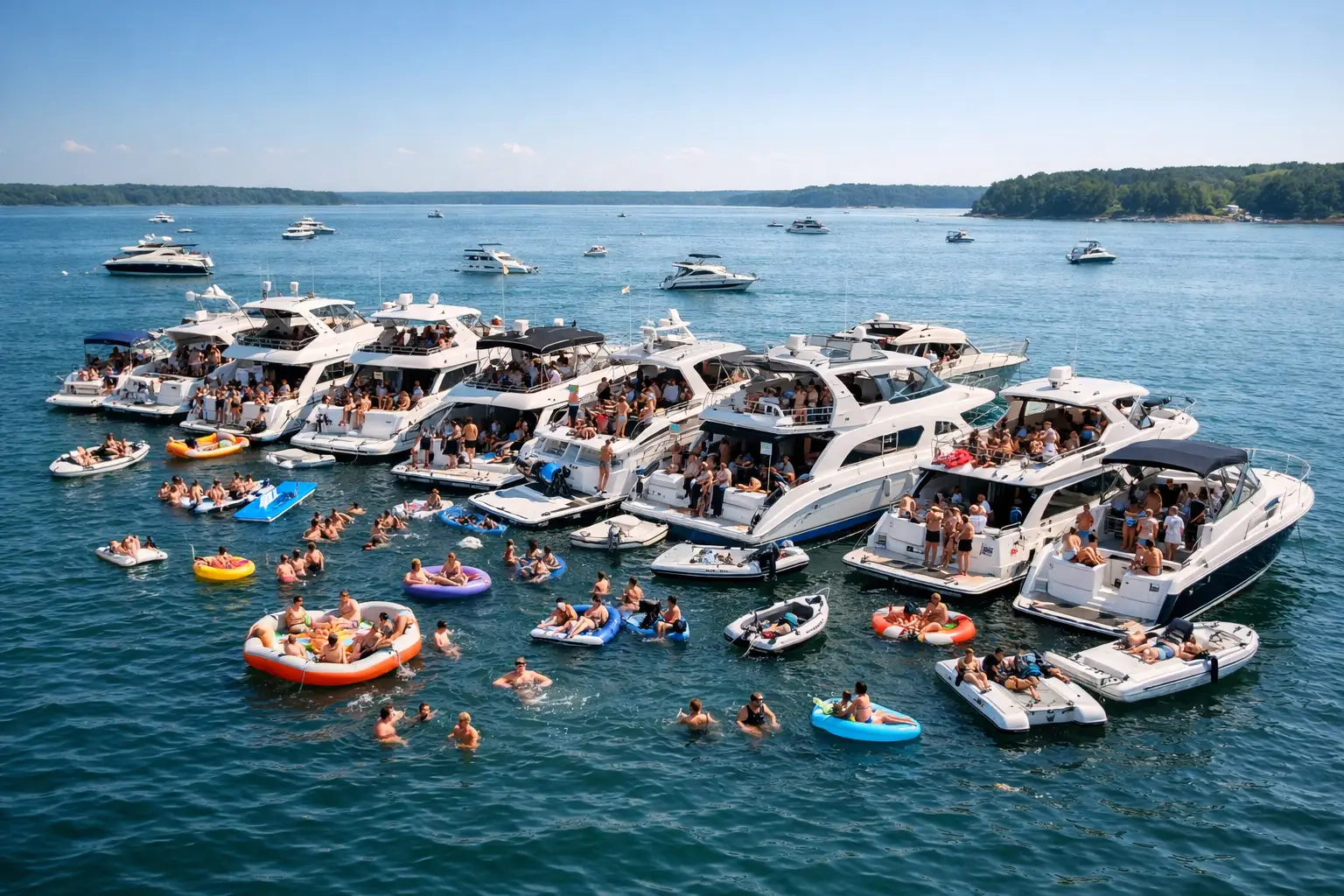
A raft-up connects multiple charter vessels in a carefully planned formation, turning separate boats into one larger on-water event space. Rather than dividing your group into isolated clusters, guests can move between open decks, lounge areas, bars, dining stations, and swim platforms throughout the day or evening.
For 100 guests, this format creates a far stronger social dynamic than trying to fit everyone onto one conventional vessel. One deck can become the focal point for music and dancing, while another gives guests room to catch up over a drink, enjoy catered food, or step away from the center of the action without leaving the event.
The result is closer to a private floating beach club than a standard boat charter. There is space to circulate, room to host, and enough variety that the experience stays lively from boarding through the final sunset photos.
At True Blue Fleet, Australian-built vessels can be connected into a single premium event setting for large groups, with social layouts made for entertaining rather than rows of seats or cramped corners. That distinction matters when your guest list reaches triple digits.
Start With the Experience, Not Just the Headcount
One hundred guests tells you how much capacity you need. It does not tell you what kind of event you are building. Before confirming boats, decide what you want the day to feel like.
A daytime celebration with swimming and inflatables needs easy access to oversized swim platforms, clear supervision, towels or practical guest guidance, and enough shaded lounge space for guests who would rather stay dry. A sunset corporate event needs a different rhythm: polished boarding, a strong food and beverage presentation, music that supports conversation, and a schedule that makes the most of the harbor backdrop.
For a birthday or milestone celebration, the focus may be a central gathering moment – speeches, a cake reveal, or a DJ set – followed by a more relaxed, free-moving social atmosphere. For brand activations and client hospitality, consider where signage, welcome drinks, photo moments, and host remarks will happen before guests naturally spread out.
The best raft-up events have one clear center of gravity. That could be the main open deck, the music area, or the swim platform. Everything else should support it.
Build in space for guests to move
A 100-person event can feel remarkably comfortable when the layout is intentional. It can also feel crowded if everyone is asked to stand in the same place at the same time. Open-deck vessels, connected access points, and lounge-style seating give people permission to move naturally.
Think about the event in phases. Boarding requires a calm welcome zone. The middle of the event needs food, drinks, and entertainment distributed in a way that prevents long lines. If there is a speech or presentation, guests need to be able to gather around a single focal point. Later, the group should be able to break back into smaller conversations without losing the overall energy.
This is why vessel design matters as much as guest capacity. A boat that technically holds a large group is not necessarily designed to host one well.
Choose a Layout That Matches Your Guest Mix
A group of 100 colleagues, clients, and senior leaders has different needs from 100 friends celebrating a birthday. The right raft-up configuration depends on age range, dress code, event timing, appetite for swimming, and how much structure the occasion requires.
For a corporate function, a two- or three-vessel formation often works well when one boat acts as the main hospitality space and another offers a more relaxed lounge environment. It gives guests a choice without separating the group. If you are incorporating a short presentation, recognition moment, or product reveal, position it where sightlines and sound are strongest.
For a social celebration, the main deck can carry the energy while companion vessels provide room to recharge, eat, and socialize. This balance keeps the party polished. Premium events do not need wall-to-wall intensity to feel memorable – they need a setting that lets every guest enjoy the event in their own way.
Ask your charter team how guests will transition between vessels, where food will be served, how sound will carry, and which areas are best for swimming or photos. Those operational details shape the mood more than most organizers expect.
Make Food and Drinks Part of the Event Design
For 100 guests, catering should feel generous, easy to access, and appropriate for time spent outdoors on the water. Freshly prepared onboard food is not just an inclusion. It is part of the hospitality experience, especially when guests are moving between decks and activities.
A single service point may work for a smaller group, but a large raft-up benefits from thoughtful timing and distribution. Start with welcoming refreshments, then release substantial food once everyone has settled in. For longer charters, a paced service keeps the experience moving without turning the event into a queue.
The same applies to beverages. A well-stocked bar and attentive service should keep guests looked after while maintaining a composed, premium atmosphere. The aim is simple: no one should have to choose between joining the moment and waiting for a drink.
If guests have dietary requirements, collect them early. With a group this size, last-minute changes are harder to accommodate and can distract from an otherwise polished event.
Treat Music, Timing, and Lighting as One Plan
A premium sound system can set the tone, but volume alone does not create atmosphere. For a 100-guest raft-up, music should follow the arc of the event. Start with an upbeat social playlist during boarding, raise the energy once the group has found its rhythm, and create a defined moment for speeches, announcements, or celebrations.
If you are booking a DJ, brief them on the crowd and the purpose of the event. A client-facing evening may call for sophisticated energy. A birthday can be more expressive. Either way, a DJ or playlist should complement the setting rather than overpower every conversation on board.
Timing also deserves attention. Day charters create space for swimming, inflatables, and open-water relaxation. Evening charters bring a different kind of theater: city lights, cooler air, and a more dressed-up feel. Sunset departures can offer the best of both, but they require a tight boarding plan so guests are on board before the light shifts.
Give Guests Clear Information Before They Board
When 100 people are attending, a concise pre-event message saves a great deal of friction. Guests should know the boarding location, arrival time, dress guidance, what to bring, whether swimming is planned, and any practical restrictions. Encourage everyone to arrive early rather than treating the departure time as a suggestion.
It is also smart to designate one or two event contacts from your side. The charter crew should not have to identify the birthday guest, find the person giving a speech, or track down the organizer every time a decision is needed. A clear point of contact keeps the experience polished from start to finish.
For corporate groups, share the schedule in advance, but do not over-program it. People remember the relaxed conversations, harbor views, and unexpected group moments as much as they remember formal activities.
Plan for Comfort and Safety Without Killing the Mood
Great hosting feels effortless because the practical details have been handled before guests arrive. Make sure the event includes professional crew, appropriate safety briefings, sensible swimming procedures, and a clear plan for weather conditions.
Comfort is equally important. Hong Kong heat, sun exposure, wind, and sudden changes in weather can affect how guests use each deck. Shade, seating, water access, and an indoor or covered fallback area can make a major difference. It depends on the season and the nature of your crowd, but planning for choice is always a smart move.
Avoid adding too many activities simply because the group is large. A few well-executed features – swim platforms, inflatables, great music, strong catering, and comfortable lounges – will usually create a better experience than a packed schedule.
The Detail Guests Will Remember
Guests may not remember the exact boarding time or how many vessels were connected. They will remember stepping onto an open deck, spotting their friends across the water, seeing the skyline change at sunset, and realizing the whole group had room to enjoy the occasion together.
That is what makes a raft-up worth planning properly. Give 100 guests a venue with real scale, excellent hospitality, and room for the celebration to unfold naturally, and the event will feel far bigger than a boat booking. It will feel like the occasion everyone talks about long after they step back onto shore.