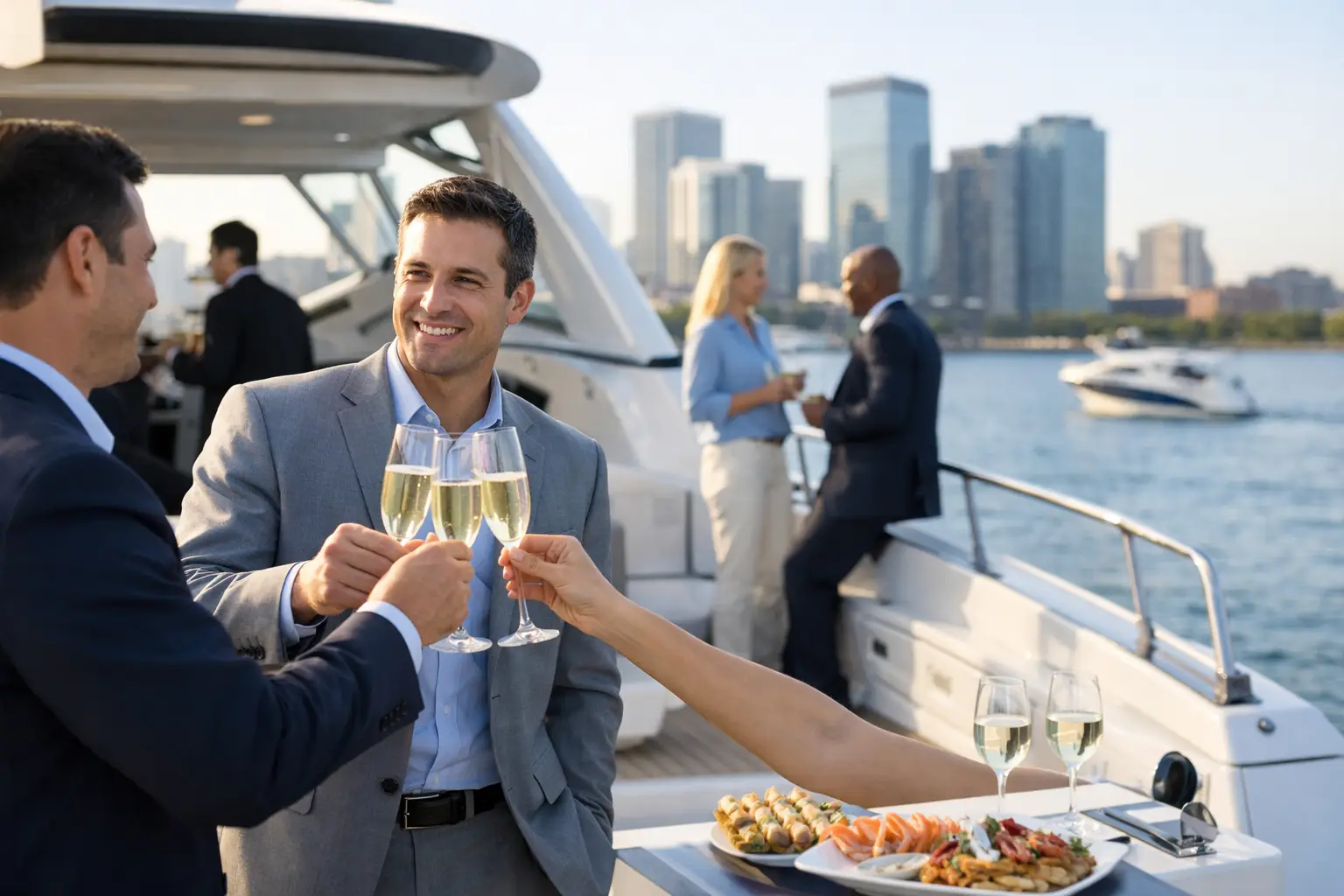
A client event can look impressive on paper and still fall flat the moment guests step on board. The reason is usually simple: people confuse booking a boat with understanding how to plan corporate yacht hospitality. The best events on the water are not built around the vessel alone. They are built around atmosphere, guest comfort, service, and a format that gives people a reason to stay engaged from the first welcome drink to the last photo.
That matters even more when the event represents your brand. A yacht setting immediately raises expectations. Guests expect strong hosting, polished food and beverage service, enough room to move, and a setting that feels intentional rather than improvised. If the event feels cramped, slow, or disjointed, the view will not save it.
How to plan corporate yacht hospitality around the guest experience
The first decision is not the route or even the menu. It is the purpose of the event. Are you entertaining clients, rewarding a team, launching a product, celebrating a milestone, or creating a networking environment where people can actually talk? Each goal changes the shape of the day.
A client-facing event usually needs a more polished flow. You want easy boarding, a strong first impression, visible service staff, and a setup that encourages conversation without making the event feel stiff. A team celebration can lean more social and relaxed, but it still needs structure. If you leave the day too open-ended, energy tends to dip after the first hour.
This is where many planners overcomplicate things. Corporate yacht hospitality works best when the format is clear and the experience feels effortless. Guests should know where to gather, where to sit, where to get a drink, and what happens next without needing directions every ten minutes.
Start with the right vessel, not the biggest one
A larger boat is not automatically a better event venue. What matters more is usable social space. Some vessels look impressive in photos but break up the crowd into small compartments. That can work for private leisure charters, but it is less effective for hosting groups that need connection, movement, and a strong shared atmosphere.
For corporate entertaining, open-deck layouts tend to perform better because they keep the group together while still allowing natural pockets of conversation. Lounge-style seating, clear walkways, and dedicated service zones make a visible difference. Guests do not want to squeeze past each other with a drink in hand or compete for a place to stand.
If your guest list is substantial, think carefully about whether one vessel creates the right experience or whether a multi-vessel setup makes more sense. For larger groups, connecting vessels can create a far more dynamic event space than forcing everyone into a format that feels tight. The right operator will talk to you about flow, not just capacity.
Match the event timing to the mood you want
Timing shapes everything. Afternoon charters usually create a more relaxed and social energy, especially if your event includes time at anchor, water access, or a long hospitality-led lunch. Evening charters feel sharper and more elevated, which often suits client entertainment, executive hosting, or celebration events with a stronger visual finish.
There is no universal best option. It depends on your audience and your objective. If guests are expected to network, too short a charter can feel rushed. If the event runs too long without enough programming, momentum can fade. In most cases, the sweet spot is enough time for guests to settle in, eat well, connect naturally, and enjoy the setting without the event overstaying its welcome.
Good planning also means being realistic about arrival and departure. Boarding should feel smooth, not chaotic. Corporate guests notice these details. A premium event starts at the dock, not once the boat leaves it.
Build a simple but intentional run of show
The strongest yacht events rarely feel heavily programmed, yet they are always planned. A loose but clear run of show keeps service on track and helps the event build naturally.
That might mean guest arrival and welcome drinks first, followed by a cruise segment while conversation is still fresh, then food service once everyone is settled. If there is a speech, brand moment, or presentation, place it when the group is attentive and not distracted by movement or meal service. Save the most social, open-ended portion of the event for after the formal moment, when guests can relax into the experience.
The goal is not to turn the charter into a conference session. It is to create rhythm. People remember events that feel easy, polished, and well-hosted.
Food and beverage should support the event, not slow it down
One of the fastest ways to weaken a corporate event is poor service pacing. If guests are waiting too long for drinks, balancing awkward plated meals, or unsure when food is being served, the event starts to feel disjointed.
On the water, catering should be designed for the environment. That usually means high-quality food that is easy to serve and easy to enjoy while standing, mingling, or moving between spaces. The style of service should match the tone of the event. A casual team day may suit a more relaxed, social food format. A premium client event often benefits from a more refined presentation with attentive crew support and visible hospitality standards.
Beverage planning needs the same level of thought. The right mix depends on the crowd, the duration, and the tone of the event. What matters most is that service feels generous, polished, and consistent from start to finish. Corporate guests should never feel like they are chasing the bar.
Think beyond branding and focus on hosting
Many companies spend too much time deciding where to place the logo and not enough time thinking about how guests will actually feel. Branding can play a role, especially for launches or client functions, but corporate yacht hospitality succeeds on hosting quality first.
Ask yourself practical questions. Will senior guests have comfortable seating? Is there enough shade or cover if needed? Can conversations happen without music overpowering the space? Does the vessel layout allow your team to mingle naturally rather than clustering in one corner?
The strongest branded events are subtle. The environment carries the message because the experience feels elevated, confident, and well considered. That does more for brand perception than a banner ever will.
Entertainment needs restraint
Not every yacht event needs a DJ, MC, product reveal, and full schedule of activities. Sometimes the setting is the entertainment. Sometimes the right soundtrack, strong hosting, and excellent service create a better result than trying to force nonstop stimulation.
That said, it depends on the event. If your audience is younger, highly social, or attending a celebration-style corporate function, music and a more energetic atmosphere may be exactly right. If the priority is relationship-building or executive conversation, keep entertainment in support of the event rather than at the center of it.
The smartest approach is to decide what guests should be doing most of the time. Talking, eating, networking, celebrating, or watching. Once that is clear, the right entertainment level becomes obvious.
How to plan corporate yacht hospitality for different group sizes
Smaller groups need intimacy without dead space. If the vessel feels too large for the headcount, the event can lose energy. In that case, layout matters even more. You want to create a clear social core where guests naturally gather.
Mid-sized groups are often the easiest to host because there is enough momentum in the crowd without overwhelming the space. This format works well for client entertaining, mixed internal and external events, and milestone celebrations.
Larger groups require more deliberate planning. Boarding, service speed, restroom access, staff visibility, and crowd movement all become more important. For this scale, a hospitality-led operator is essential. A large event on the water should still feel premium, not crowded. In Hong Kong, operators with purpose-built social layouts and the ability to create connected multi-vessel event spaces can deliver a far stronger result than a standard charter setup.
Work with an operator that understands events, not just boats
This is the biggest difference-maker. A boat provider can give you a vessel. An experienced charter host can help shape the event itself.
That means advising on the right schedule, guest count, service style, weather contingencies, and onboard layout before the date arrives. It means knowing how to balance energy with comfort and how to make a corporate event feel elevated without making it feel formal. It also means having crew who understand hospitality, not just operations.
This is why premium charter experiences stand apart from standard options. The venue is only one part of the product. The real value is in the execution – the sense that every moving part has been considered, from the first arrival moment to the final disembarkation. For companies that want to host confidently, that difference is everything.
If you want your event to be remembered for the right reasons, plan for the feeling on board, not just the booking itself. That is what turns a yacht charter into real corporate hospitality.