A corporate summer boat party can go one of two ways fast. It either feels like the event everyone talks about for months, or it feels like a work function that just happens to be floating. The difference is rarely the calendar date or the guest list. It comes down to atmosphere, layout, and how well the experience is built for people to actually connect.
That matters more than most teams realize. When companies plan summer events, they are usually trying to do several things at once – thank staff, impress clients, celebrate a milestone, and create a setting that feels relaxed without losing polish. A standard venue can do part of that. A well-executed event on the water can do all of it, but only if the boat is designed for entertaining rather than treated as simple transportation.
Why a corporate summer boat party works
Summer corporate events often struggle with one basic problem: they feel predictable. Private dining rooms, hotel function spaces, and rooftop bars can still work, but they do not automatically create energy. People spread out into familiar social patterns, stay with their own department, and leave remembering the food bill more than the event itself.
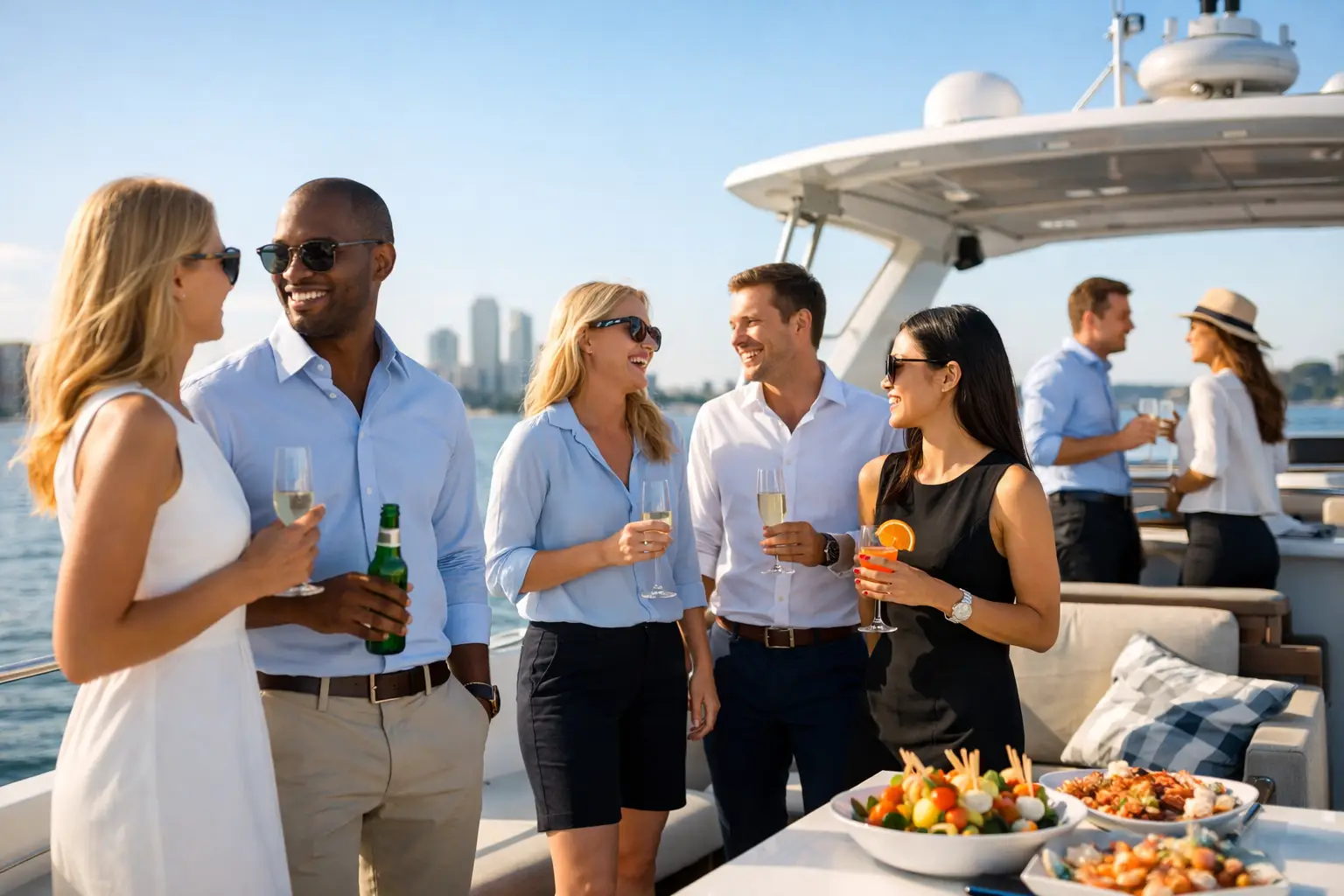
A corporate summer boat party changes the social dynamic right away. Guests arrive with a sense that something different is happening. The setting is already doing part of the work. Open water, skyline views, sea breeze, music, and a defined guest list create momentum before the first drink is poured or the first speech begins.
There is also a practical advantage. On a private charter, your group is not competing with another booking in the next room or dealing with a venue that feels half public and half private. The experience is contained, curated, and easier to shape around your brand, your guests, and the kind of tone you want to set.
Still, not every boat event feels premium. That is where the details matter.
The venue matters more than the idea
Saying you are hosting an event on a boat sounds impressive. In reality, the wrong vessel can flatten the experience quickly. If the deck is cramped, the seating is broken into awkward sections, or the layout was not designed for social movement, guests feel it immediately. The event becomes fragmented instead of fluid.
For corporate groups, spacious open-deck layouts usually work best because they encourage natural circulation. People can move from catering to drinks to conversations without bottlenecks. Lounge-style zones help too. They give the event a polished, hospitality-led feel instead of making it feel like everyone is standing around waiting for the next activity.
This is one of the biggest differences between a purpose-built entertainment vessel and a more traditional charter setup. A boat built around hosting can carry the energy of the event. A boat built for something else often asks guests to adapt to it.
That trade-off becomes even more obvious with larger groups. If you are entertaining 60, 80, or 120 guests, scale is not just about legal capacity. It is about whether the environment still feels comfortable, social, and premium once everyone is on board.
How to plan a corporate summer boat party that feels effortless
The strongest events look relaxed because the planning was sharp. That means building the experience around guest behavior, not just a booking window.
Start with the purpose. A client-facing event usually needs more polish, easier conversation, and a smoother hospitality rhythm. A team celebration can push further into high-energy territory with stronger music, more movement, and a more casual social flow. Both can be premium, but they are not the same event.
Next, think about timing. Day charters bring a brighter, more active atmosphere, especially if your group wants swim access, sun, and a beach-club feel. Late afternoon into sunset tends to suit mixed corporate groups because it balances energy with sophistication. Evening harbor cruises can feel especially sharp for executive hosting or milestone celebrations, but they depend more on lighting, service, and soundtrack to keep the mood right.
Then there is guest count. This sounds obvious, but many event planners focus on fitting everyone rather than hosting everyone well. A packed deck can kill the premium feeling you are trying to create. Giving guests room to move, sit, mingle, and take in the setting is part of the event value.
Food and beverage planning deserves the same level of attention. For a corporate audience, quality beats volume every time. Freshly prepared catering, smart presentation, and service that keeps the event moving without interrupting it will do more for the guest experience than a long menu ever could. The same goes for drinks. The right setup feels generous, well-managed, and appropriate to the tone of the event.
What guests actually remember
People rarely remember the spreadsheet behind an event. They remember moments. The first step onto the deck. The way the boat looked as everyone arrived. The sunset. The soundtrack. The fact that conversations felt easy. The sense that the company hosting them had taste and knew how to put on a proper experience.
That is why visual impact matters. Distinctive vessels, clean styling, strong service, and a social layout all contribute to memory. If the event looks good and feels good, guests will photograph it, talk about it, and connect the experience back to your brand.
There is a balance here, though. Chasing spectacle without thinking about comfort can backfire. Overscheduling entertainment, forcing networking activities, or packing the run sheet too tightly can make the whole thing feel managed instead of enjoyable. A premium corporate summer boat party should feel guided, not overproduced.
Corporate hospitality on the water is different from a typical staff party
This is where many planners get it wrong. A corporate event on the water is not just a staff social with a better view. It can be a client entertainment platform, a brand statement, and a team culture moment all at once.
If clients or senior stakeholders are attending, service standards become central. The crew, catering, boarding process, and pacing of the event need to feel calm and confident. No one wants to host an important guest in an environment that feels improvised. Premium hospitality is what turns a fun idea into a credible corporate event.
For internal events, the goal is slightly different. Teams usually want something that feels more relaxed than a ballroom but more elevated than the usual after-work venue. That sweet spot is where a well-run charter shines. It gives people space to let their guard down without sacrificing quality.
In Hong Kong especially, where so many guests have already seen the standard event formats, a standout corporate summer boat party can feel refreshingly original. It gives companies a setting that is social, distinctive, and polished without becoming stiff.
When bigger really is better
Some events need more than one deck and one bar. If you are planning a large company celebration, product launch, end-of-quarter party, or mixed guest event with staff and clients, scale becomes part of the appeal.
This is where multi-vessel formats can be a serious advantage. Connecting boats into one floating venue gives organizers room to create different energy zones while keeping everyone within the same event footprint. One area can feel more relaxed and conversation-led, while another carries the main music and social momentum. That flexibility is hard to replicate in a fixed venue.
It also helps with audience mix. Not every corporate guest wants the same experience. Some want to network, some want to unwind, and some want to stay close to the action. A larger on-water setup lets the event accommodate all three without feeling split.
Operators that specialize in this format tend to offer a smoother result than standard charter providers because the event design is already part of the product. That is a major reason premium hosts choose purpose-built fleets over generic alternatives.
The smartest approach is turnkey, not pieced together
A corporate summer boat party should not feel like a patchwork of outside vendors and last-minute decisions. The more moving parts you add, the more chances there are for the atmosphere to slip.
Turnkey planning is usually the better call for corporate groups because it keeps accountability clear. One experienced operator can coordinate the vessel, crew, food, drinks, service flow, timing, and guest experience as one package. That consistency shows up on the day. Guests may never see the planning work, but they absolutely feel the difference.
That is part of why brands like True Blue Fleet stand out. The best charter experiences are not just about being on the water. They are about hosting with confidence, using vessels designed for social energy, and delivering an event that feels elevated from boarding to final dock.
If you are planning this summer’s company event, aim higher than a change of scenery. A great corporate summer boat party is not memorable because it floats. It is memorable because every part of it feels considered, social, and worth showing up for.